In a recent address, Spanish Prime Minister Pedro Sánchez emphasized that there is no substantial evidence to support claims that Morocco orchestrated the significant influx of migrants into Ceuta, which occurred on July 30 and 31. This statement follows a police report that criticized Moroccan security forces for their lack of action during the crisis. Despite the alarming situation that saw over 70,000 migrants attempt to cross the border, resulting in numerous fatalities, Sánchez has refrained from directly blaming Morocco. Instead, he has been focused on maintaining and improving the historically fragile relations between the two nations, particularly concerning Ceuta and Melilla, Spain's territories in North Africa.
During his parliamentary address, Sánchez condemned the comments made by Moroccan officials regarding Ceuta, describing them as “unacceptable.” This marked a rare instance of public criticism towards Rabat, which has long claimed ownership of the North African enclave. According to the police report, there were significant deficiencies in the Moroccan police response, characterized by a “total permissiveness” that seemingly allowed the migrant surge to occur with little resistance. Reports indicated that some Moroccan officers even directed migrants towards the water, while the number of police present at the border was notably lower than usual.
Sánchez clarified that no police, legal, or international bodies had provided Spain with any solid evidence indicating that Morocco had planned or executed the migrant crisis. He asserted, “If this solid proof existed, we would act accordingly,” highlighting that the government had received no prior alerts regarding the scale of the incident. In response to the situation, a Moroccan source denied any claims of a relaxed border control, attributing the surge of migrants to the manipulation of social media and misinformation.
Furthermore, Sánchez pointed out the diplomatic strains between the two countries, revealing that Spain had summoned the Moroccan ambassador to express its concerns. Remarks made by Moroccan Justice Minister Abdellatif Ouahbi, who claimed historical and geographical rights over Ceuta and Melilla, were particularly pointed, as he called for a “final solution” to reclaim these territories. In light of this, Sánchez firmly declared that Ceuta and Melilla would remain Spanish “until the end of time.” The opposition parties in Spain have been vocally critical of Sánchez, suggesting that his government is overly accommodating towards Morocco, with calls for his resignation over perceived incompetence or complicity regarding the migrant crisis.
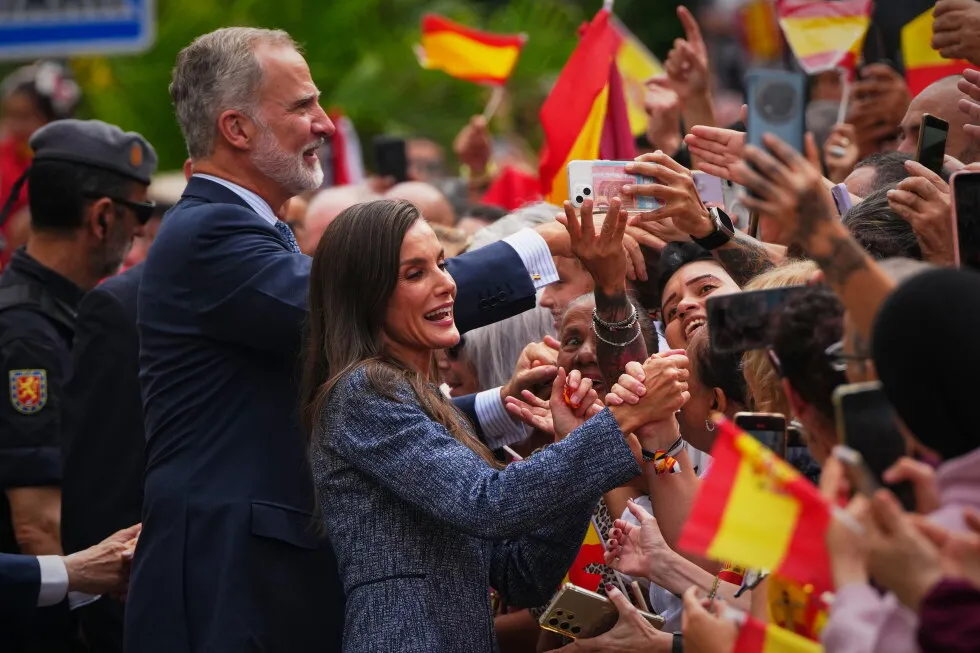
Analysts have speculated that Morocco may have leveraged the migrant influx as a means of exerting political pressure on Spain, particularly following Sánchez’s visit to Algeria, Morocco’s historical rival. The ongoing dispute over Western Sahara adds another layer of complexity to the relationship, as Morocco maintains control over the area despite claims from the Algerian-supported Polisario Front. In a bid to bolster ties, Sánchez has encouraged King Felipe VI to visit Ceuta and Melilla, which could potentially exacerbate tensions with Morocco, given the historical context of royal visits to these regions. The last visit by a Spanish monarch in 2007 led to a significant diplomatic incident.
While many migrants have returned to Morocco, a substantial number remain in Ceuta, leading to increased local unrest as residents express feelings of neglect. In response to the situation, tens of thousands of people across Spain have protested in solidarity with Ceuta, calling for greater government support. Sánchez reiterated the necessity for state assistance, stating that Ceuta needs governmental backing now more than ever. However, he emphasized that he does not intend to provoke a diplomatic conflict with Morocco.
As reported by courthousenews.com.