Spanish Prime Minister Pedro Sanchez addressed the legislature on September 3, defending his handling of the recent migration crisis in Ceuta. He reiterated that there was "no evidence" to suggest Morocco's involvement in the sudden influx of migrants that occurred at the end of July, while firmly asserting Spain's sovereignty over the enclave. The question of Morocco's potential role in the entry of tens of thousands of migrants between July 30 and 31 has been a focal point of debate in Spain for over a month. This scrutiny intensified following the leak of a police report that highlighted the "permissiveness" of Moroccan law enforcement during those two days.
During his address, Sanchez emphasized that no service or international organization has presented solid evidence to the Spanish government indicating that Morocco orchestrated or planned the migrant influx. He stated, "If such solid proof existed, we would act accordingly with all the firmness that the situation demands." Sanchez also noted that there were no prior reports that anticipated the scale or possibility of the events that transpired in late July.
Political Tensions and Calls for Accountability
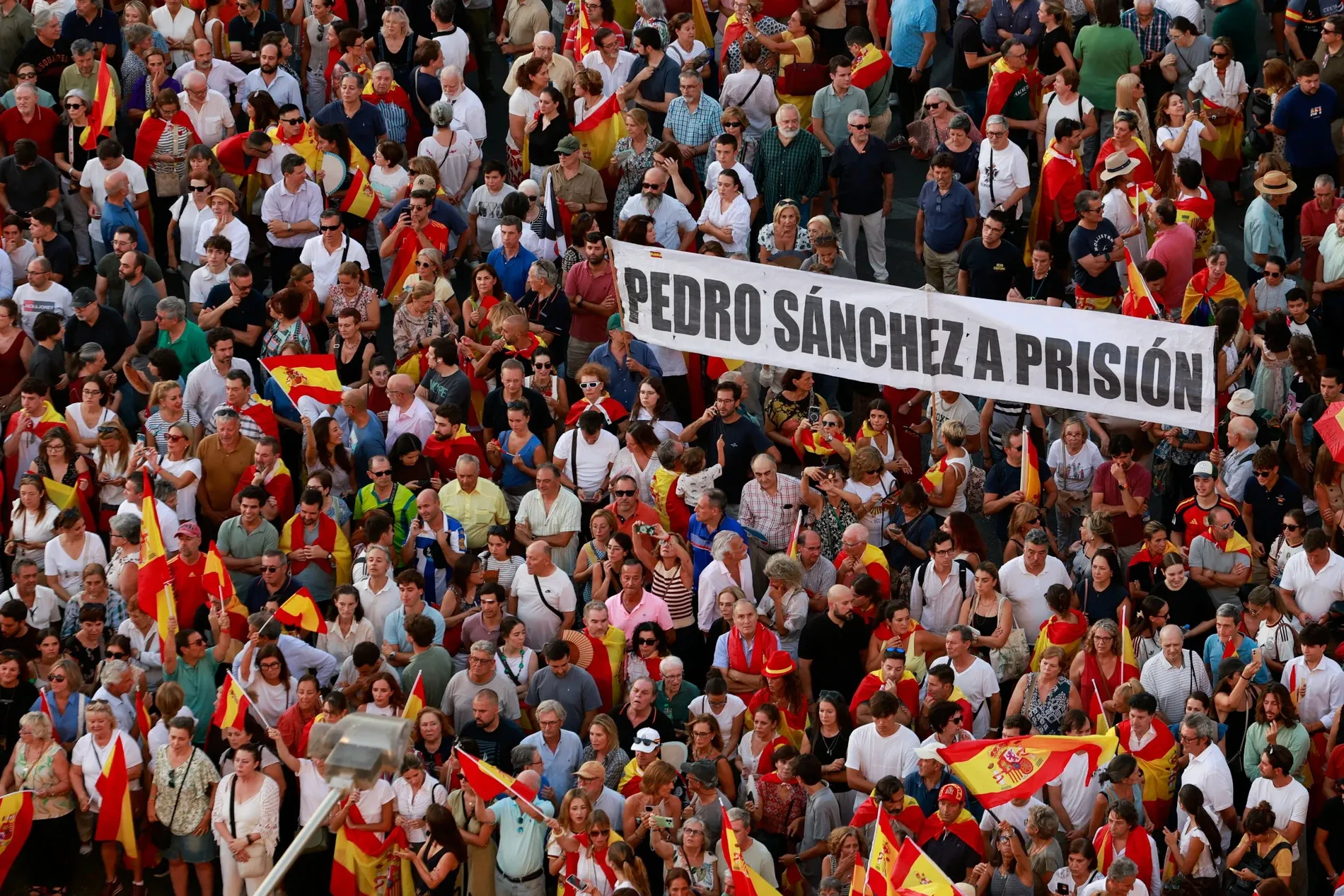
His remarks came on the heels of massive demonstrations across various Spanish cities, in support of the small North African territory and at the behest of right-wing and far-right parties protesting the government's crisis management. Opposition leader Alberto Nuñez Feijoo from the Popular Party accused Sanchez of incompetence, suggesting that if the Prime Minister's claims were true, he should resign for ineptitude, and if false, for collusion, calling the situation a "possible hybrid act of war by Morocco." In a recent interview with British news outlet GB News, U.S. President Donald Trump described the situation in Spain as "outrageous," warning that it could ruin the country and destabilize Europe.
Despite his repeated rejection of any implication of Rabat in the crisis, Sanchez criticized the "unacceptable" statements made by two Moroccan ministers who recently asserted Morocco's sovereignty over Ceuta and Melilla, another Spanish enclave. Sanchez firmly stated, "For centuries, these two cities have been Spanish... and I assure you that for the Spanish government, this will remain so until the end of time." He called on King Felipe VI of Spain to visit the enclaves soon to convey the state’s unwavering commitment, emphasizing that Ceuta needs state support now more than ever.
Historical Context and Ongoing Tensions
The Moroccan government claims sovereignty over these two enclaves, viewing them as occupied territories, although this assertion is not presented to the United Nations, as Morocco focuses on resolving the Western Sahara issue in its favor. This former Spanish colony is largely controlled by Morocco but also claimed by the Polisario Front, which is backed by Algeria. While Madrid has supported Morocco's position since 2022, some analysts believe that the late July crisis in Ceuta could have been a strategically orchestrated message from Morocco in response to Sanchez's visit to Algeria in July. Although the vast majority of the migrants who arrived in Ceuta at the end of July were quickly returned, several thousand—estimated between 5,000 by the central government and 10,000 by local authorities—remain in the small territory, which has a population of over 80,000.
As reported by information.tv5monde.com.