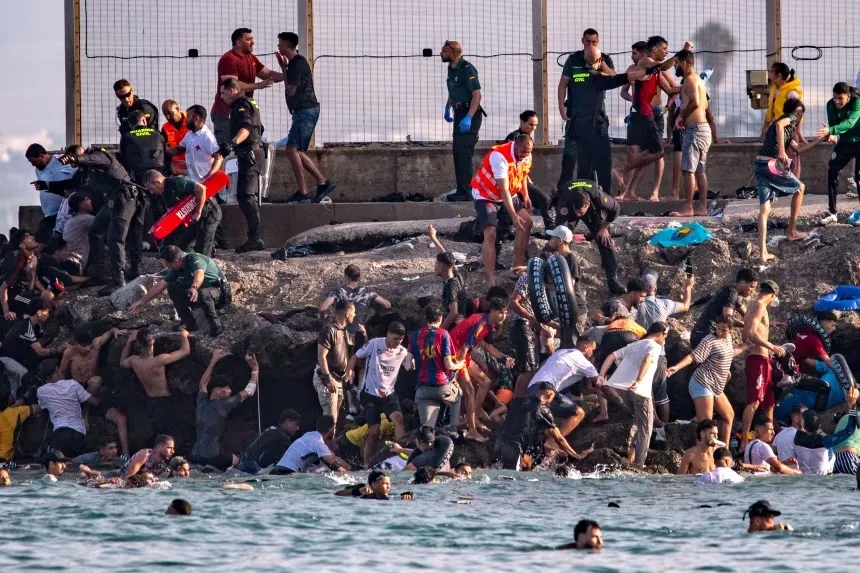

Spanish Authorities Clear Makeshift Camp of 3,000 Migrants in Ceuta
In a significant operation, Spanish law enforcement officials have successfully dismantled a makeshift migrant camp located on Trampolin Beach in Ceuta, a Spanish enclave on the Strait of Gibraltar. This action led to the removal of over 3,000 irregular migrants who had been residing along the shoreline, highlighting the ongoing challenges faced by European authorities amid a surge in migration. The operation was heavily fortified, with dozens of officers and more than 20 vehicles deployed to secure the area and prevent any potential escape attempts during the evacuation.
Following the clearance, the migrants were transported to a government facility situated near the Tarajal border crossing for identification and processing. This decisive action comes in the wake of a dramatic rise in migration, with over 70,000 individuals reportedly crossing into Ceuta from Morocco in July alone, marking one of the most significant influxes of migrants in recent history. Local officials have expressed concerns regarding the environmental conditions at the beach, citing health risks associated with contact with the water, which adds another layer of urgency to the situation.
Addressing the Migration Crisis: Spain and Morocco's Collaborative Efforts
The recent clearance operation is part of a broader strategy by Spanish authorities to manage the ongoing migration crisis effectively. As migrants are processed, it is reported that many will not qualify for asylum, leading to further discussions on repatriation protocols with Morocco. Spain's commitment to returning individuals lacking legal status or eligibility for international protection reflects its ongoing collaboration with Moroccan authorities in addressing the fallout from this unprecedented migration wave. This complex situation has sparked heated political discussions in both Rabat and Madrid as they navigate the delicate balance between border security and humanitarian obligations.
As the situation evolves, it remains critical for both nations to address the root causes of migration while ensuring the safety and dignity of those seeking refuge. The international community continues to watch closely as these developments unfold, underscoring the necessity for cohesive strategies to tackle the challenges posed by irregular migration.
As reported by africa.businessinsider.com.