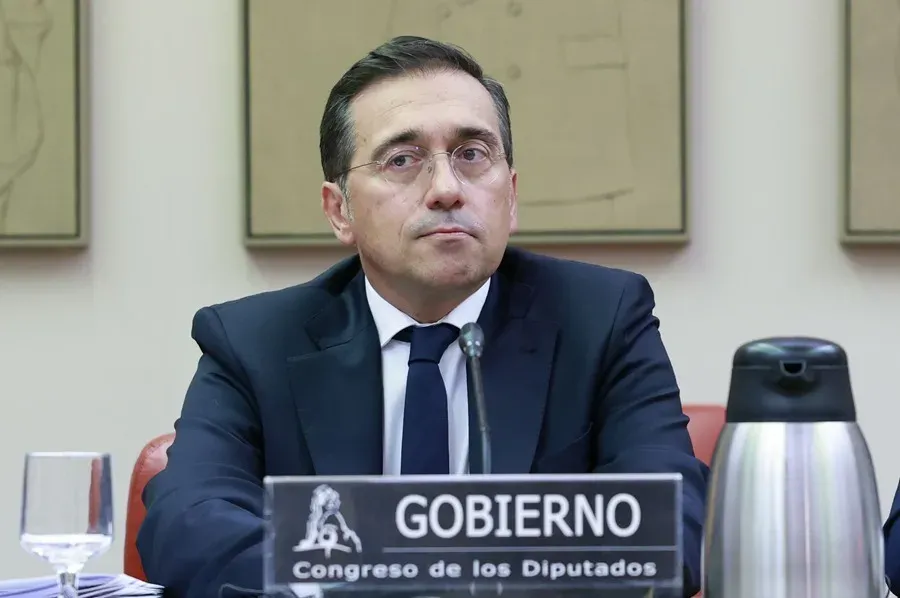

Spanish Foreign Minister Affirms Stance on Ceuta and Melilla
In a recent statement, Spain's Foreign Minister, José Manuel Albares, reiterated the country's firm stance on its sovereignty over the cities of Ceuta and Melilla. During a session with the Spanish Parliament’s Foreign Affairs Committee, Albares emphasized that Spain will "never negotiate" with Morocco regarding the status of these cities. This declaration comes amid ongoing discussions about migration issues and the importance of maintaining dialogue and coordination with Morocco to address these challenges effectively.
Albares described Ceuta and Melilla as integral parts of Spain and the European Union, asserting that they represent not only territorial integrity but also the safety and security of the region. He declared that the residents of these cities, regardless of their backgrounds or beliefs, are Spanish and European by both law and allegiance. This sentiment, he insists, will remain unchanged.
The minister clarified that there have been, and will be, no discussions concerning Spanish sovereignty over Ceuta and Melilla, highlighting that Spain has consistently rejected any statements from Morocco that could be seen as a challenge to its territorial integrity. He acknowledged the necessity of diplomatic dialogue with Morocco, particularly in light of a recent surge in migration from the Moroccan side, which has posed significant challenges for Spanish authorities.
Complexities of the Ceuta and Melilla Border
Albares characterized the borders between Ceuta, Melilla, and Morocco as among the most complex in the world, attributing this to the stark differences between Europe and Africa, as well as the violence present in various regions of the African continent. He noted that the recent influx of migrants into Ceuta was exacerbated by misinformation circulating on social media, which distorted the implications of a ruling from Spain’s Supreme Court regarding the repatriation of migrants arriving by sea.
The minister’s comments were made amid criticism from opposition parties and some allies of the Spanish government, who accuse it of weakness and yielding to Moroccan demands. Notably, members of the Popular Party have voiced concerns that the government has developed a relationship with Morocco that compromises Spain's interests in exchange for stability, which remains contingent on decisions made across the border. The political climate continues to develop as various factions challenge the government's approach to this sensitive issue.
These statements come in the wake of remarks made by Moroccan Justice Minister Abdellatif Ouahbi, who asserted Morocco's historical and geographical claims to Ceuta and Melilla and called for a bilateral dialogue mechanism with Spain to reach a final resolution. This has stirred significant debate within Spain, adding to the complexities of diplomatic relations between the two nations.
As reported by al3omk.com.