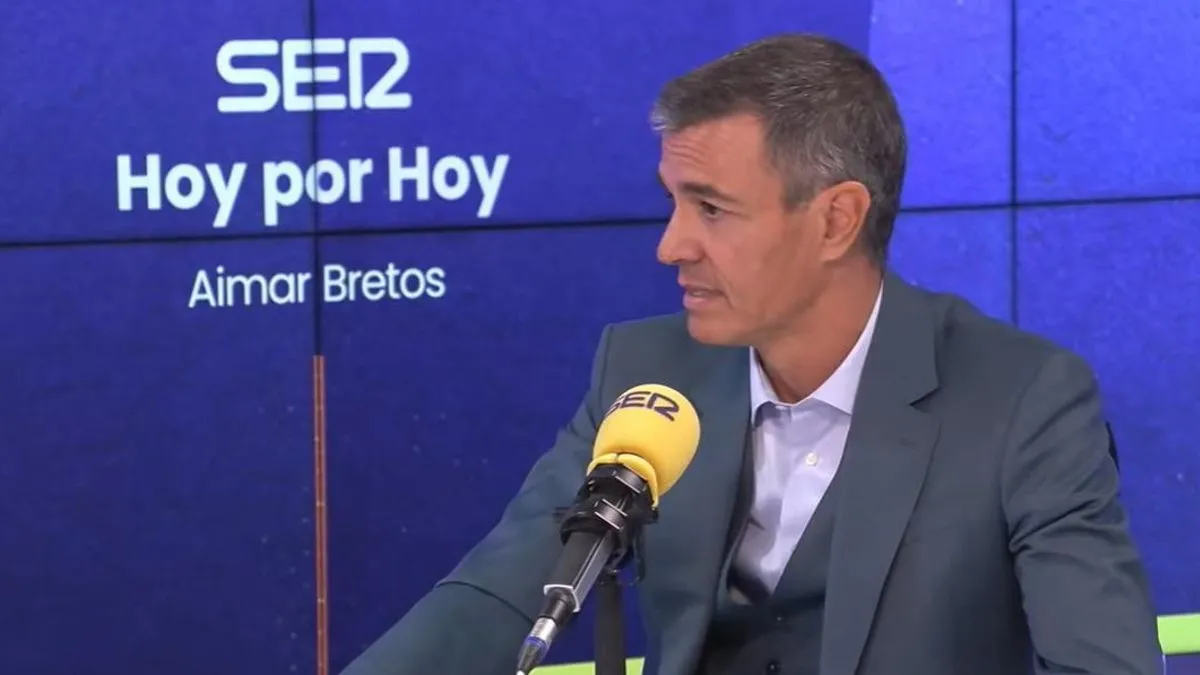

The President of the Spanish Government, Pedro Sánchez, has firmly stated that there is no credible information from security forces, the National Intelligence Center (CNI), or other intelligence services indicating any potential involvement of Moroccan authorities in the recent migration crisis that unfolded in Ceuta at the end of July. During an interview with Cadena SER, Sánchez linked the spread of misinformation to networks associated with both Russia and Israel, as well as to an international far-right agenda, accusing them of exploiting migration issues to undermine Spain and Europe.
In his address, Sánchez characterized the relationship with Morocco regarding migration as "frankly positive" and noted that Moroccan authorities had deployed significant police resources in the Castillejos area when the influx into the autonomous city began. He acknowledged, however, that both the CNI and the National Police had received situational reports in the days leading up to the crisis that warned of an increase in irregular migration flows. Nonetheless, he insisted that none of these reports predicted the scale or severity of the events that transpired on July 30 and 31.
Prior to the crisis, various meetings had been held between Ceuta's institutions and the General State Administration, led by the Government Delegation, during which information was shared regarding the increasing attempts to enter the city. According to Sánchez, the data shared was similar to patterns observed in previous summers, which also saw "peaks" in migration. Therefore, he dismissed claims of contradictions in recent statements made by different government members regarding prior warnings. "There was no information that conveyed the magnitude of the crisis," he stated, while recalling that, in anticipation of new arrivals, border controls were strengthened and the Temporary Immigrant Stay Center (CETI) was prepared. "Clearly, no one predicted that we would face an influx of such characteristics," he added.
Regarding the exact origins of the crisis, Sánchez admitted that the government still lacks a definitive explanation, stating, "Unfortunately, we do not have it. We continue to investigate." The President ruled out transferring any of the migrants currently in Ceuta to the mainland and assured that "in the coming days," the city would have sufficient capacity to accommodate them, thanks to the opening of approximately 6,000 places. The government estimates that around 5,000 individuals remain in Ceuta from the late July influx, including about 1,200 minors. Sánchez emphasized that the government's priority is to resolve the cases of these minors within the autonomous city.
According to figures provided by Sánchez, around 70,000 people entered between July 30 and 31, with approximately 90% returning to Morocco in the following days. Since August 10, another 3,222 individuals have reportedly returned voluntarily. Sánchez noted that "the majority" of those who entered irregularly did so for economic reasons, which likely means they will be sent back to Morocco.
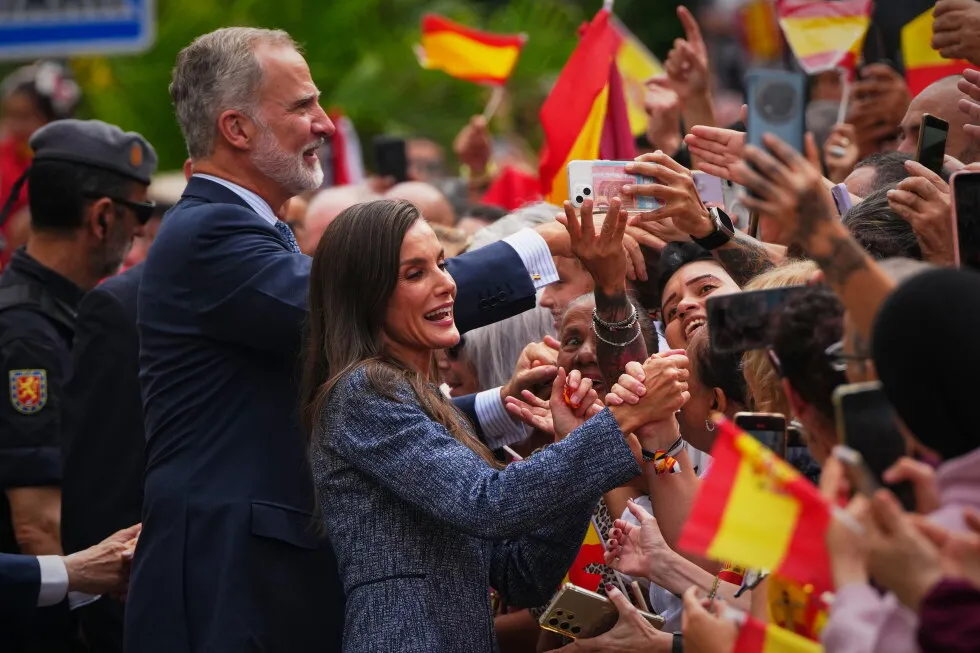
Furthermore, Sánchez confirmed that King Felipe VI will visit the autonomous cities of Ceuta and Melilla when conditions are appropriate, although he did not specify a date as discussions are still ongoing with Zarzuela. He highlighted that he has been the sitting president who has visited Ceuta and Melilla the most during his eight years in office, contrasting this with the inactivity of the head of state, who has not visited either city since his proclamation in 2014, even during administrations from the Popular Party. During the interview, Sánchez inaccurately stated that Felipe VI has reigned for "20 years," when in fact he has been on the throne for just over 12 years.
While Sánchez declined to disclose details of his conversations with the king, he strongly asserted that there are "sufficient arguments and reasons" for the head of state to finally visit Ceuta and Melilla. He indicated that the timing of these visits will depend on the appropriate conditions, and he refrained from revealing whether Felipe VI shares his view, referring inquiries to the Royal House. Additionally, Sánchez criticized former Prime Minister José María Aznar, who visited Ceuta the previous week, suggesting that those who seek to sow discord have only ever done so and that this behavior is not exclusive to their time in office.
As reported by infolibre.es.