
Increased Security Measures at Spanish Borders
The Spanish government has taken significant steps to bolster the presence of the Civil Guard in the autonomous cities of Ceuta and Melilla in response to the looming threat of a large-scale assault on the Spanish border scheduled for this Wednesday, coinciding with the legislative elections in Morocco. According to sources within the armed forces, a contingent of 144 agents from the Group of Reserve and Security (GRS) has been dispatched to Ceuta from various autonomous communities, while Melilla has received three Rapid Intervention Modules (MIR), comprising approximately 60 agents. National Police officials have indicated that while there has been a rotation among agents of the UIP, there has not been an increase in overall personnel.
In recent weeks, the government has been closely monitoring social media channels that promote participation in the upcoming assault on the Spanish border. This is strategically timed with the expectation that Moroccan law enforcement will be preoccupied with overseeing the electoral process in their country. In light of this situation, the Spanish Embassy in Rabat has launched a campaign across social media platforms aimed at discouraging potential irregular crossings of the border, utilizing messages in both Spanish and French that clarify that simply entering national territory does not guarantee the right to remain in Spain.
Despite Foreign Minister José Manuel Albares downplaying these calls for a border assault, asserting that they have not gained traction among migrants, the government is remaining vigilant and has reinforced the Civil Guard's presence in both Ceuta and Melilla. Sources from the armed forces have explained that the Ministry of the Interior has also ordered an increase in maritime surveillance in Spanish sovereign territories. This follows a recent augmentation of patrols in areas such as the Peñón de Vélez de la Gomera, the Alhucemas Islands, the Chafarinas Islands, and the islet of Perejil, due to similar calls detected on social media.
Ongoing Vigilance and Preparedness
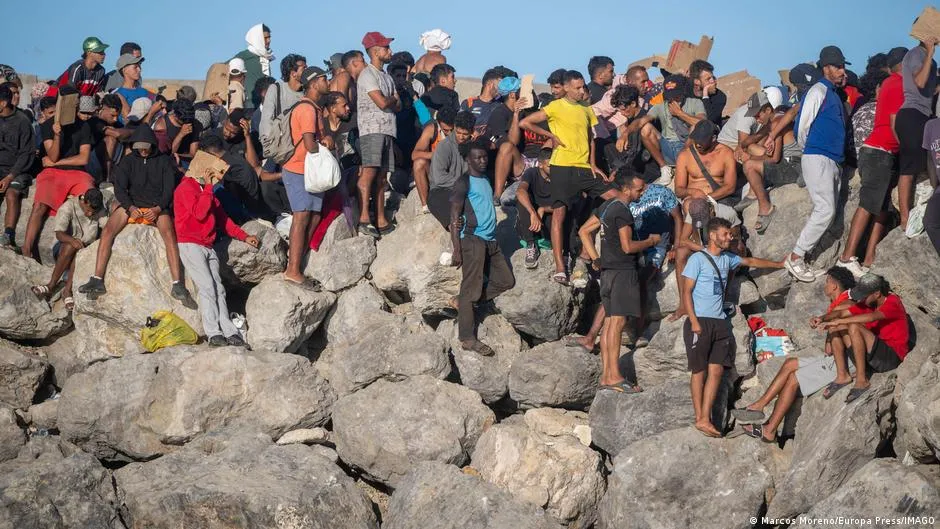
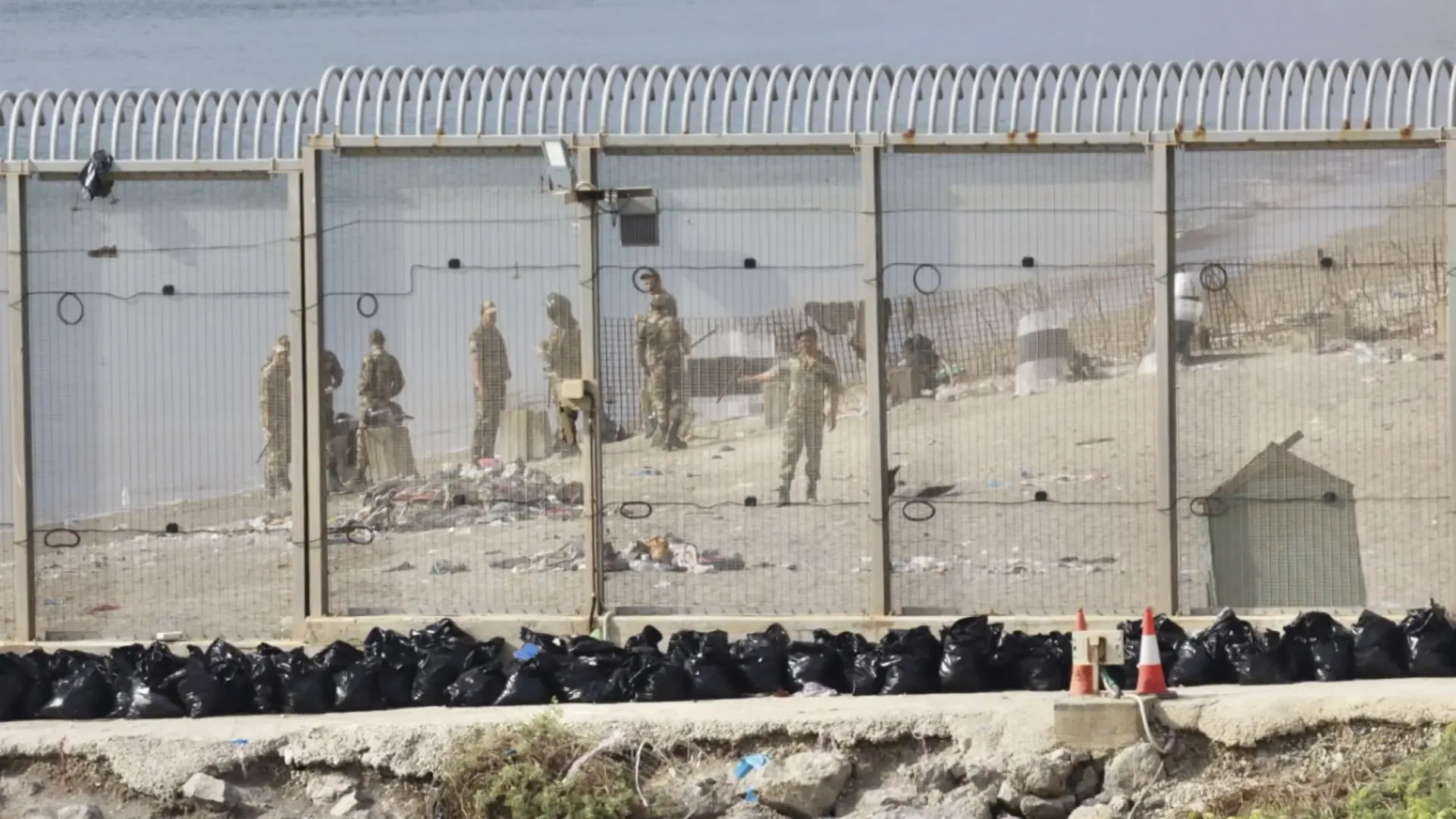
Officials have acknowledged the challenges posed by a potential surge in migrant arrivals, emphasizing that while the operational capacity is prepared, the situation could become highly difficult to manage if an influx of 80,000 individuals were to occur simultaneously. However, they point to the importance of the "floating barriers" installed at the Tarajal Pier in Ceuta and the Southern Dike in Melilla, which are intended to facilitate immediate border rejection measures. It has been confirmed that Melilla has already seen returns of migrants attempting to swim across the Southern Dike in recent days.
Despite these preparations, the Civil Guard remains optimistic that a mass assault on the border will not materialize this Wednesday, citing that numerous similar calls have been detected on social media since late July, none of which have come to fruition. Interior Minister Fernando Grande-Marlaska reiterated on Monday that the government has proactively increased border security in Ceuta and Melilla, deploying three additional platoons from the Group of Reserve and Security (GRS) to each autonomous city as a precautionary measure.
Moreover, while social media claims suggest reduced surveillance by Moroccan authorities due to the elections, the Civil Guard has clarified that Rabat is aware of these calls to action and has been reinforcing its side of the border. Reports indicate that the Moroccan Gendarmerie is fully informed of the situation and has deployed resources at the Ceuta and Melilla borders. Additionally, armored vehicles equipped with water cannons are stationed in Castillejos for potential crowd control in case of large-scale attempts to breach the border.
Media outlets in Morocco have also reported an uptick in surveillance measures on the opposite side of the border, particularly around Castillejos. A local news source detailed that all routes leading to this neighboring locality of Ceuta are under close observation, especially those coming from Tetouan or Tangier. Furthermore, the Royal Navy has reportedly enhanced its presence by deploying six rigid-hulled inflatable boats to monitor the area and deter any maritime crossing attempts.
In Melilla, the government delegate Sabrina Moh has urged calm regarding the border situation, denying any alerts about possible new entries. However, she emphasized that vigilance and control in response to social media calls are ongoing, with measures adapted according to the needs of the situation. She reiterated that law enforcement agencies are continuously working year-round to ensure preparedness for any eventuality.
As reported by 20minutos.es.