
The Spanish monarch, King Felipe VI, is set to visit the enclave of Ceuta for a two-day period, following extensive cleanup operations that took place along the shores and streets, where countless migrants had lingered for weeks. As he arrives, the question arises: what will the king observe in Ceuta?
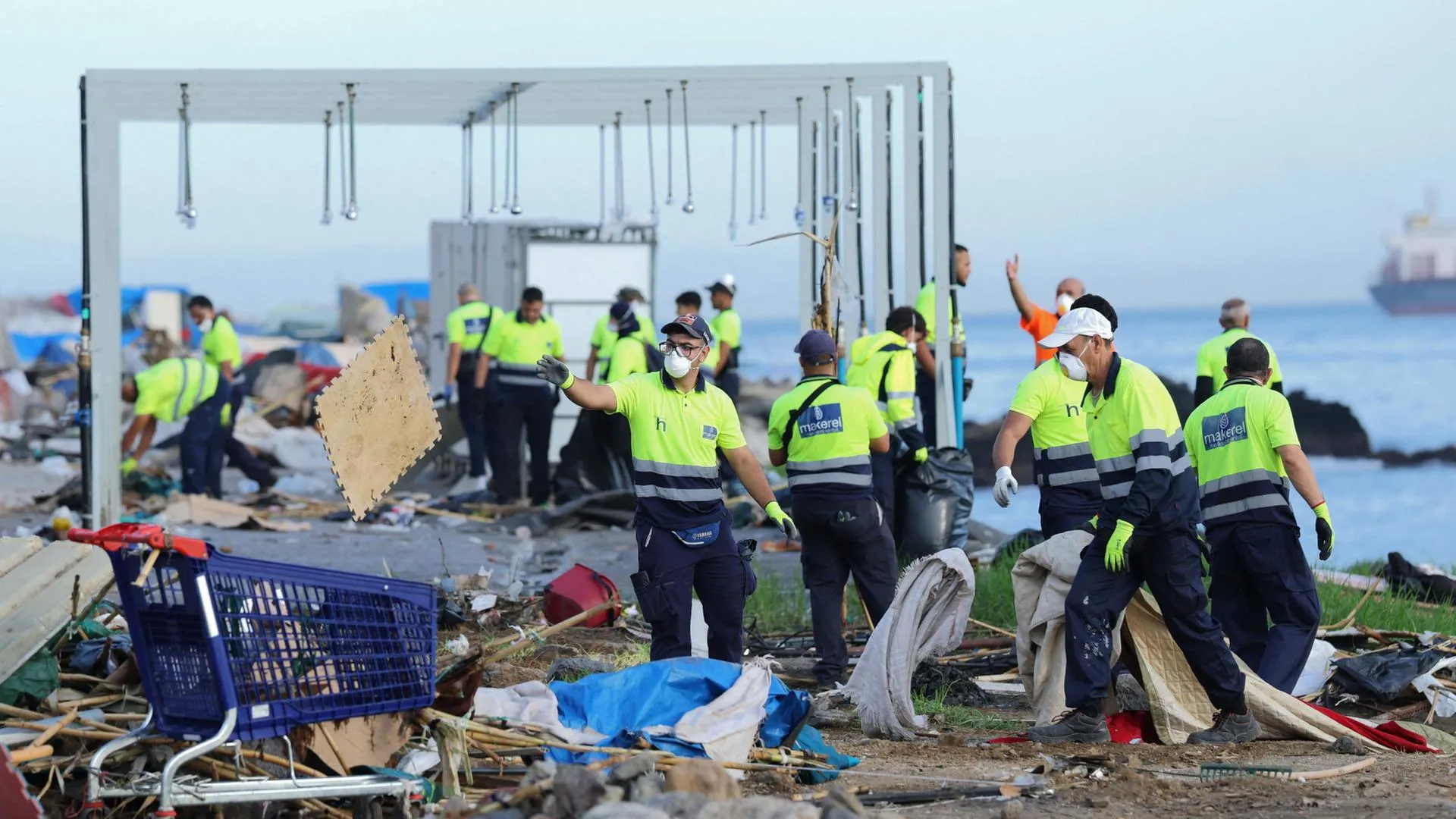
At the Playa del Trampolín, cleanup crews donning bright yellow vests are diligently clearing away remnants of the makeshift tent city where thousands of migrants had sought refuge. They are busy collecting bamboo, which served as building material for temporary shelters, along with plastic water bottles and other debris, all of which is being packed into numerous black garbage bags. A weathered green-and-silver pickup truck is seen transporting load after load of these bags to massive green roll-off containers, signifying a stark shift in the landscape that once housed so many.
Despite the beach being cleared by police about a week prior, two migrants were discovered hiding among the rocks of the coastal slope that very morning. A Guardia Civil van was quickly dispatched to take them away, underscoring the ongoing struggle faced by those seeking a better life.
The Overlooked Reality of a Cleanup
Jorge González, a local resident, is keenly observant of the happenings on the beach. His pristine white house overlooks the small two-lane road that separates his property from the shoreline, where he and his wife, Marisa, have found retirement. Displaying a yellow-red banner that reads "Beach of Shame" from their terrace railing, Jorge comments on the beach cleanup with a tone of bitterness. “Today, the Spanish king is coming to Ceuta,” he remarks. “And they want him to see that there’s nothing to see here, despite what he must know about the situation.” He estimates that approximately 4,000 to 5,000 individuals have been relocated from the area to other parts of the city, effectively shifting the problem away rather than addressing it.
The makeshift camp known as "El Guano," located near the Trampolín beach, had been home to many migrants prior to the king's visit. In the lead-up to the royal arrival, the camp was dismantled, with police organizing the migrants into groups for transport. However, the royal couple may not witness the full extent of the situation, as their official itinerary does not include visits to any of the beaches or the industrial zone near the Moroccan border, where many of the relocated migrants are likely to end up.
Community Efforts Amidst Ongoing Struggles
Since mid-August, over 10,000 individuals have reportedly returned to Morocco, as per the Spanish government's statements. In the industrial area, many people, including children and adolescents, had been living on the streets for weeks, with limited medical care provided from a mobile clinic operated by a humanitarian organization. Though some makeshift shelters have been removed, the mobile clinic remains operational, catering to those still in need. Storage facilities equipped with bunk beds continue to house unaccompanied minors, which community leaders like Ahmed Enfedal, president of the neighborhood association in Ceuta's Moroccan district El Príncipe, criticize as mere “children’s camps” that lack genuine support and resources.
The neighborhood association has been tirelessly providing for young girls and migrants, distributing food and assisting parents in reuniting with their children. Despite feeling abandoned by authorities, local residents are determined to help in any way they can, often feeling overwhelmed by the sight of individuals sleeping on their doorsteps.
Following the evacuation of "El Guano," heavy machinery arrived to clear the remnants of the camp, just in time for the king's visit. As Enfedal prepares to wave Spain flags for the royal couple, he emphasizes the symbolic nature of the visit, echoing González's sentiments that it represents little more than a gesture. “At least he supports us morally; after all, Europe and the Spanish government have left us in the lurch,” says González, reflecting on the broader implications of the visit.
As reported by tagesschau.de.