
Transformation of the Spanish Monarchy's Role in Moroccan Relations
The recent shift in the role of the Spanish monarchy, particularly under King Felipe VI, from that of a mediator to a more hardline stance in dealings with Morocco marks a significant change in the diplomatic landscape between the two nations. Historically, the Spanish monarchy has served as a calming influence, facilitating dialogue and negotiation during crises. However, the recent events surrounding the tragic situation in Ceuta have seen the monarchy take on a more aggressive posture, positioning itself as a leading voice in pressuring Morocco and internationalizing the issue, especially within European circles.
At the heart of the diplomatic tensions lies a fundamental institutional imbalance. King Mohammed VI of Morocco seeks to engage directly with his Spanish counterpart; however, King Felipe VI lacks the authority to make unilateral decisions, as he is bound by the elected government's policies, which are subject to parliamentary oversight. This situation creates a disconnect, as the Spanish Prime Minister, Pedro Sánchez, prefers direct communication with the Moroccan King, knowing that his own authority is limited regarding contentious issues that frequently arise between Rabat and Madrid. This disconnect has led to misunderstandings and diplomatic friction, exemplified by former Spanish Foreign Minister Javier Solana's recounting of a past disagreement with the late King Hassan II, who expressed frustration over dealing with a minister rather than the king himself.
King Felipe VI's Hardline Approach
The situation in Ceuta, which involved the mass entry of approximately 80,000 individuals, mostly Moroccan, and the tragic drowning of 141 people, prompted many observers to anticipate a mediating role for King Felipe VI. Reports from the Spanish newspaper El País indicated that the Madrid government was hopeful for intervention from the Spanish king to address the crisis with Morocco. However, as events unfolded, it became increasingly clear that King Felipe VI was adopting a hardline approach, signaling a potential rupture in relations with King Mohammed VI. His condemnation of the mass incursion into Ceuta as an unacceptable violation of Spanish and European borders marked a stark departure from previous diplomatic norms.
King Felipe VI's firm stance is evident through three notable actions: first, his declaration that the Ceuta incident constituted a breach of Spain's territorial integrity, leading him to convene a military meeting in September with key defense officials to discuss the crisis. This meeting, which he publicly highlighted, was framed as a defense-focused response to the incursion, illustrating a shift in tone towards a more militaristic viewpoint on the issue.
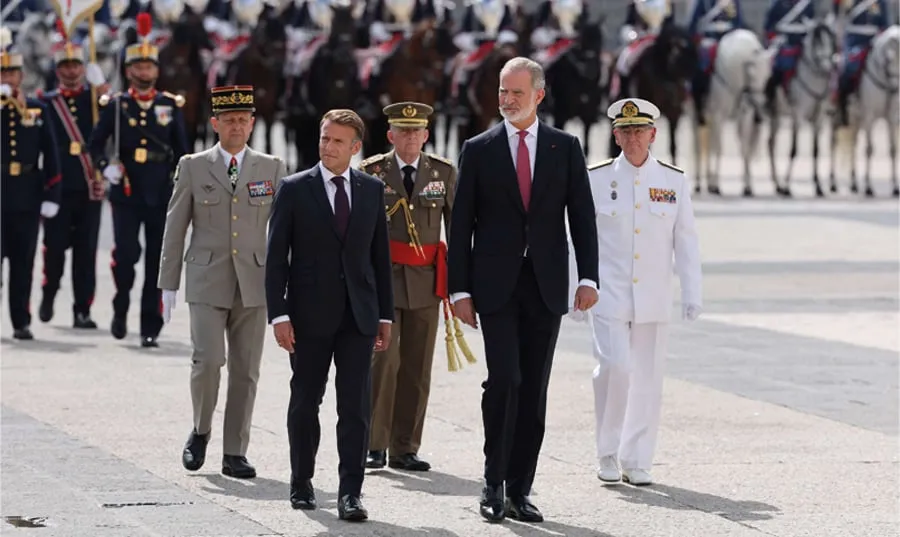
Secondly, the king has utilized international platforms to emphasize the European dimension of the Ceuta crisis, reinforcing Spain's position within the broader context of European border security. During a recent official dinner with French President Emmanuel Macron, he asserted that the massive infiltration through Spanish borders was unacceptable and called for enhanced cooperation among EU member states to address such challenges collectively.
Lastly, it appears that Felipe VI's hardline stance has influenced the Spanish political landscape, prompting a more rigid approach towards Moroccan relations. Though Prime Minister Sánchez had initially planned a post-crisis visit to Ceuta and Melilla, pressure from the monarchy and various state factions, including military leaders, expedited this visit, which occurred on October 13 and 14. Felipe VI's decision to proceed with the visit despite potential backlash from Morocco suggests a strategic shift towards normalizing relations with Ceuta and Melilla independently of Moroccan sensitivities.
These developments indicate a significant departure from the Spanish monarchy's traditional role as a mediator in disputes with Morocco. The growing tensions and the cold interactions between Kings Felipe VI and Mohammed VI reflect a relationship in decline. This shift away from mediation, a role the Spanish monarchy has historically played since the democratic transition in the mid-1970s, is likely to have lasting implications for Moroccan-Spanish relations, both now and in the future.
As reported by alquds.co.uk.