
Reactions to the Royal Visit in Ceuta
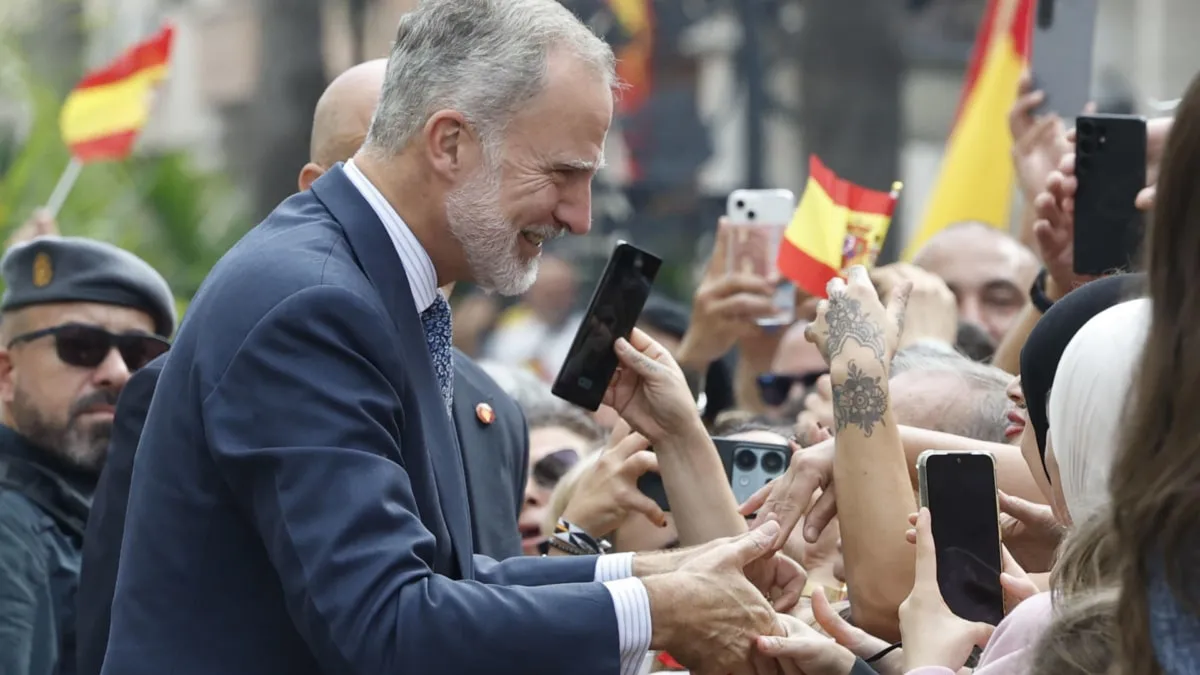
The recent visit of King Felipe VI and Queen Letizia to Ceuta has not gone unnoticed across the Strait, despite the silence from Moroccan authorities. This marks the first visit by a Spanish monarch to the autonomous city since King Juan Carlos's trip in 2007, which precipitated a significant diplomatic crisis with Rabat. Nearly two decades later, Morocco is once again expressing apprehension regarding Felipe VI's presence in a territory it claims as its own. The Moroccan press has been closely monitoring the royal entourage's activities in Ceuta, with the widely read digital publication, Hespress, reporting on the enthusiastic welcome the Kings received. Thousands of citizens and residents gathered early in the morning to chant welcoming phrases and display Spanish flags, signaling a clear political statement regarding Madrid's sovereignty over this 'occupied Moroccan enclave.'
However, reactions have emerged not only from the media. Upon learning of Felipe VI and Queen Letizia's visit, the National Federation of Maritime Fishing in Morocco, affiliated with the Moroccan Workers' Union, organized a protest outside the Spanish Consulate in Agadir. According to their statement, the demonstration aims to express rejection of the visit while defending 'the fundamental principles of the Moroccan nation and its territorial integrity.' The union also plans to deliver an 'official letter of protest' to the Spanish consul in Agadir and the European Union Delegation in Rabat, emphasizing that this protest aims to convey a political and union message to Madrid and European institutions regarding their stance on Ceuta and Melilla and issues related to the Kingdom's territorial integrity.
Potential Diplomatic Crisis Ahead
Hespress suggests that the royal visit to Ceuta and Melilla, where the couple will travel next, is driven by the monarchy and the Spanish government’s desire to assert their sovereignty over these occupied cities whenever possible. The analysis indicates that Felipe VI and Letizia's presence has political dimensions linked to the 'internal landscape' in Spain, as political parties utilize 'border issues, foreign relations, and immigration' in their internal conflicts. The memory of Juan Carlos I's visit to Ceuta two decades ago, which the Moroccan government deemed 'unacceptable and provocative,' looms large in this context. The actions of the then-monarch severely strained bilateral relations, necessitating months of dialogue to mend ties.
The attendance of the Moroccan ambassador to Spain, Karima Benyaich, at a reception in the Royal Palace on National Day, just prior to the royal visit to Ceuta, suggests that Rabat may not respond with similar intensity this time. However, the Moroccan digital media emphasizes that royal visits to Ceuta and Melilla always entail 'delicate decisions' for diplomatic relations. Despite the apparent calm in diplomatic interactions and attempts to maintain a high level of strategic coordination between the two nations, the situation remains precarious.
Additionally, a recent article from the president of the Moroccan Center for Strategic Studies, Mohamed Benhamou, points out that Felipe VI and Queen Letizia's presence in Ceuta and Melilla cannot be divorced from the 'constitutional and political tension' within the Spanish state ahead of upcoming elections. Benhamou argues that by allowing this visit to take place, Pedro Sánchez is attempting to evade direct responsibility for parliamentary failures following the collapse of housing decrees and the dissolution of Parliament. Although the royal trip was announced before the election call, the analyst believes Sánchez seeks to 'remove the nationalist card from the right' by sending the Royals to Ceuta and Melilla. Consequently, it is suggested that the Royal House intervened to fulfill 'its symbolic role of arbitration,' aiming to 'calm the residents of both cities and restore state prestige.' The analyst confidently asserts that 'the Spanish government requested the King's assistance.' Given that Morocco's claims are based on historical legitimacy and an inalienable sovereign right, Felipe VI's presence remains a purely ceremonial gesture, intended for internal and partisan consumption, and is unlikely to alter the 'existing power balance on the ground.'
As reported by elindependiente.com.