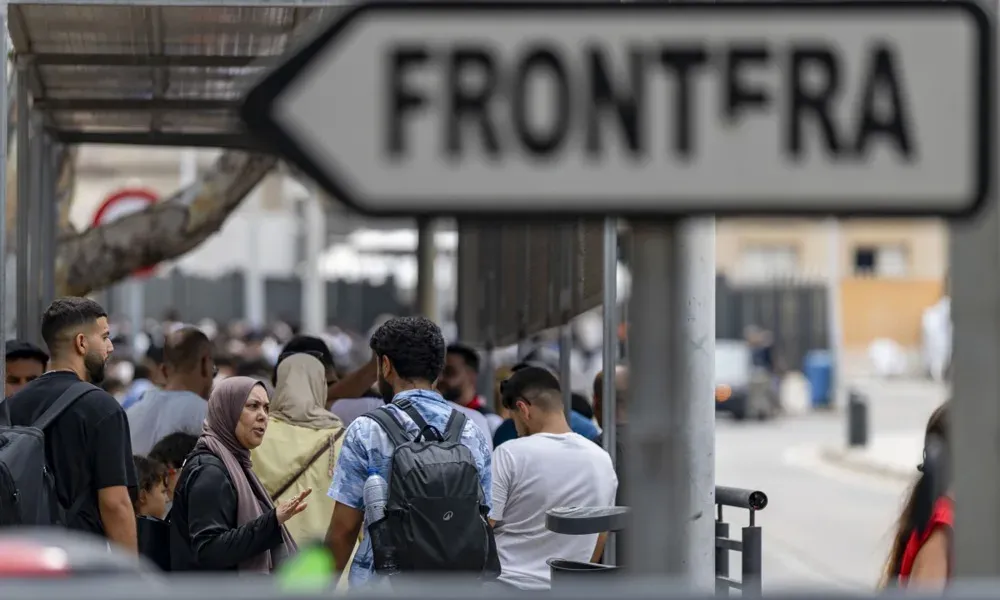
On Thursday, Spain's Prime Minister Pedro Sánchez firmly dismissed allegations suggesting that Moroccan authorities played a role in the tragic mass crossing of migrants from Morocco into Ceuta, a Spanish exclave. This denial comes at a time when Sánchez faces increasing scrutiny regarding his management of the crisis, especially following widespread protests across Spain. Just a day prior, tens of thousands of citizens took to the streets demanding urgent solutions to the humanitarian disaster unfolding in Ceuta and calling for Sánchez's resignation.
In late July, a staggering 72,000 migrants attempted to enter Ceuta, a territory that is home to just 84,000 residents. While most of these migrants were swiftly returned to Morocco, approximately 5,000 individuals, including 1,200 minors, have remained in Ceuta for weeks, according to figures reported by the national government, although local authorities suggest the numbers may be higher. Prime Minister Sánchez has reported that 141 individuals tragically lost their lives in their attempts to reach the city; however, both his office and the interior ministry have not clarified how this figure was determined.
The circumstances surrounding this mass crossing remain unclear, with the Spanish government attributing it to a social media campaign. Recent reports from Spanish media highlighted a police document that suggested Moroccan security forces may have been lax during the incident. Nonetheless, officials from Spain have refuted claims that the report implicated Morocco directly. During a press conference, Sánchez acknowledged that for a crucial 10-hour period on July 30, when the number of migrant arrivals peaked, the Moroccan Gendarmerie allegedly allowed the border to be crossed.
Despite refraining from direct criticism of Morocco, Sánchez did condemn remarks made by two Moroccan ministers that questioned Spain’s sovereignty over Ceuta and Melilla, another Spanish territory in North Africa. In response, he stated that the Spanish government had summoned Morocco's ambassador in Madrid to address these comments.
While Sánchez continues to reject the notion that Moroccan authorities orchestrated the crisis, he maintained that Moroccan police had indeed permitted crossing at the border. The Prime Minister announced that his government would publish essential reports concerning the border breach, yet he did not provide a timeline for their release or disclose their content. The death toll has now been revised to 141, a significant increase from earlier estimates of 96, as reported by authorities in both Ceuta and Morocco's National Human Rights Council. However, neither his office nor the interior ministry could explain how this new figure was calculated when approached by The Associated Press.
Opposition leader Alberto Feijóo sharply criticized Sánchez's approach during a parliamentary session, expressing that many Spaniards are both perplexed and outraged at what they perceive as a violation of their territorial integrity. He echoed the sentiments of the protesters, affirming that the people of Ceuta should not be left to fend for themselves, insisting that the state must take action.
As the humanitarian crisis in Ceuta persists, Sánchez is under intense pressure to address the issues facing the small community, which is struggling to cope with the sudden influx of migrants. Conflicting statements from top officials regarding the events leading up to the crisis have only added to the confusion, with the defense ministry claiming prior intelligence warnings, while the interior ministry has denied such notifications. The two exclaves, Ceuta and Melilla, represent the only land borders between the European Union and Africa.
As the situation develops, Sánchez's government remains committed to transparency, pledging to release key information about the Fborder breach, which has been deemed the deadliest in recent history. However, a clear timeline or details regarding the findings remain uncertain.
As reported by africanews.com.