
Spanish Police Expose Drug Trafficking Networks
The recent operation conducted by Spanish police has sent shockwaves through European security circles, revealing a new face and technological backing for international drug trafficking networks originating from Morocco. This development has transformed the landscape of drug smuggling; it is no longer confined to traditional boats navigating the Mediterranean waves. Instead, it highlights a dangerous strategic evolution that has turned the skies over the region into an open corridor for transporting hashish and cocaine deep into Europe, once again placing the Moroccan regime under international scrutiny.
Reports indicate that Spanish authorities executed five simultaneous raids across various locations, including the Basque Country and Ceuta. These operations successfully dismantled a complex smuggling scheme aimed at transporting massive quantities of hashish and cocaine from Morocco into Europe, ultimately reaching France via unconventional routes that combine air and land travel. This situation raises pressing questions regarding the accountability of security policies implemented by the Moroccan government.
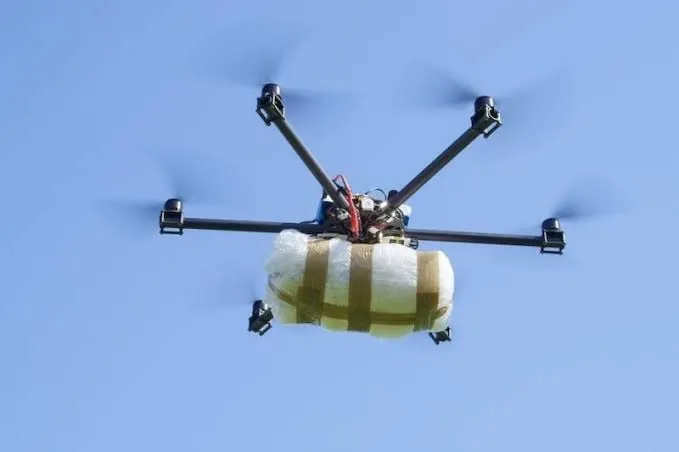
The takedown of this dangerous criminal network resulted in the arrest of eight individuals and the seizure of an unprecedented logistical arsenal. Among the confiscated items was a colossal drone measuring approximately four meters in length, equipped with four engines capable of flying at speeds exceeding 100 kilometers per hour. This technology enables the drone to carry significant amounts of drugs in a single trip and execute rapid crossings between Morocco and Spain within just minutes, a shift deemed perilous by Spanish investigations. It underscores how drug lords have capitalized on aerial routes, utilizing vehicles equipped with complex hidden compartments for their illicit activities.
This technological breakthrough in drug trafficking raises profound questions about the nature of security oversight on the Moroccan side. The existence of such sophisticated aircraft and vehicles outfitted with intricate concealed storage systems cannot occur without clear complicity that turns a blind eye to a trade generating billions of dollars. This reality suggests that the Moroccan economy may be significantly reliant on drug trafficking to European countries and beyond.
The implications of this security operation extend beyond merely thwarting a drug shipment; it reveals a direct threat to regional national security. The penetration of unidentified drones into airspace carries unpredictable security and military risks. Today, the international community, particularly European capitals, faces the critical need to reassess their security partnerships with Rabat. There is an urgent requirement to transition from superficial coordination to imposing genuine pressures aimed at eradicating the roots of this trade and curbing the policy of negligence that transforms air and land borders into safe passageways for organized crime syndicates.
As reported by elmawkie.dz.