
Spanish PM Addresses Migrant Crisis and Moroccan Relations
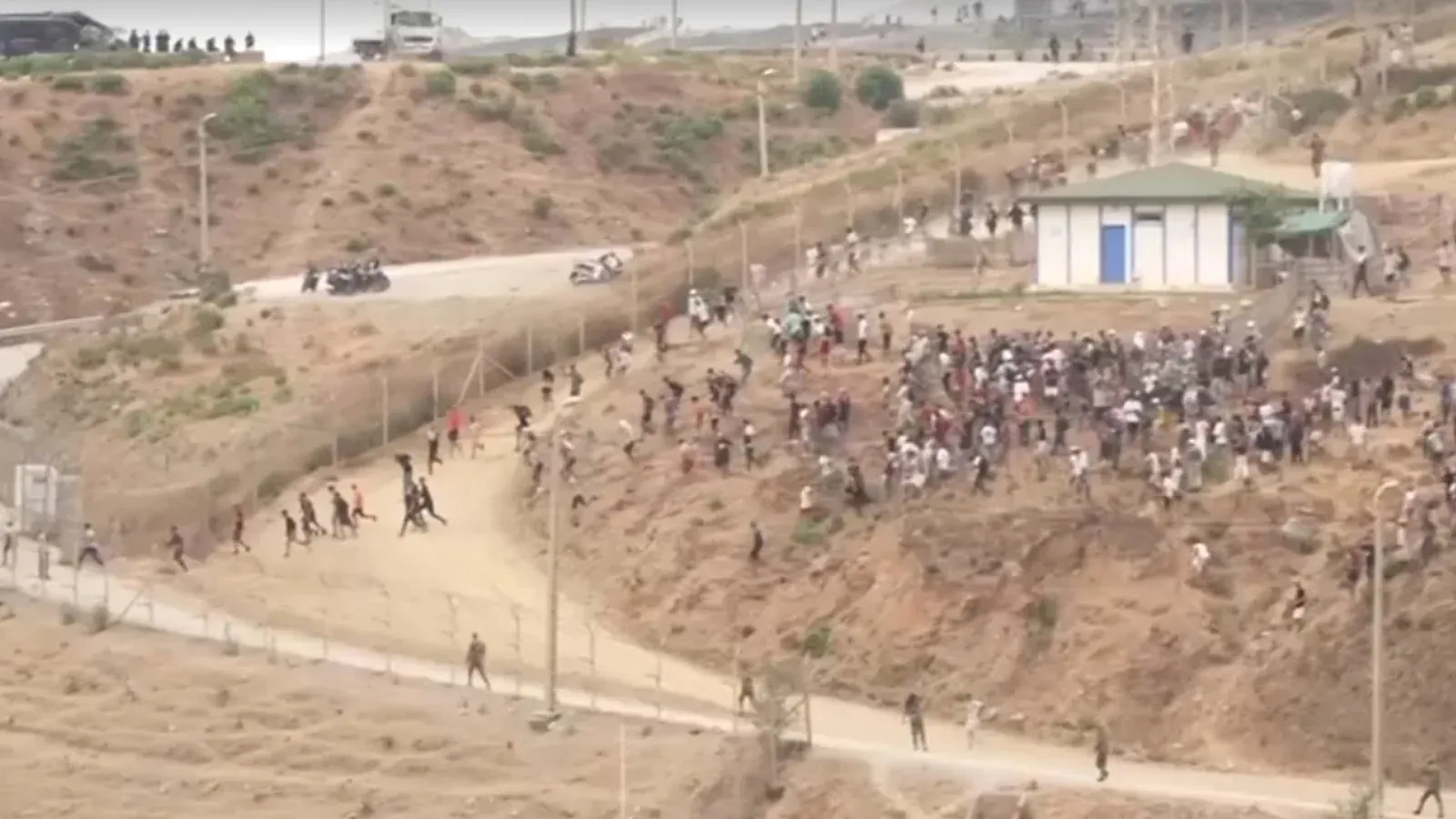
In a significant statement that reflects the delicate state of Spanish-Moroccan relations, Spanish Prime Minister Pedro Sánchez has asserted that there is no "solid proof" to suggest that Morocco orchestrated the recent surge of migrants into Ceuta. This declaration comes in the wake of a police report indicating numerous failings by Moroccan security forces during the crisis that unfolded on July 30 and 31, when over 70,000 migrants crossed into Ceuta, resulting in tragic fatalities, primarily by drowning as they attempted to navigate around a breakwater.
While Sánchez has refrained from outright blaming Morocco for the chaos, he has criticized the "unacceptable" remarks made by Moroccan officials regarding Ceuta. This marks a rare instance of public condemnation from Sánchez towards Morocco, a country that claims the Spanish enclave. In a move that may exacerbate tensions, the Prime Minister disclosed that the Spanish government has encouraged King Felipe VI to visit Ceuta and Melilla, another Spanish territory in North Africa, as a gesture of support.
Concerns Over Moroccan Security Response
The recent influx of migrants has raised concerns not only about humanitarian conditions but also about the adequacy of Moroccan law enforcement's response. The Spanish police report, which has been made public, suggests that the Moroccan police exhibited a "total permissiveness" during the crisis, with some officers allegedly directing migrants towards the water. Reports indicated that the number of police stationed at the border was significantly lower than usual and that there was a lack of serious effort to control the situation. In a parliamentary address, Sánchez emphasized that no legal, police, or international institutions have provided definitive evidence to support claims that Morocco planned or executed the migrant rush, stating, "If this solid proof existed, we would act accordingly. This government is not afraid of confronting other foreign powers."
Sánchez's comments come amid growing unrest in Ceuta, where many of the migrants who crossed into the city have remained, often sleeping on the streets. This has led to heightened tensions among local residents, who feel neglected by the government. Protests have erupted in Ceuta and across Spain, with opposition parties seizing the opportunity to criticize Sánchez's handling of the situation and suggesting that he is overly accommodating to Moroccan interests. Some analysts argue that Morocco may have used the migrant crisis as leverage in its political dealings with Spain, particularly in response to Sánchez's recent visit to Algeria, a historical rival of Morocco.
Despite the ongoing challenges, Sánchez remains firm in his stance that Ceuta and Melilla will continue to be Spanish territories "until the end of time," countering Moroccan assertions of historical claims over these areas. His call for King Felipe to visit the enclaves underscores the need for a more significant governmental presence and support for the local population during these turbulent times. This situation continues to evolve as both countries navigate their complex relationship amidst pressing humanitarian concerns.
As reported by rte.ie.