
Spanish Senate Advocates for Maritime Boundary Reevaluation
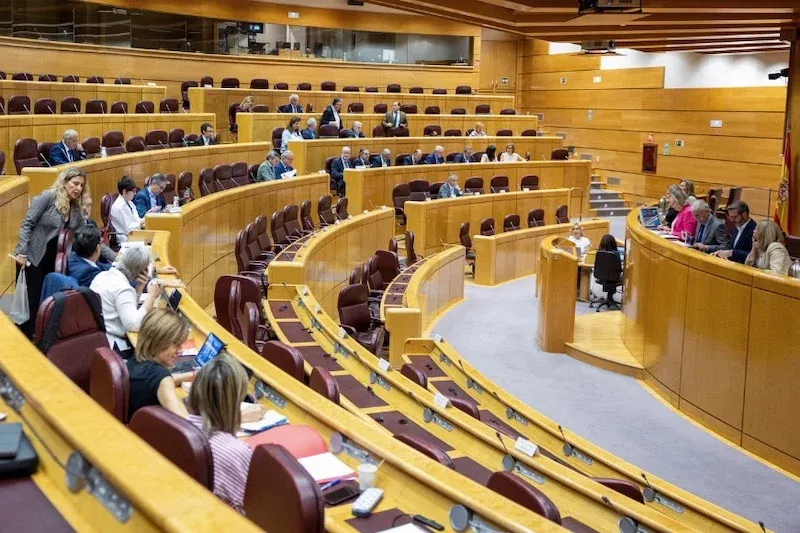
On October 1, 2026, the Spanish Senate's committee on autonomous communities approved a non-legislative proposal advocating for the Madrid government's immediate action to address maritime boundaries between Spain and Morocco. This initiative, presented by the parliamentary group representing various parties, aims to reactivate a task force dedicated to delineating maritime zones, specifically recognizing the Canary Islands' maritime activities as a fully rights-based archipelago under international law.
The proposal gained momentum with a vote of 35 senators in favor, alongside a compromise amendment, while 18 voted against it, and one senator abstained. In March 2024, Senator Aniceto Javier Armas González had previously urged the government to expedite the determination of maritime boundaries with Morocco, emphasizing the need for international acknowledgement of the Canary Islands as a complete rights-holding archipelago rather than a mere collection of isolated islands.
Strategic Resource Discoveries Prompt Urgent Action
The impetus for this proposal stems from the geopolitical, economic, and environmental significance of accurately defining these maritime boundaries, particularly following the discovery of critical minerals and strategic resources such as tellurium and cobalt near Mount Tropic. The document highlighted that the existing ambiguity surrounding the boundaries has been exacerbated by these recent findings in areas approximately 250 miles from the Canary Islands, underscoring the urgent need for international clarification of Canary Island waters.
It was noted that China currently holds a significant portion of the world's rare earth element reserves, essential for manufacturing solar panels and electric vehicle batteries. Thus, gaining access to these resources is deemed crucial for future competitiveness. The control of the European Union over Mount Tropic is considered vital for diversifying supply chains and enhancing competition against major global powers.
The memorandum also referenced Spain's legislation from December 30, 2010, regarding Canary waters, which was reflected in the autonomous governance framework established in 2018. Under this framework, Spain petitioned the United Nations on May 11, 2009, to extend its exclusive economic zone west of the Canary Islands. However, international consensus on the delimitation of Canary waters remains elusive, as the criteria for such determinations have yet to be established.
Senator Armas González reiterated the necessity for the Moncloa Palace, the Spanish government headquarters, to revitalize the task force dedicated to maritime boundary delineation with Morocco, incorporating representatives from the autonomous government of the Canary Islands. He stressed that this maritime area is of particular importance due to the strategic resources identified at Mount Monte Tropic, and underscored the need for Spain to promptly re-engage with Morocco on this matter, ensuring effective representation from the Canary Islands' autonomous region.
This proposal, if implemented, aims to secure Spain's maritime sovereignty while promoting international agreements to achieve recognition of the Canary Islands as a fully rights-holding archipelago, adhering to Article 46 of the United Nations Convention on the Law of the Sea.
As reported by hespress.com.