
Morocco to Experience a Stunning Partial Solar Eclipse
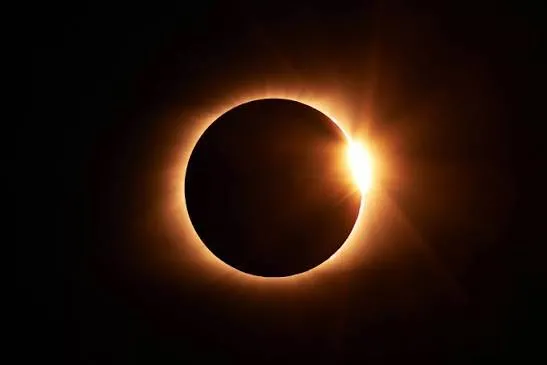
On Wednesday, August 12, Morocco will witness a particularly spectacular partial solar eclipse, with the obscuration rate reaching nearly 93% in northern regions, as stated by Zouhair Benkhaldoun, a professor at Cadi Ayyad University and the director of the Oukaïmeden Astronomical Observatory. This astronomical event is part of a broader global phenomenon, which will take the form of a total eclipse. A total eclipse occurs when the Sun, Moon, and Earth align perfectly, causing the lunar disk to completely obscure the Sun for observers within the path of totality.
The path of totality will traverse several regions, including the Arctic, Greenland, Iceland, a small portion of Portugal, and especially Spain, before concluding over the Mediterranean Sea. However, Morocco lies outside this totality zone, meaning that the eclipse will only be partial. The Kingdom will find itself in the penumbra of the Moon, where the levels of obscuration will vary significantly from one region to another.
Cities in the northern part of the country are set to enjoy the most pronounced effects of the eclipse. Nador is expected to experience the highest obscuration rate, with approximately 92.9% of the solar disk being masked. Other northern cities such as Tangier, Tetouan, and Al Hoceïma will also witness obscuration levels close to 92%. In Fes, the obscuration will reach about 89.5%, while it will be around 88% in Rabat and 87% in Casablanca. Other cities like Marrakech will see obscuration around 83%, Agadir at 79%, Laâyoune at 70%, and Dakhla at 60%.
Viewing Conditions and Safety Precautions
Depending on the location, the eclipse is expected to commence between 6:44 PM and 7:06 PM. The maximum obscuration will occur between 7:40 PM and 8:00 PM, with the phenomenon concluding between approximately 7:58 PM and 8:39 PM. The distinction between a total eclipse and a partial eclipse lies in the observer's position relative to the shadow cast by the Moon on Earth. In the central area, known as the 'umbra' or 'shadow', the Sun is entirely obscured. In the penumbra, where Morocco will be located, only a section of the solar disk disappears behind the Moon.
To enjoy this celestial event under optimal conditions, there is no specific location in Morocco that is particularly favored, according to Zouhair Benkhaldoun. The primary requirement is to have a sufficiently clear western horizon, as the eclipse will occur later in the day. However, it is crucial to take strict precautions while observing this phenomenon. The director of the Oukaïmeden Astronomical Observatory warns against direct observation of the Sun, which can lead to irreversible eye injuries. Therefore, he strongly recommends using specially designed eclipse glasses for safe viewing. Such protective equipment is available through various astronomical associations across Morocco.
As reported by lavieeco.com.