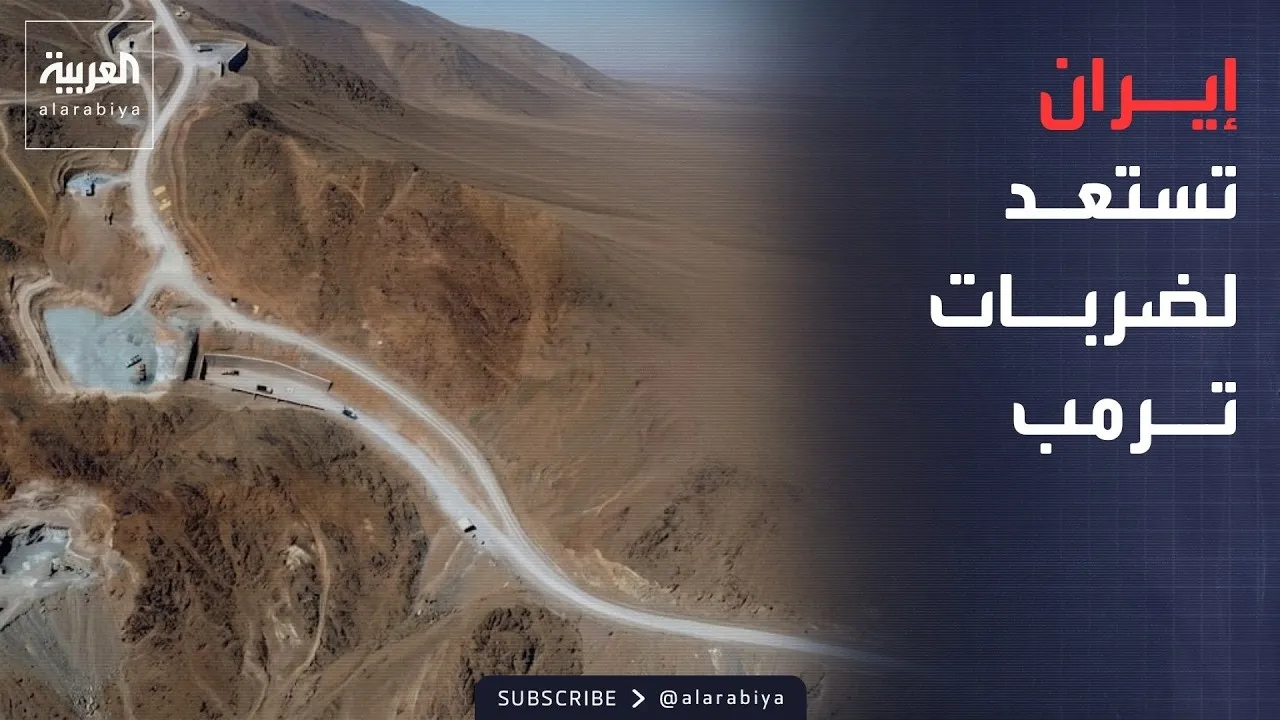

Iran's Nuclear Facility: A Complex Challenge
Major General Dr. Samir Farag, a military and strategic expert, emphasized that Iran has effectively exploited periods of conflict and previous wars to reposition and fortify its nuclear program intricately within the facility located at 'Mount Al-Fas.' During his appearance on the program 'Life Today' with journalist Mohamed Mostafa Sherdy on the 'Al-Hayat' channel, he detailed that this site is situated 1,600 meters south of the Natanz facility, strategically positioned between Fordow and Isfahan. Iran has constructed a secret facility that spans three floors, extending more than 100 meters underground and featuring four main entrances.
Challenges for the U.S. Military
General Farag pointed out that targeting this nuclear complex poses a significant military dilemma for Washington, primarily due to the mountain's composition of extremely hard volcanic rocks, which are resistant to penetration. He noted that the most powerful weapons available to U.S. forces are the GBU-57 bunker-buster bombs, which have a destructive range that does not exceed 60 meters. Drawing from his extensive military experience during the Yemen conflict, he referenced how massive Russian Tupolev bombers dropped tons of explosives on volcanic mountain ranges without achieving discernible effects on their fortifications.
Furthermore, the military expert discussed the prevailing ambiguity surrounding the true nature of operations within Mount Al-Fas, especially given Iran's official denial of any nuclear activities there. He asserted that the reality remains obscured as Iran continues to prevent International Atomic Energy Agency (IAEA) inspectors from visiting and inspecting these sites since the onset of military operations. This situation renders U.S. claims about the destruction of sensitive targets, or Iranian assertions of transferring all nuclear materials into the mountain, as unresolved intelligence matters in practical terms.
In conclusion, General Samir Farag underscored the context of the ongoing psychological warfare between Washington and Tehran. He highlighted stringent Russian warnings to the United States regarding the potential consequences of striking nuclear facilities, which could result in widespread nuclear leakage and radiation that threaten regional stability. At the same time, he pointed to the role of Israeli Prime Minister Benjamin Netanyahu in exerting pressure on the U.S. administration, instilling fear through rumors that Tehran is nearing the development of nuclear warheads, thereby attempting to accelerate the timeline for a military strike.
As reported by soutalomma.com.