
In a significant development, the Istiqlal Party has entered a more advanced phase of preparation for the anticipated legislative elections scheduled for September 23, 2026. This shift marks the transition from internal management of nominations to a strategic realignment of its candidates across various electoral districts, shedding light on the competitive landscape that is expected to characterize the upcoming electoral process.
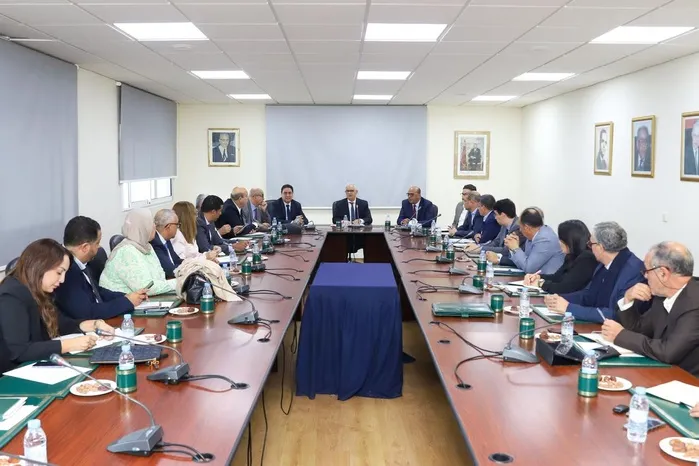
Following a meeting held on August 3, the party's executive committee announced a new wave of endorsements after reviewing the submitted applications through a rigorous examination process by the ethics and conduct committee. This initiative, according to the party leadership, aims to ensure that nominations align with the provisions of the party's statutes and internal code of conduct.
The new batch of endorsements spans multiple regions from the north to the south, indicating the party's intention to expedite the formation of its local lists rather than waiting until the election date to finalize candidate selections. In the Tangier-Tetouan-Al Hoceima region, the party has chosen Mohamed Hammoudani to lead its list in the Al Hoceima district, while in the eastern region, it has selected Touh Toh Mohamadi for the Nador district, a candidate formerly associated with the National Rally of Independents, a member of the ruling coalition.
Similar decisive actions are evident in the Fes-Meknes region, where Hassan Sligoua has been endorsed for the northern Fes district, Hassan Yamani for the Meknes district, and Mohamed Soufan for the Taounate-Tissa district. In the Marrakech-Safi region, the party has appointed Abdul Aziz Darwish for the Sidi Youssef Ben Ali district, while in Rabat-Salé, Idris Al-Sentisi, a former parliamentary leader of the People's Movement Party, has been selected for the Salé city district.
In the Beni Mellal-Khenifra region, the party has finalized the nomination of Abdel Ali Briki for the Azilal-Demnat district, and in Marrakech-Safi, Abdul Aziz Darwish has again been nominated for the city of Sidi Youssef Ben Ali, alongside Shadi Bolon for the Tan Tan district. However, the significance of this selection batch lies not only in the quantity of names announced but also in the political nature of the choices made. Attracting candidates with previous experience from other parties, particularly those in the ruling coalition, reveals that electoral competition is beginning to assert itself within the government alliance even before the votes are cast.
This aspect holds particular importance given that the parties forming the ruling coalition are also preparing for the same electoral event. Consequently, many local districts are likely to become battlegrounds for candidates from political components that ostensibly align within the same government coalition, yet approach the elections with differing strategies driven by seat calculations, local reach, and voter mobilization capabilities.
From this perspective, the movements of the Istiqlal Party appear to lean towards a comprehensive restructuring of its local electoral presence. This strategy combines retaining established party names while also opening doors for new faces with electoral networks and grassroots presence outside the traditional organizational framework. Such an approach enables the party to broaden its maneuvering space in districts that require candidates capable of mounting robust electoral challenges, rather than relying solely on internal organizational nominations.
This dynamic unfolds against a political backdrop where parties are gradually shifting from internal preparations to testing their influence on the ground. With the September 23 election date approaching, the candidate selection process is evolving from a mere organizational decision into a critical factor that shapes local alliances, attracts influential figures, and redistributes centers of influence within several districts.
The party's utilization of the ethics and conduct committee to vet nominations adds an organizational dimension to this process, as leadership seeks to present endorsements as products of an internal institutional pathway, rather than mere responses to local electoral pressures. This approach grants the leadership greater latitude in managing choices, especially at a time when intra-party competition regarding who deserves candidacy and who stands the best electoral chances can increase.
At the same time, this second wave of endorsements reveals that the Istiqlal Party's battle will not solely be waged internally but will also hinge on the leadership's ability to reconfigure its local map and attract personalities capable of shifting the competitive balance in specific districts. Future endorsement rounds are expected to provide clearer insights into the party's electoral vision, particularly in districts where electoral ambitions of candidates from ruling parties intersect. As the election date approaches, the allocation of nominations within these districts will become increasingly sensitive, potentially placing ruling coalition parties in a challenging position to navigate the balance between governmental coexistence and electoral competition.
Thus, the endorsement process appears to be more than just an organizational measure to cover electoral districts; it represents one of the initial battlegrounds of actual electoral conflict. Parties that successfully finalize their candidates early possess more time to build their local campaigns, organize their networks, attract influential actors, and gauge voter sentiments ahead of the official campaign launch.
The Istiqlal Party presents this process as part of a trajectory aimed at selecting candidates who meet standards of competence, integrity, and merit, capable of representing citizens and advocating for their issues, while emphasizing principles of accountability and responsibility. However, what the upcoming endorsement rounds will reveal is likely to be more significant than the organizational data itself: Will the party succeed in transforming these endorsements into actual electoral strength, and will the recruitment of figures from ruling parties enhance its position within the coalition or widen the competitive landscape among its components before reaching the polling day? These questions will gradually find answers as the electoral map of the parties solidifies, and the competition shifts from political organizations to the districts that will ultimately determine the balance of power in the next parliament.
As reported by kechpresse.com.