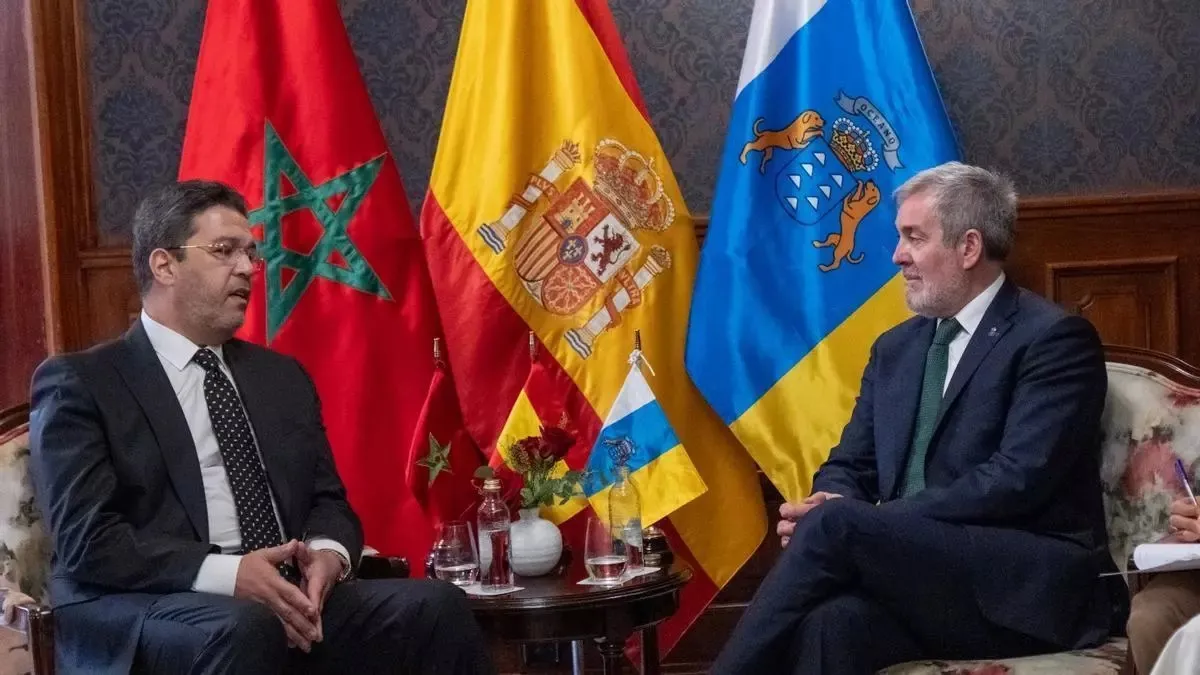
Strengthening Economic and Touristic Ties
In a significant move aimed at enhancing economic and touristic cooperation, the President of the Canary Islands government, Fernando Clavijo, recently welcomed his Moroccan counterpart from the Souss-Massa region, Karim Achengli. This meeting, held on Monday, underscores the growing importance of collaboration between these two regions in the context of Morocco's booming tourism industry. The discussions are a continuation of an official mission that took place in January in Agadir, where several cooperation agreements were signed. The current dialogue aims to expedite the implementation of these agreements across various sectors, including connectivity, trade, tourism, innovation, agriculture, and academic cooperation.
Fernando Clavijo emphasized the necessity of strengthening relations with neighboring territories, particularly Morocco, advocating for cooperation over competition. This perspective is particularly timely as Morocco's tourism sector has recently surpassed that of the Canary Islands in attracting international visitors. In response to this trend, the Canary Islands are looking to foster the creation of a shared Atlantic space that leverages economic complementarities. The Souss-Massa region is identified as a priority in the Canary Islands' external strategy due to its dynamism and substantial development potential.
Future Prospects and Strategic Sectors
Karim Achengli highlighted that this visit represents a crucial step towards building a shared future, following the commitments made earlier this year. While Clavijo refrained from quantifying the potential economic impacts of the agreements, he noted that the benefits would depend on their gradual implementation. He stressed the need to enhance maritime and air links, which are deemed essential for boosting trade and tourism exchanges. Strategic sectors identified for collaboration include the blue economy, port traffic, and sports, particularly in the context of the upcoming FIFA World Cup 2030, which Spain, Morocco, and Portugal will jointly host.
A joint technical committee will be established to monitor the commitments and evaluate their execution. Additionally, the public agency Proexca will be responsible for producing a detailed report on the economic impact of this cooperation. The Moroccan delegation's visit, which will continue until April 29, aims to deepen institutional, economic, and scientific relations between both sides of the Atlantic.
As reported by lopinion.ma.