
Unseen Developments in Israel's Defense Strategy
While the citizens of Israel remain alert to the constant threat of rocket sirens and are acutely aware of the geographical fronts they have come to know intimately, a significant enhancement to Israel's western flank is unfolding quietly within the chambers of the United States Senate. This development has not been accompanied by press conferences or announcements from government officials in Jerusalem, yet its implications are profound. Tucked away in the recently submitted Fiscal Year 2027 National Defense Authorization Act, designated as S. 4784, is Section 1268. Although it bears an unremarkable title—focused on enhancing defense cooperation with Morocco—it encapsulates one of the most pivotal legislative measures impacting Israel's strategic depth this year.
Section 1268 is not merely a proposal; it is a binding legislative directive that compels the Pentagon to deliver, within 180 days of enactment, a comprehensive ten-year roadmap aimed at transforming Morocco into the most capable military partner for the United States on the African continent. Reported by the Senate Armed Services Committee, which is chaired by Roger Wicker, this bill is poised for a crucial vote on the Senate floor, with concurrent movements in the House of Representatives.
Long-Term Implications of U.S.-Morocco Defense Ties
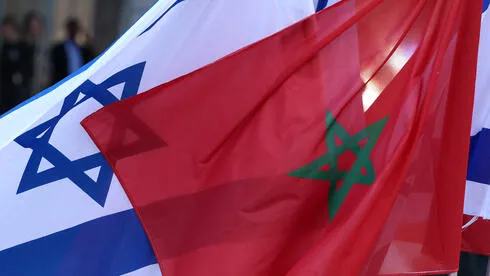
Morocco was the first Arab nation to normalize relations with Israel, a shift that included meaningful defense agreements rather than just commercial flights and trade initiatives. Section 1268 effectively solidifies this bilateral defense roadmap, which was informally agreed upon in April, into American law. This legislative action ensures that the security relationship is insulated from the fluctuations of electoral cycles, budgetary disputes, or changes in administration. In essence, Washington is proactively securing Israel's interests by embedding this initiative within its own defense planning framework, all while operating from Moroccan territory.
The geographical implications of this move are significant. As the Israel Defense Forces (IDF) engage with Iranian proxies along Israel's borders, the U.S. is methodically establishing a fortified, technologically advanced security partner at the far western edge of the Arab world. This is not a charitable endeavor; it functions as a strategic pincer movement. A Morocco that is capable of defending its own airspace and exerting influence across the Sahel region effectively diminishes Iran's efforts to establish a new front against Israel through proxy forces.
Section 1268 outlines a series of initiatives that read like a proactive strategy for countering Iranian expansion into Africa. The legislation mandates the establishment of new joint security facilities in Morocco, providing American and allied forces with logistics bases for rapid deployment throughout the Sahel and in key Mediterranean areas. It also calls for the modernization of Cold War-era airfields in Morocco to accommodate contemporary airlift and surveillance operations—an essential response to the diminished availability of American bases in West Africa following a wave of governmental shifts towards Moscow and, in some cases, Tehran.
This strategic pivot is monumental. For the past two decades, U.S. military basing strategies in Africa have primarily traversed the Sahel and the Gulf of Guinea. However, as political instability leads to the rise of governments hostile to Western interests, this framework has been eroding. Morocco now stands as a stable and willing alternative, with Section 1268 enshrining this new direction within a ten-year defense strategy.
Moreover, the bill establishes a dedicated center for drone warfare and counter-drone operations in Morocco. This provision should be particularly noteworthy for Israeli defense planners, given that Morocco has recently invested in Israeli military technology, including loitering munitions and advanced air defense systems. The integration of an American-funded drone operations hub alongside existing Israeli military assets not only benefits Morocco but also creates a collaborative testing environment for American, Moroccan, and Israeli defense systems to evolve in response to shared threats, particularly the proliferation of inexpensive drones—an issue that has already inflicted casualties on Israeli and American forces.
In addition, Section 1268 expands the scope of the African Lion exercise, the continent's largest multinational military drill, incorporating themes such as artificial intelligence and cyber warfare, alongside undersea operations designed to safeguard Atlantic shipping routes from maritime harassment that Iran has previously tested in other regions.
Another critical aspect that has largely gone unnoticed in Israeli discussions is the resource dimension embedded within Section 1268. The legislation mandates a thorough assessment of vulnerabilities within the global phosphate supply chain, of which Morocco controls approximately seventy percent of the world's proven reserves. Phosphates are vital for the production of precision munitions and modern explosives. By integrating Morocco's phosphate reserves into America's defense planning, the U.S. fortifies its position against Chinese and Russian influence over essential raw materials, ensuring that Western and Israeli arms inventories remain adequately stocked during prolonged conflicts. This consideration is far from trivial; it directly impacts ammunition security for Israel, particularly at a time when the demands of warfare are depleting resources at an unprecedented rate.
These developments are not occurring in isolation. Iran's Revolutionary Guard has been discreetly supplying the Polisario Front with drones and anti-tank weapons, intending to create distractions for Rabat and divert Western attention while Iranian interests in the region remain unchallenged. The overarching strategy pursued by Tehran is consistent across its areas of influence: to open low-cost asymmetric fronts that compel wealthier adversaries to allocate resources and focus on defense, thereby allowing Iran to extend its influence elsewhere. Section 1268 serves as a preemptive response from Washington to thwart this strategy before it can escalate. A Morocco equipped with advanced counter-drone capabilities and backed by a decade-long American commitment becomes a deterrent against Iranian destabilization efforts, as well as a buffer against Algerian maneuvers in the region.
For Israel, the implications of these developments are straightforward. Supporters in the Knesset should advocate for a swift Senate vote on this legislation and ensure that the House mirrors the ambitious objectives outlined in Section 1268 rather than diluting them during the legislative process. Additionally, Israeli defense exporters should be encouraged to deepen co-production initiatives with their Moroccan counterparts at this opportune moment when American funding and political resolve are aligned. It is vital for Israeli officials to shift their perspective on the Abraham Accords from viewing them as a diplomatic milestone of 2020 to recognizing Morocco as a burgeoning ally equipped with American backing—a partner that will readily engage without requiring extensive persuasion.
In a rapidly evolving geopolitical landscape, where Israel continuously defends the fronts visible to it, Section 1268 has quietly fortified another front some two thousand miles to the west, all accomplished without the deployment of Israeli troops or expenditure of resources.
As reported by ynetnews.com.