
Morocco's Commitment to African Security Amidst Growing Challenges
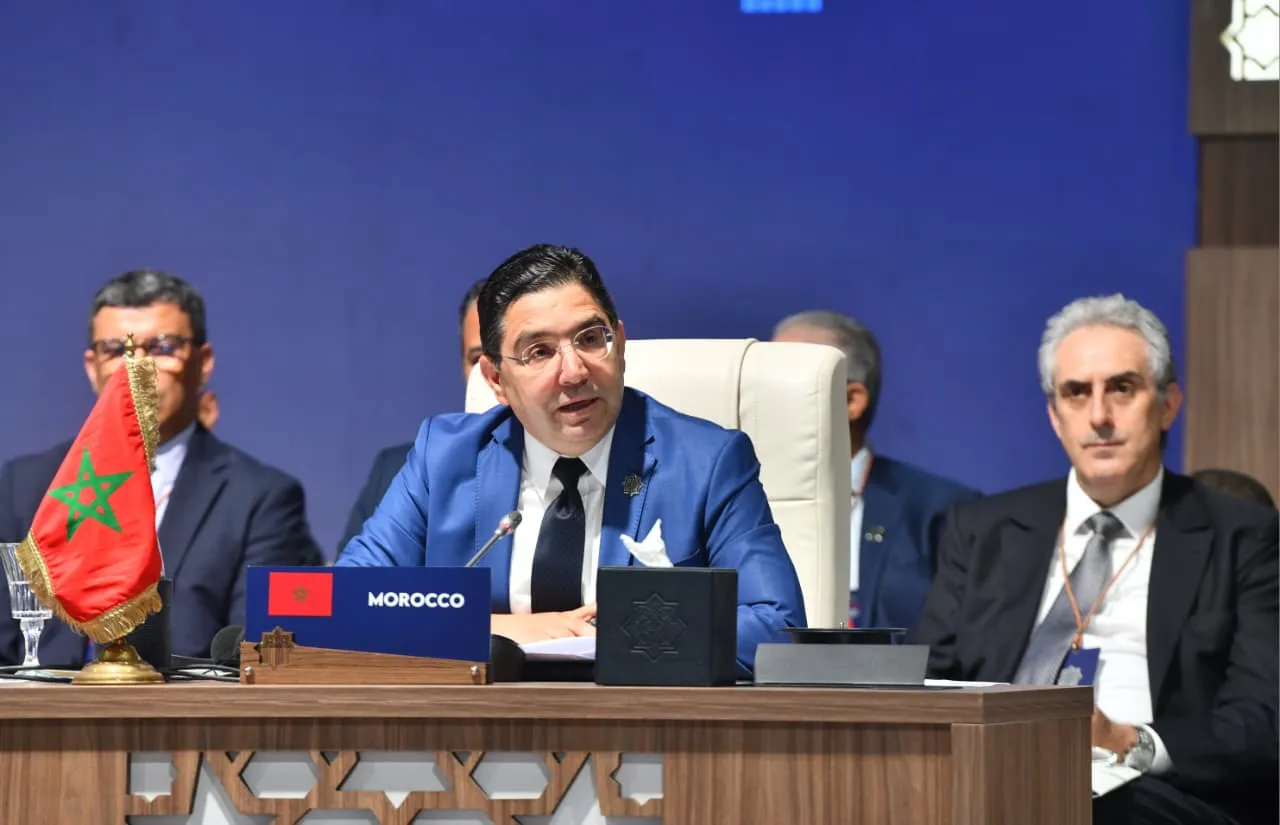
During the opening session of the 5th High-Level Meeting of Heads of Counter-Terrorism and Security Agencies in Africa, which took place in El Jadida under the co-chairmanship of Morocco and the United Nations Office of Counter-Terrorism (UNOCT), Moroccan Foreign Minister Nasser Bourita addressed critical security issues facing the continent. He shed light on the alarming rise of terrorism, the proliferation of armed conflicts, and the growing connections among terrorist groups, separatist movements, and transnational crime. Bourita also emphasized the challenges brought about by technological advancements and the implications of artificial intelligence in the security landscape.
Bourita articulated that the Royal Vision serves as a comprehensive framework for understanding the complex realities of Africa. He underscored that Morocco's African policy is rooted in a sense of belonging, stating that Africa represents more than just a neighboring region or a diplomatic choice for the Kingdom; it embodies a deep geographical, identity, political, institutional, and historical connection. According to Bourita, Morocco's active involvement in addressing terrorism on the continent is not merely an option but a fundamental duty stemming from its commitment to ensuring the safety and stability of Africa.
Highlighting His Majesty the King’s holistic approach to security, Bourita posited that responses to terrorism must encompass not only security measures but also religious, economic, and social considerations. He recognized the pivotal role of the Marrakech Platform, celebrating its fifth anniversary this year, as a vital framework for dialogue and cooperation in combating terrorism across Africa. The Platform unites heads of African counterterrorism and security agencies along with representatives from partner nations and international organizations to enhance collaboration in tackling the continent's security challenges.
In closing, Bourita called for a more pronounced African voice in the ongoing efforts to update the United Nations counter-terrorism strategy, asserting that as Africa stands at the epicenter of global terrorism, it must be central to the formulation of this strategy. He affirmed that stability serves as the foundation for development and democracy, urging participants to work collectively towards a secure and prosperous Africa.
As reported by diplomatie.ma.