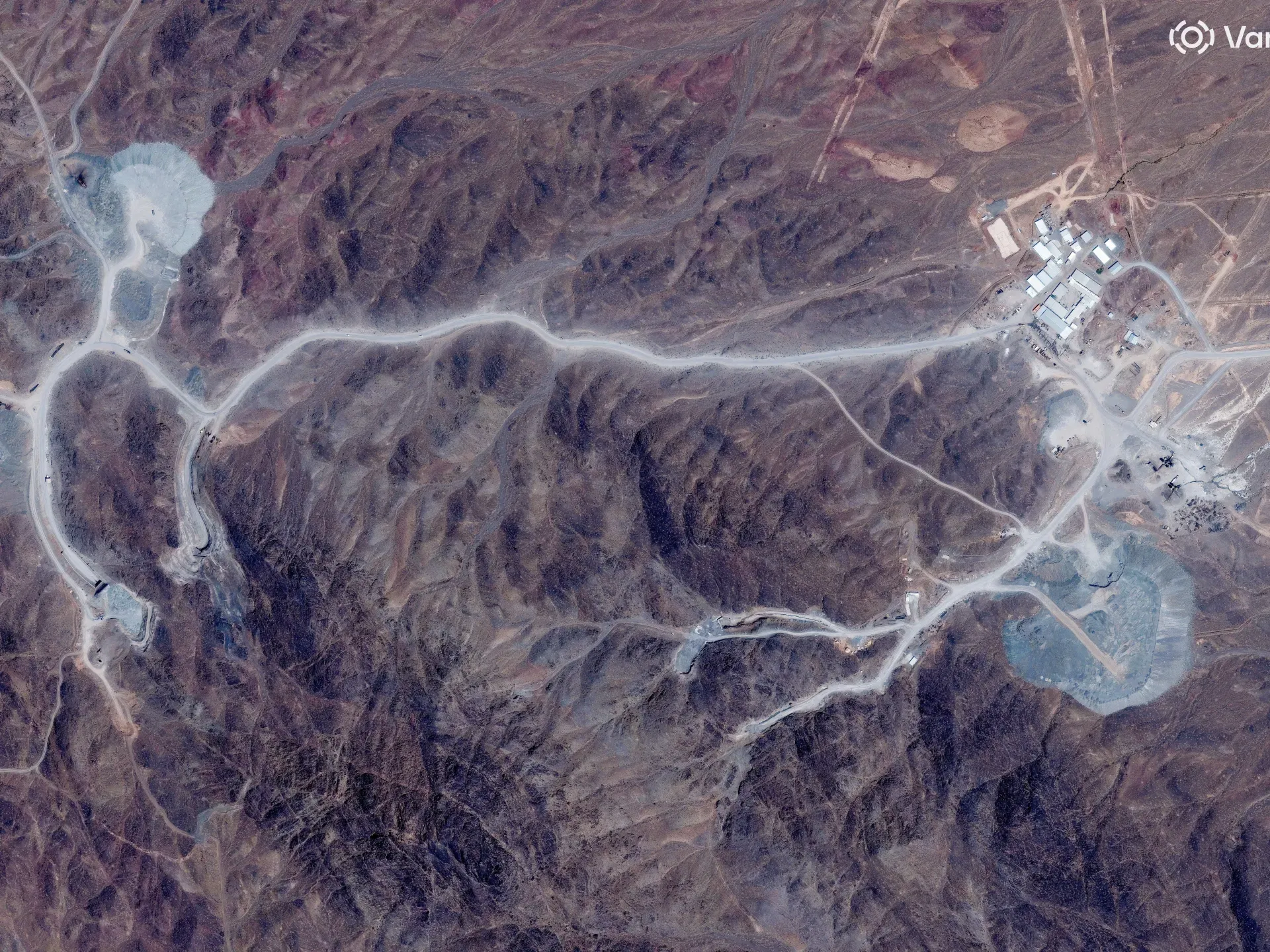

On July 26, 2026, a report surfaced regarding a significant underground complex located less than two kilometers south of Iran's Natanz uranium enrichment facility. This site, known in Persian as "Koh Kolang Gazla" or "Mountain of the Pickaxe," has drawn considerable attention due to its purported military implications. Experts assert that the complex is fortified against the strongest U.S. bunker-busting bombs, thereby raising critical questions about its actual purpose. While the Iranian government claims the site is intended for assembling and manufacturing advanced centrifuges, U.S. and Israeli intelligence agencies suspect it could serve as a clandestine facility for uranium enrichment.
The Institute for Science and International Security in the United States, utilizing satellite imagery, suggests that the complex is not yet operational and construction is ongoing, indicating a strategic development in Iran's nuclear capabilities. The facility has emerged as a primary target in threats issued by U.S. authorities during the ongoing American-Israeli-Iranian conflict, escalating tensions significantly. Notably, on July 21, 2026, then-President Donald Trump stated that the U.S. might strike the Pickaxe Mountain site "relatively soon." Iranian Foreign Ministry spokesperson Ismail Baghaei countered these claims, asserting that Washington's fixation on the site, which reportedly conducts no nuclear activities, was merely a fabricated excuse to justify potential aggression against Iran.
Strategic Location and Construction Details
Situated in Isfahan Province, approximately 220 kilometers south of Tehran and just two kilometers from Natanz, Pickaxe Mountain rises about 1,600 meters above sea level within the Zagros mountain range. The complex spans nearly one square kilometer at the mountain's base, surrounded by a security fence that connects to Natanz's perimeter. Two paved roads lead to the entrances of the tunnels, facilitating access to this heavily fortified site. The depth of the facility is estimated to be at least 100 meters beneath the mountain, making it exceptionally well-protected against military strikes. Construction began in December 2020, following a fire at the Natanz facility, which Iranian authorities attributed to a cyber sabotage event, while Western reports speculated Israeli involvement.
Political and Military Implications
The significance of Pickaxe Mountain extends beyond its physical and military dimensions; it embodies a complex political narrative. Iran maintains that the facility's purpose is strictly for the development of centrifuges, while U.S. and Israeli sources express concerns that it could act as an insurance policy for Tehran's nuclear ambitions. Intelligence assessments suggest that the tunnels are carved out of solid granite, providing an unparalleled level of protection against bombings. Conversely, Iranian officials argue that the existing narrative surrounding the site is a deceptive Israeli tactic aimed at prompting the U.S. to escalate military actions against Iran.
Israeli military radio estimates indicate that the site may contain components necessary for constructing an underground facility capable of enriching uranium to military-grade levels of 90%. However, these assessments lack independent verification, and there has been no confirmed presence of enriched nuclear material at the site. In the wake of the American-Israeli-Iranian conflict, which flared up on February 28, 2026, Trump reiterated his commitment to destroy the Pickaxe Mountain complex, emphasizing that any site suspected of being used for nuclear purposes would face severe repercussions. Experts suggest that while the site's fortifications present formidable challenges for air strikes, there may be vulnerabilities that could be exploited through ground assaults.
As reported by aljazeera.net.