Promoting Democratic Values in Upcoming Elections
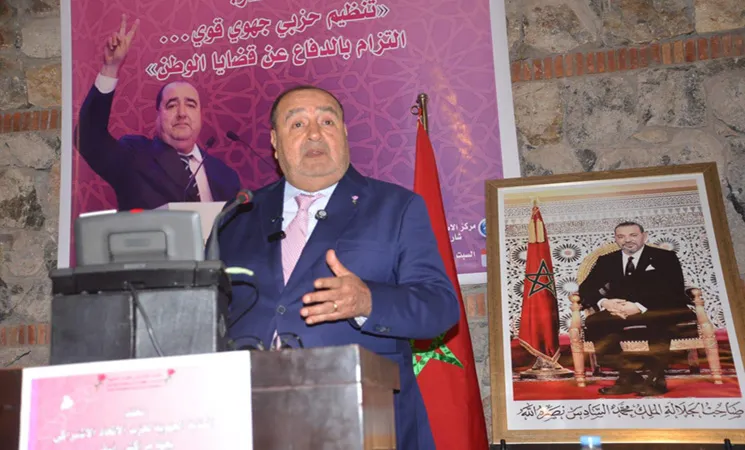
On April 25, 2026, during the inauguration of the third regional conference of the Socialist Union Party in Marrakech Safi, the party's First Secretary, Idriss Lachkar, emphasized the significance of adopting a clear democratic approach in managing the upcoming electoral processes. The conference, which took place under the banner of "A Strong Regional Party Organization... A Commitment to Defend National Issues," served as a platform for discussing the party's strategies and objectives in the context of Morocco's evolving political landscape. Lachkar indicated that the party's administrative committee had recently approved a nomination process grounded in democratic principles, reinforcing collective decision-making within party structures. He pointed out that the political bureau and the administrative committee have prioritized nominations for members of the federal parliamentary team, given their commendable performance.
Lachkar praised the parliamentary achievements of the party, which, despite having only 35 members, has secured a leading position compared to other political entities in Morocco. This is evident in terms of legislative proposals and oversight roles, as the party adopts a "responsible opposition" stance aimed at alleviating social tensions, distinguishing itself from nihilistic opposition tactics. He congratulated the federal team members for their maturity and dynamism in parliamentary activities. Furthermore, he addressed the case of Nour Eddin Ayat Haj, a parliamentarian from Qalaat Sraghna, who opted not to run for re-election, highlighting the party's acceptance of this decision only after Ayat Haj proposed a suitable alternative, thus embodying a spirit of democratic responsibility.
Addressing Political Challenges and National Issues
In his analysis of the internal political situation, Lachkar raised concerns regarding the "governmental overreach" that has disrupted institutional balance, suggesting that such behavior has significantly harmed Morocco's democratic experience. He criticized the ruling majority for minimizing the opposition's role in oversight and accountability, noting the government's failure to meet its ten commitments presented to parliament. These include objectives related to growth rates, job creation, and the alarming decline in female workforce participation, which has plummeted to 19 percent. He also underscored the government's shortcomings in social protection initiatives and poverty reduction, with inflation and the rising cost of living exerting additional pressure on the middle class.
Furthermore, Lachkar pointed out the persistent regional disparities that the government pledged to reduce to below 39 percent, yet currently level at approximately 59.3 percent. He also drew attention to the stalled education reforms and the slow legal and institutional recognition of the Amazigh language. In light of these issues, he concluded that seven of the government's commitments had not been officially fulfilled, while three were partially addressed, with none accomplished in full. Despite these criticisms, Lachkar affirmed that the Socialist Union Party is not nihilistic; it recognizes achievements attributed to royal guidance, such as the expansion of health coverage and increased public investment, although these positive indicators do not translate into improved living conditions for citizens, who continue to face rising prices and inadequate essential services.
On the international front, Lachkar noted the global context marked by instability and multiple tensions, affirming that the party maintains a balanced approach rooted in peace values. He condemned the aggression faced by Palestine, placing responsibility on the right-wing Israeli government for escalating conflicts, and stressed that advocacy for the Palestinian cause must occur on the international stage by political parties, unions, and civil society. He remarked that internal advocacy would be futile, questioning the effectiveness of lobbying efforts directed at the Moroccan government, given its historical ties to the Abraham Accords.
Lastly, Lachkar called on citizens to assume responsibility and engage in a “genuine battle for accountability and punishment,” reiterating the Socialist Union Party's commitment to defending democracy, social justice, and enhancing its role as a significant political force both nationally and internationally. In his opening remarks at the conference, regional party secretary Abdessalam Karim highlighted the organizational significance of this event as a pivotal moment for invigorating party work and addressing the profound transformations occurring in Morocco.
As reported by alittihad.info.