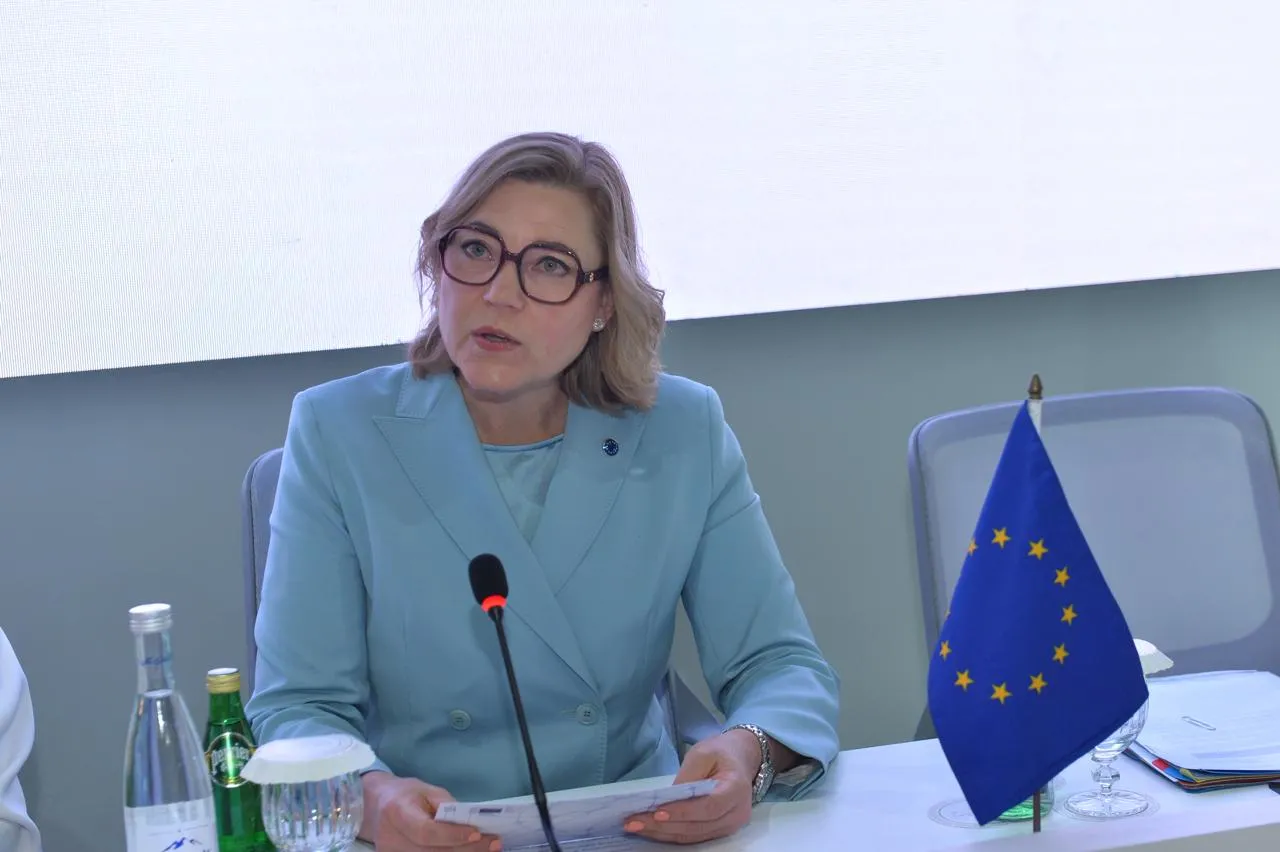

At the recent GITEX event, Médias24 had the opportunity to interview Henna Virkkunen, the Executive Vice-President of the European Commission responsible for technological sovereignty, security, and democracy. The discussion centered around the current state and future prospects of digital cooperation between Morocco and the European Union. As Rabat and Brussels celebrate three decades of partnership, the European Commission aims to deepen this relationship through a structured digital dialogue. For Brussels, Morocco is emerging as a key African hub for innovation, connectivity, and technological sovereignty, particularly through investments in infrastructure, artificial intelligence (AI), and clean energy.
During her visit to GITEX Africa Morocco, Virkkunen elaborated on the priorities of this new digital dialogue between Rabat and Brussels. On April 8, 2026, the launch of this digital dialogue was officially announced, marking a significant milestone in the long-standing partnership. Virkkunen emphasized that thirty years of collaboration reflect a solid foundation, but the current global landscape necessitates a focus on technology and digitalization as crucial components of security and competitiveness. The aim is to integrate more technological advancements into the partnership.
In conjunction with this dialogue, an administrative arrangement has been established with Morocco, where the Mohammed VI Polytechnic University (UM6P) and four European supercomputing centers signed a letter of intent. This agreement represents a starting point for collaboration, focusing on three main areas over the coming months. The first area is the collaboration on AI factories and supercomputers, which is vital for supporting startups and researchers involved in AI innovation. The second axis addresses connectivity through underwater cables, 5G networks, and future 6G infrastructure, alongside European funding opportunities through the European Investment Bank (EIB). Lastly, the third focus is on digital public infrastructures, with Morocco's ambitious plans to digitize various services.
Virkkunen also highlighted the importance of Morocco investing in its infrastructure to create its AI systems, reiterating that access to computational power is crucial for developing local technologies. She noted that there are currently 8,000 startups in the EU working on AI systems, but many face challenges due to insufficient computational capacity. The EU is investing in 19 AI factories to address these challenges, with four having signed agreements with Moroccan counterparts. As the dialogue progresses, it is expected that new topics will emerge for collaboration, particularly involving businesses and startups to ensure the entire ecosystem benefits from these advancements.
For the European Union, strengthening technological sovereignty is paramount, especially in light of the growing need for autonomy in critical sectors. The EU seeks to work with trusted partners, and Morocco's role as an innovation and connectivity hub is seen as strategically significant. The ability for countries to control their technologies, particularly regarding sensitive data localization and citizen privacy, is becoming increasingly important. Virkkunen emphasized that Morocco is in a favorable position to develop sustainable data centers and AI factories, thanks to its access to clean energy. The ambitious digitalization program currently underway in Morocco is closely monitored by the EU, indicating a promising future for cooperation.
As reported by medias24.com.