
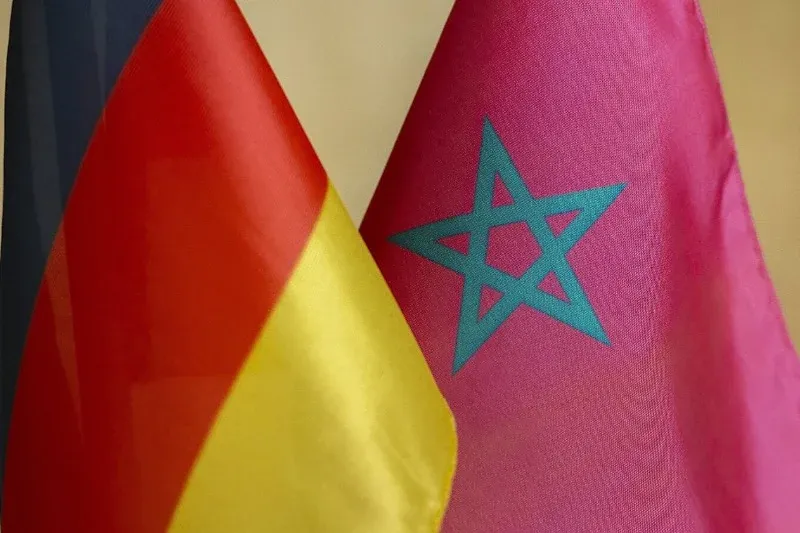

Growth of German Exports to Morocco
In 2025, German exports to Morocco reached an impressive €3.9 billion, marking a substantial increase of approximately 12% within just one year. This growth is emblematic of an increasingly structured commercial relationship, particularly in the industrial sector, with the automotive industry leading the charge. The economic ties between Morocco and Germany are becoming stronger, as highlighted in the August-September 2026 edition of the publication _Außenwirtschaft aktuell_ by the Stuttgart Chamber of Commerce and Industry, which emphasizes the potential of the Moroccan market and the upward trajectory of exchanges with the German economy.
Industrial Demand and the Automotive Sector
The statistics from the Stuttgart Chamber of Commerce reveal that German exports to Morocco have indeed surged by around 12% in 2025, with a significant portion of this increase attributed to products closely linked to Morocco's production apparatus. Notably, vehicles and automotive parts accounted for about €900 million, while machinery and electrical equipment also ranked among the top export sectors from Germany to the Kingdom. The structure of these exchanges indicates a clear evolution in the bilateral relationship, as a considerable share of German exports to Morocco consists of capital goods, components, and products tailored for industrial use. This trade configuration directly supports the development of Morocco's installed production capacities.
Central to this dynamic is the automotive sector, which plays a pivotal role in the economic relationship between the two nations. With approximately €900 million in exports, vehicles and automotive parts represent one of the primary export flows from Germany to Morocco. This demand aligns with the growth of a burgeoning automotive ecosystem, which has emerged as one of the key drivers of Morocco's manufacturing industry. Notably, the chamber has indicated that Morocco has now surpassed South Africa as the leading vehicle producer in Africa, signifying the Kingdom's increasing significance within the continent's automotive value chains and its growing integration into European industrial circuits.
The rise in German exports must be viewed in the context of the expanding capabilities of Morocco's automotive industry. The increase in production volumes generates a growing demand for machinery, equipment, components, and industrial technologies. This trend creates a favorable environment for German companies specializing in capital goods and industrial solutions. The automotive sector's development necessitates a demand that extends beyond mere vehicle manufacturing, involving suppliers from various sectors, including electrical, mechanical, electronic, automation, and production equipment.
Thus, the nature of these exchanges reflects a complementary relationship between two industrial frameworks. On one side, Morocco is enhancing its production capabilities and reinforcing its integration into European value chains. On the other, the German industry provides a substantial part of the equipment, components, and technologies essential for this capacity enhancement.
According to the Stuttgart Chamber of Commerce and Industry, this transformation contributes to positioning Morocco as an increasingly attractive market for German enterprises. The publication allocates a section to Morocco in its Africa-focused dossier, portraying the Kingdom as an underestimated growth partner. The strategic geographical positioning of Morocco further amplifies this appeal, with its proximity to European markets and the development of an export-oriented industrial base strengthening its attractiveness for companies engaged in international supply chains.
The implications extend beyond mere commercial flows. The growth in German exports to Morocco also signifies an intensification of industrial exchanges between the two economies. The machinery, electrical equipment, vehicles, and automotive parts exported from Germany partially cater to the needs of Morocco's developing production apparatus. This complementarity is particularly evident in the automotive sector, yet it is poised to expand into other industrial segments as Morocco's production fabric diversifies.
In summary, the dynamics observed in 2025 serve as a clear indicator of the growing interest that Morocco represents for German companies. The €3.9 billion in exports registered during the year reflects not only sales aimed at the Moroccan market but also a significant portion of flows linked to the needs of the industry and Morocco's integration into international production chains. Today, the automotive sector stands as the primary anchor of this relationship, where the substantial share of vehicles and automotive parts in German exports, coupled with Morocco's newfound standing in African automotive production, illustrates the deepening industrial exchanges. For German companies, Morocco presents not just a commercial outlet but also an industrial base interconnected with Europe, while for Morocco, the development of these relations opens additional avenues to attract suppliers, equipment manufacturers, and technologies that can enhance the local depth of value chains.
As reported by fr.hespress.com.

