
EU and Morocco Reinforce Security Ties
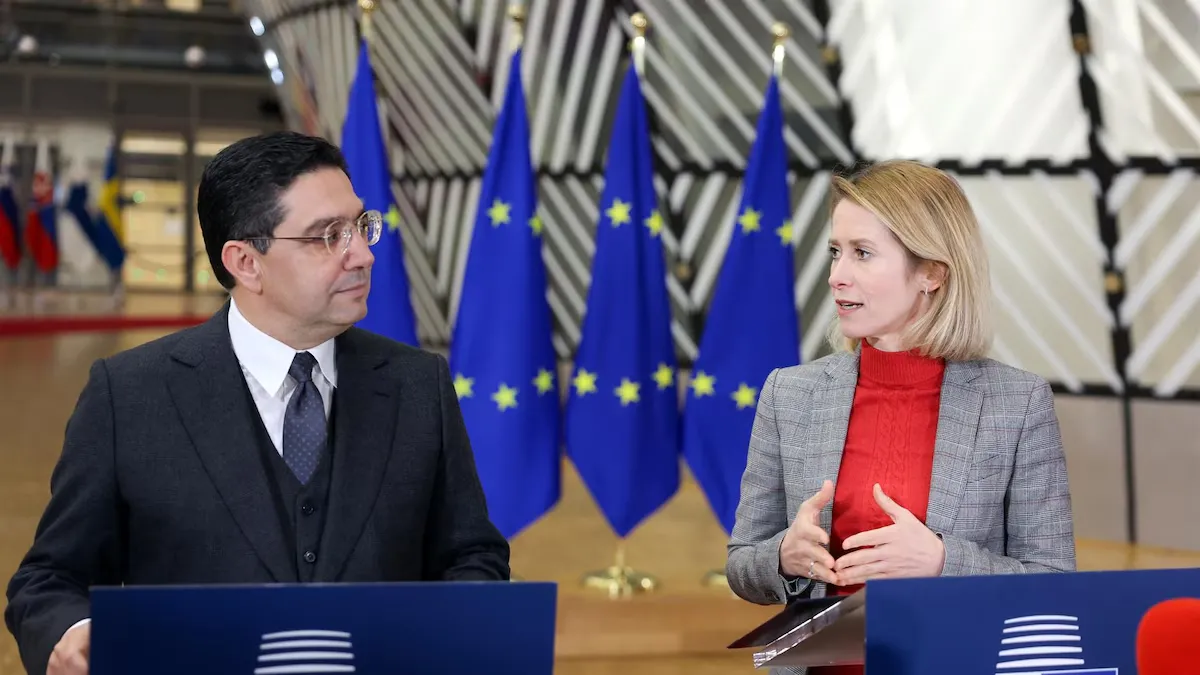
On Tuesday, the European Union (EU) and Morocco convened in Brussels for a significant meeting aimed at enhancing their collaboration in the realms of peace and security across the Maghreb and Africa. This dialogue particularly focused on critical issues such as combating terrorism and bolstering cybersecurity, while simultaneously reaffirming both parties' commitment to multilateralism, the United Nations, and adherence to international law.
This meeting marked the second High-Level Security Dialogue between the EU and Morocco, following a similar initiative held in Rabat in May 2024. It also came on the heels of the EU-Morocco Association Council that took place in January of this year in the EU's capital, occurring just months prior to the onset of a crisis in Ceuta.
During the dialogue, delegations exchanged perspectives on their respective peace and security initiatives within the Maghreb and broader African context, including the Sahel region. Discussions also encompassed security dynamics in the Middle East, touching on sensitive topics regarding Iran, the occupied Palestinian territories, Lebanon, Syria, and the ongoing situation in Ukraine, as noted in a statement from the European External Action Service (EEAS).
Collaborative Efforts for Long-term Stability
The EU was represented by Romanian diplomat Cosmin Dobran, the EEAS Director for Peace, Partnerships, and Crisis Management, while Morocco's delegation was led by Ismail Chekkori, the Director of Global Affairs at the Moroccan Ministry of Foreign Affairs. The two officials delved into several areas of collaboration, including the fight against terrorism and violent extremism, international cybersecurity coordination, and issues surrounding non-proliferation and disarmament.
Both representatives reiterated their shared commitment to maintaining an international order grounded in norms, supporting effective multilateralism, and upholding the role of the United Nations and its charter, alongside a respect for international law. They agreed to deepen their cooperation in international and regional forums, particularly within the Euro-Mediterranean area and with their African partners, to foster long-term stability, peace, and security.
According to the EEAS, this High-Level Security Dialogue between the EU and Morocco is held periodically, alternating locations between Rabat and Brussels.
The timing of this meeting is particularly noteworthy, occurring months after a significant influx of migrants from Morocco into the autonomous city of Ceuta, a situation that has led Brussels to recognize Rabat as a key partner for the EU, especially in terms of migration cooperation.
During this period, the European Commission has advocated for collaboration with Moroccan authorities to combat irregular migration and human trafficking networks, while also seeking Morocco's assistance in facilitating the return of individuals who do not have the right to remain in European territories.
In her State of the Union address on September 16, European Commission President Ursula von der Leyen directly addressed the people of Ceuta, stating that "the border of Ceuta is the border of Europe," and affirming that "Europe will be there" for them, emphasizing that all external borders are indeed European borders. She reinforced that, "Ceuta is Spain. Ceuta is Europe. And Europe will be there for you."
As reported by infobae.com.