
In a world increasingly threatened by transnational crime, international security and judicial cooperation have become essential. However, the effectiveness of such collaboration heavily relies on the mutual trust between nations and a strict adherence to bilateral agreements and legal procedures. Recent events have highlighted that turning sensitive security issues into material for leaks and media exploitation can disrupt this vital cooperation.
This disruption was recently illustrated by a French media campaign that relied on an internal document attributed to the National Police's Fugitive Search Unit, which propagated a misleading narrative suggesting that Morocco has become a "haven" for fugitives from justice. Addressing these claims does not necessitate engaging in futile debates; instead, it requires a focus on hard statistics and international law principles to understand the stark contrast between institutional security protocols and sensational journalism that preys on fragmented information devoid of objective analytical foundations.
Debunking the "Safe Haven" Myth
Attempts by certain factions in France to promote the idea of Moroccan authorities being lenient towards internationally wanted individuals fall apart when one examines the substantial daily efforts undertaken by Moroccan security forces in their interactions with Interpol's Red Notices. Official statistics revealed since the beginning of 2020 indicate a massive endeavor that cannot be overlooked. During this period, nearly 4,568 international search warrants issued by the French judiciary were processed and integrated into Morocco's national databases automatically and promptly, reflecting a security vigilance and strategic response that places the tracking of fugitives at the forefront of priorities.
To illustrate the effectiveness of these efforts, the same security source highlighted the results of arrests, confirming that the Central Directorate of National Security and the General Directorate of Territorial Surveillance managed to apprehend 124 individuals subject to French search warrants. In contrast, French authorities arrested only 47 individuals wanted by Moroccan justice, indicating a significant imbalance in the reciprocal treatment of fugitives. Furthermore, regarding extraditions, Morocco demonstrated unwavering commitment to bilateral agreements by handing over 101 individuals to French authorities, while only receiving 16 suspects back from Paris. These stark figures leave no room for doubt and fundamentally dismantle the "haven" hypothesis, affirming Morocco's leading role in combating organized crime compared to its partners.
It appears that the real issue lies not in the lack of cooperation but in the attempts by some French parties to shift the discussion from judicial corridors and institutional security communication channels to media outlets and television screens. The bilateral cooperation regarding the apprehension of fugitives is governed by clear international legal protocols and judicial channels, which cannot be managed through the leak of incomplete and contextually stripped data to the press.
Leaking internal documents from the French police's judiciary department and stripping them of their legal context reflects one of two scenarios: either a lack of understanding of international cooperation mechanisms, or a deliberate attempt to undermine the efforts of a strategic partner. Effective security work necessitates confidentiality, trust, and respect for procedures, not the creation of media bubbles that base their conclusions on a complete ignorance of the rules and regulations governing bilateral cooperation.
The Crisis of Incomplete Files
One of the most significant misrepresentations propagated by French media has been the focus on the failure to extradite certain detainees, highlighting the importance of legal culture, which seems to have been deliberately overlooked. As is internationally recognized, Moroccan law prohibits the extradition of Moroccan citizens or dual nationals to foreign countries, a sovereign principle upheld by most democracies, including France itself. However, this prohibition does not imply an escape from justice; rather, it necessitates the application of the "official complaint procedure," which implies that these detainees are tried in Moroccan courts based on the files submitted by the requesting state.
The paradox becomes evident when the security source contacted by the newspaper revealed that out of 53 Moroccan nationals detained based on French warrants, only 33 formal complaint files were forwarded by French judicial authorities. This indicates that the obstacle to proceeding with the judicial follow-up for several wanted individuals is not the "laxity" of Moroccan authorities but rather the administrative sluggishness or delays of the French side in submitting official files and complaints within the stipulated timelines, as per bilateral agreements. These individuals were tried in Morocco immediately upon receipt of the 33 files, reinforcing that the ball was in France's court and that the delay originated from the party currently voicing grievances through media channels.
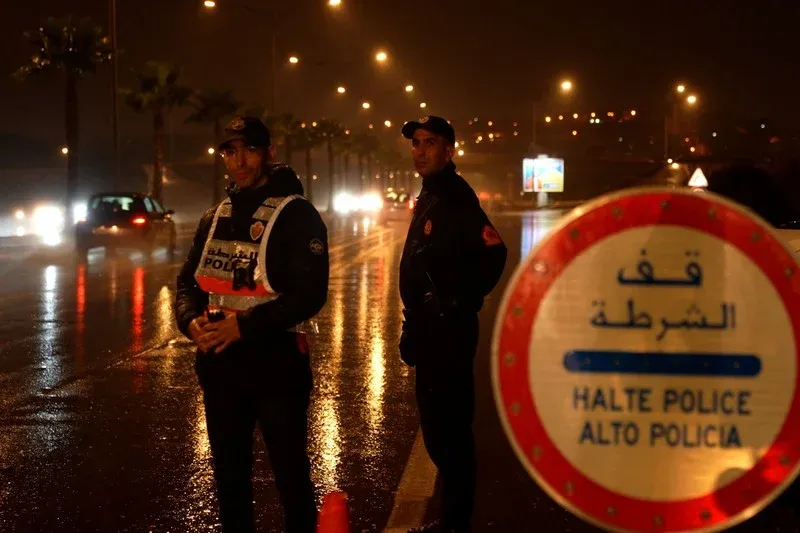
Morocco's commitment to combating transnational crime is not a seasonal obligation nor one that awaits evaluations from overseas media. This ongoing dynamic is evidenced by the continuous execution of precise security operations targeting internationally wanted individuals on Moroccan soil. Recent successful campaigns in major cities like Marrakech and Casablanca have led to the arrest of dozens of fugitives under international warrants related to drug trafficking, money laundering, and mafia networks.
These arrests, achieved through high-level coordination, affirm that Moroccan security agencies are consistently combing through national territory, preventing Moroccan cities from becoming transit or settlement points for any international criminal activities. It is clear that the French media's handling of statistical information has been selective, generalized, and lacking in sound professional foundations. Morocco has undeniably demonstrated, through documented figures and strict field interventions, its unwavering commitment to pursuing fugitives from justice and refuses to be dragged into cheap media contests.
Successful security cooperation necessitates respect for national laws, expedited judicial procedures concerning the dispatch of extradition files and official complaints, and a move away from a sense of superiority and the leaking of internal documents to cover up internal administrative shortcomings. Morocco will remain a reliable partner in the international security equation, but it requires engagement through official and institutional channels, far removed from the noise of the press and hasty conclusions.
As reported by hespress.com.