
Reaffirming Diplomatic Ties Amidst Migration Challenges
On September 24th, during the United Nations General Assembly in New York, Moroccan Foreign Minister Nasser Bourita met with his Spanish counterpart, José Manuel Albares, to discuss the bilateral relations between Morocco and Spain. This meeting provided Bourita with a platform to address criticism from certain Spanish political figures regarding Morocco's management of migration flows. The message from Rabat was notably assertive, as Bourita stated, "Partnerships cannot be built on unfounded accusations and sterile rhetoric." He emphasized that the issue of irregular migrants and unaccompanied minors not being returned to Morocco should be directed at Spain, rather than placing the blame solely on Morocco. This statement underscored Morocco's stance that while cooperation is welcome, it should not be accompanied by constant scrutiny and blame.
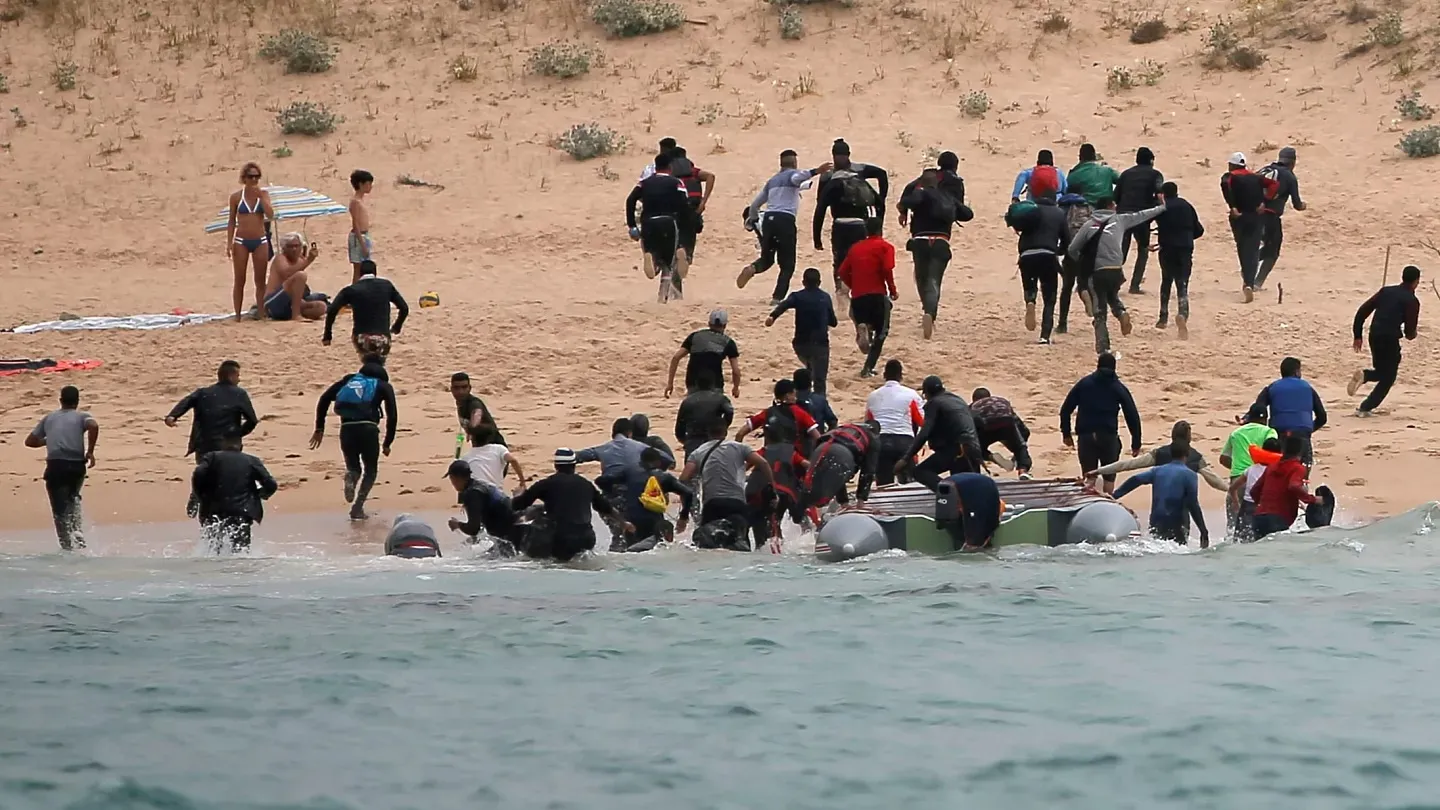
Historically, the European discourse on immigration has often relegated Morocco to a singular role: that of a barrier preventing migrants from reaching European borders. This simplistic view fails to acknowledge the complex reality that Morocco is not just a transit country but also a place of origin and settlement for thousands of sub-Saharan migrants. Morocco faces its own challenges in managing these migration flows and combating human trafficking networks. Moreover, sustainable migratory cooperation with Spain cannot hinge solely on a subcontracting logic, where Madrid seeks to secure its European borders while expecting Rabat to handle the upstream responsibilities. This outdated perspective is increasingly being questioned.
Migration as a Domestic and Foreign Policy Issue
Looking across the Strait, it is evident that immigration in Spain has evolved into a significant internal political issue, transcending mere foreign policy concerns. Ceuta and Melilla, two Spanish enclaves in North Africa, play a critical role in this discourse. In early September, Albares described their borders as a strategic frontier for the European Union, and shortly thereafter, Madrid proposed a series of measures aimed at enhancing their European integration. Consequently, each influx of migrants can swiftly become a political flashpoint, often putting the relationship with Rabat at risk amid Spanish political debates.
Morocco is a valuable neighbor when it comes to security cooperation, but it can also become a convenient scapegoat when issues arise. The diplomatic crisis of 2021 highlighted the potential consequences of misunderstandings between the two nations. Since then, Rabat and Madrid have adopted a new approach characterized by mutual respect, dialogue, and commitment to avoid unilateral initiatives that could spark further crises. Beyond the contentious migration issue lies a broader question regarding the nature of the Morocco-Spain relationship: Is it still asymmetrical, with Morocco expected to play a subordinate role in safeguarding European borders, or has it evolved into a strategic partnership where both countries recognize each other's interests and red lines?
The economic and diplomatic transformations witnessed in recent years strongly suggest the latter. While migration flows are a reality, Spain, like any sovereign state, has the right to protect its borders. However, Morocco equally asserts its right to demand that each migration challenge not be turned into a trial of its cooperative efforts. Bourita has reiterated Morocco's willingness to continue dialogue and uphold the gains from the 2022 roadmap, but he has also set a clear boundary: the partnership must entail reciprocal responsibilities, a sentiment that Madrid must also acknowledge.
As reported by laquotidienne.ma.