The strategic partnership between Morocco and Russia has experienced a steady and successful evolution over the years, with significant milestones marking its progress. According to Vladimir Baibakov, the Ambassador of the Russian Federation to Morocco, this partnership is built on a foundation of mutual respect and non-interference in each other's internal affairs, while also taking into account cultural and national values as well as the priority interests of both nations. In an interview with the Moroccan News Agency (MAP) commemorating the tenth anniversary of the signing of the "Deepened Strategic Partnership" between Morocco and Russia, Baibakov highlighted the ongoing momentum of this alliance, which continues to expand towards broader and more ambitious perspectives.
Reflecting on the historical context of this partnership, Baibakov recalled that the strategic relationship was first established in 2002 when HM King Mohammed VI and President Vladimir Putin signed a pivotal agreement during the King's initial visit to Moscow. The partnership was further deepened during a subsequent visit by the King on March 15, 2016, where both leaders signed a declaration aimed at advancing their strategic cooperation along with several other bilateral agreements. These agreements have fostered a robust political dialogue across diverse fields, which is evidenced by the active participation of high-level Moroccan delegations in significant events such as the Russia-Africa Summits held in Sochi in 2019 and in Saint Petersburg in 2023.
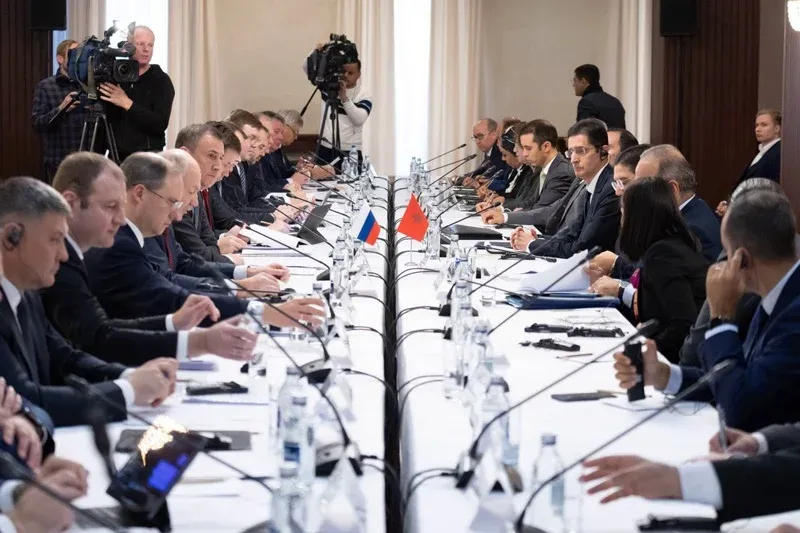
Baibakov emphasized Morocco's position as one of Russia's key trade and economic partners in Africa. The recent 8th meeting of the Russian-Moroccan Intergovernmental Joint Commission for Economic, Scientific, and Technical Cooperation, which took place in Moscow last October, highlighted the signing of a new agreement focusing on maritime fisheries, underscoring the commitment of both nations to enhance their economic collaboration. In addition to economic ties, the partnership has seen remarkable growth in parliamentary, sporting, and cultural relations, as well as in educational cooperation. Baibakov welcomed the increasing number of tourists traveling between the two countries, a trend made possible by the introduction of new direct flights operated by Royal Air Morocco.
Moreover, the ambassador discussed the collaborative efforts in counter-terrorism, which aim to promote security and stability across the region, including the Sahelo-Saharan zone. He pointed out that Morocco's support for the United Nations Office of Counter-Terrorism (UNOCT), which has established a regional office in Rabat, is an integral part of this partnership. The strengthening of the tripartite partnership involving Russia, Morocco, and Africa plays a crucial role in solidifying bilateral relations and fostering the development of the African continent. Such initiatives serve as effective platforms for political dialogue rooted in equality and mutual benefit, which is pivotal for both Russia and Africa as they seek to enhance cooperation.
Furthermore, Baibakov highlighted Morocco's status as a leading investor on the African continent, pointing to three significant initiatives launched by HM King Mohammed VI aimed at promoting economic development across Africa and the Sahel. These initiatives include the Atlantic Royal Initiative, which focuses on enhancing transport, infrastructure, and intra-African trade, and seeks to create a platform for Atlantic coastal countries to foster security and stability while promoting economic prosperity. The Royal Initiative to provide Sahel countries with access to the Atlantic Ocean emphasizes the importance of Morocco's infrastructure, such as highways and railways, in creating new transportation and logistical opportunities. Additionally, the Africa-Atlantic gas pipeline project is positioned to deliver sustainable energy resources, which is seen as a vital component for regional economic development and cooperation.
Looking ahead ten years after the signing of the deep strategic partnership, Baibakov expressed optimism about the untapped opportunities and promising prospects that lie ahead. He noted that the deep-rooted friendship between the peoples of both nations, combined with the dynamic nature of their national economies, will continue to drive the partnership forward. Both Morocco and Russia are committed to enhancing their multifaceted cooperation, with Russian companies showing increasing interest in local investment projects across various sectors, including agriculture, water management, pharmaceuticals, construction, and tourism, as well as major digital transformation initiatives.
The ambassador underscored the necessity of establishing a reliable and modern logistical and financial infrastructure to support this cooperation, a topic that was thoroughly discussed during the recent joint commission meeting held in Moscow. He also emphasized the promising prospects for future collaboration, particularly in technical fields, highlighting that the bilateral agreements signed during the Sovereign's visits to Moscow have been successfully implemented. Additionally, he pointed to the potential of sports, especially football, as a vital area for strengthening the strategic partnership, particularly with Morocco gearing up to host the FIFA World Cup 2030 alongside Spain and Portugal.
As reported by en.hespress.com.