
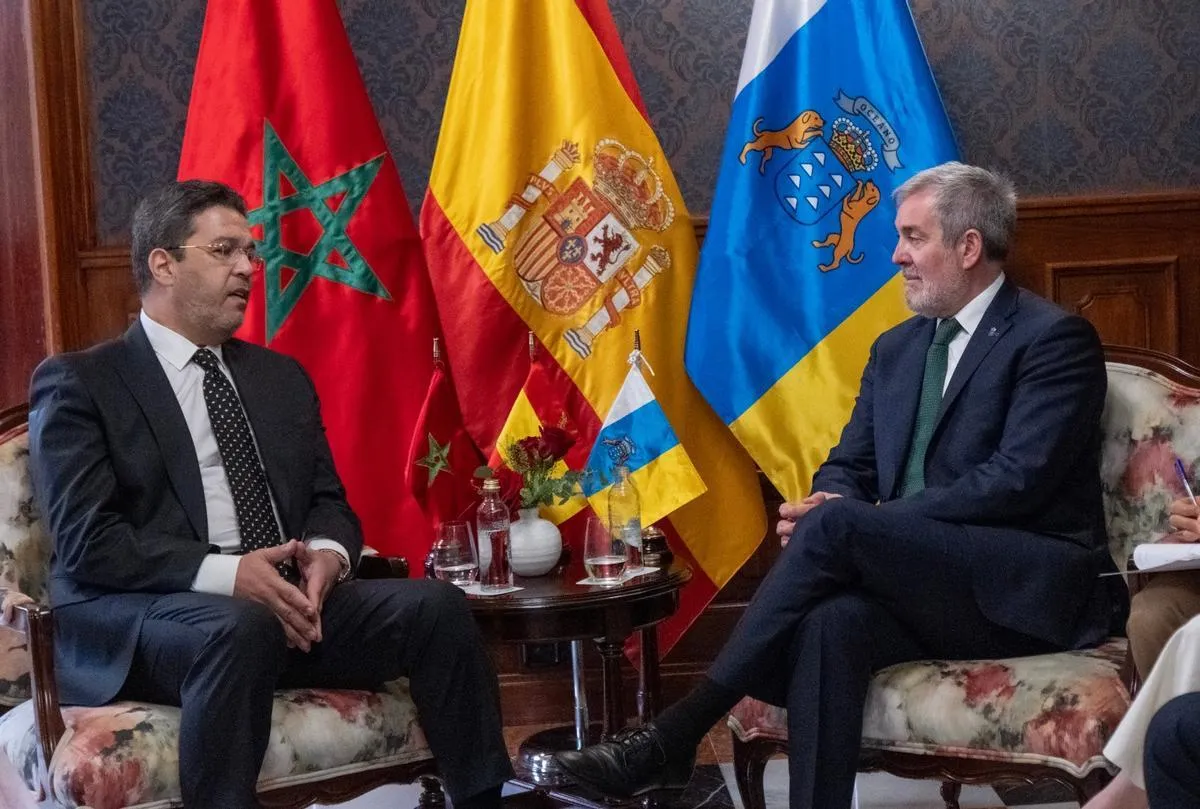

Canarias and Souss Massa: A Partnership for Progress
The President of the Canary Islands, Fernando Clavijo, met with Karim Achengli, the President of the Souss Massa Regional Council, during an official visit from the Moroccan delegation to the islands. Clavijo emphasized that isolation from the rest of the world is a misguided approach, advocating instead for collaboration between the two regions. This meeting builds on a previous institutional mission led by Clavijo in Agadir, where ten collaboration agreements were signed just three months prior. Both leaders are now focused on implementing these agreements, particularly in areas such as connectivity, trade, tourism, innovation, agriculture, and academic cooperation.
During the meeting, Clavijo highlighted the current global context, marked by the ongoing war in Iran, which serves as a reminder of the interconnected world we inhabit. He underscored the importance of strengthening neighborly relations, asserting that cooperation with Morocco should be prioritized over rivalry. Despite concerns about Morocco's economic growth, the Canary Islands government aims to create a shared Atlantic space that offers opportunities in various sectors, including connectivity, trade, tourism, innovation, agriculture, academia, and sports.
Economic Prospects and Collaborative Opportunities
In addressing the economic impact of the mission, Clavijo refrained from providing specific figures, noting that the results of these agreements would only be measurable once they are put into action. He acknowledged the clear intention to enhance maritime and air connectivity between the two regions, deeming it essential for trade relations, including the balance of trade. He pointed out tourism, port traffic, and the blue economy as key areas ripe for development.
Clavijo further recognized Morocco's robust economic growth and its increasing openness to the tourism sector, stressing the need to evaluate how the commercial agreements forged between the two regions materialize in the medium term. He also identified sports as a significant area for potential collaboration, particularly in light of the upcoming 2030 FIFA World Cup, which will be jointly hosted by Spain, Morocco, and Portugal. Clavijo stated, "The 2030 World Cup presents an opportunity to exchange experiences, promote training, and showcase the capabilities of our territories on a global stage."
Moving forward, Proexca, a public entity affiliated with the Canary Islands’ Department of Economy, Knowledge, and Employment, will prepare a detailed report on the economic scope of this mission. To ensure effective follow-up on the commitments made, both parties will establish a technical commission to measure the degree of compliance and benefits arising from the agreements finalized during this official visit, which will last until April 29.
This agenda is a direct continuation of the initiatives launched in January in Agadir, where a Canary Islands delegation led by Clavijo signed ten collaboration agreements and a memorandum of understanding with the Souss Massa Region. These agreements were aimed at strengthening institutional, economic, academic, scientific, technological, and sporting cooperation between both sides of the Atlantic. This initial meeting was heralded as the largest institutional and business mission organized by the Canary Islands in that Moroccan region to date, and now, three months later, discussions are returning to the islands with a work agenda focused on translating intentions into tangible projects.
As reported by eldia.es.
