
Historic Diplomatic Advancements Between Israel and Morocco
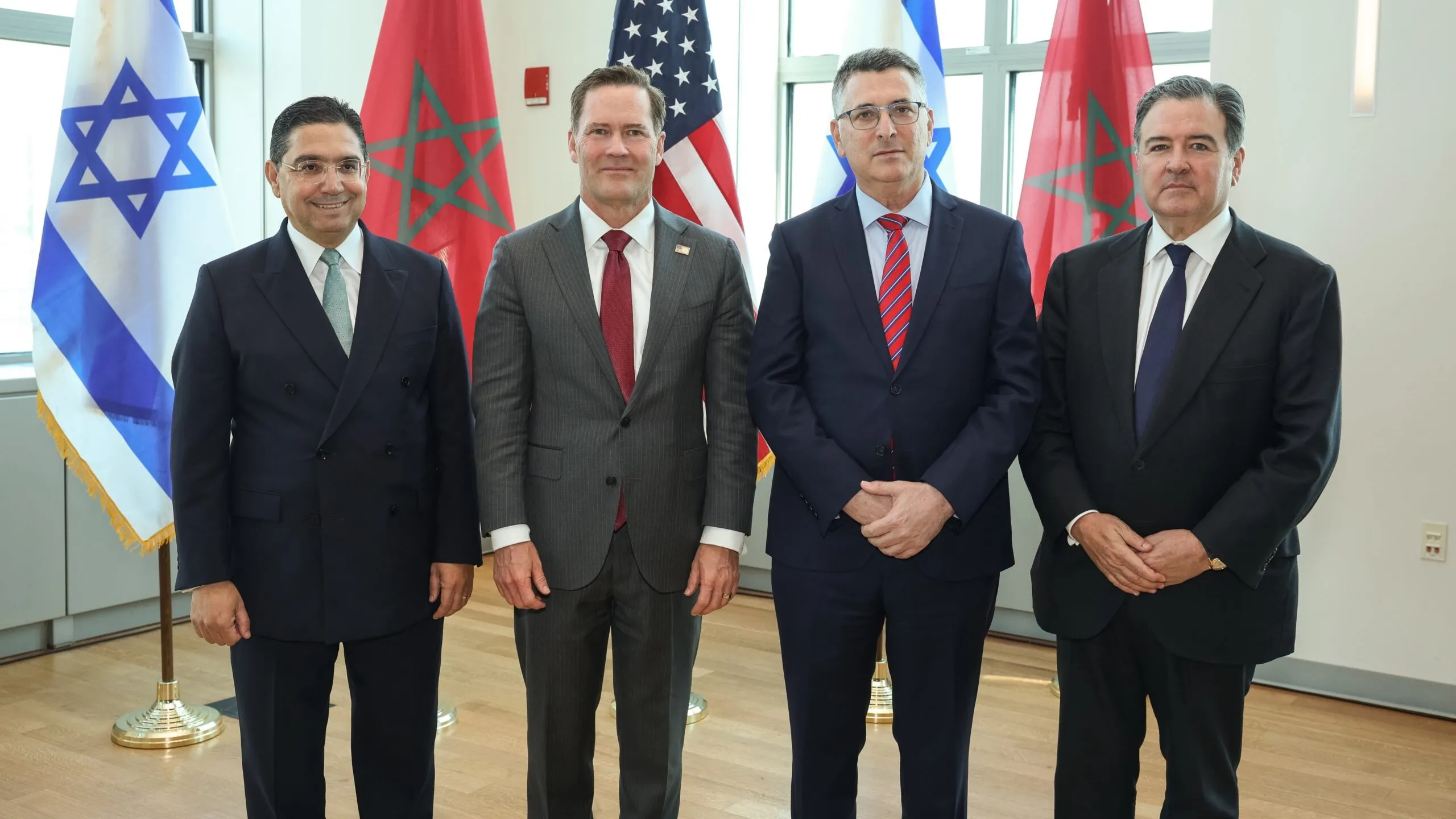
On September 16, during a trilateral summit held at the residence of U.S. Ambassador to the United Nations, Mike Waltz, in New York, Israel and Morocco announced a significant upgrade to their diplomatic relations. This upgrade includes the elevation of their diplomatic missions to full embassies and the appointment of ambassadors. The event, which coincided with the annual General Debate of the UN General Assembly, saw discussions between Israeli Foreign Minister Gideon Sa’ar and Moroccan Foreign Minister Nasser Bourita, emphasizing their commitment to enhancing bilateral relations through a series of strategic initiatives.
Observers have noted that this meeting underscores both countries' dedication to the Abraham Accords, which aim to foster peace and cooperation in the region. David Aaronson, a visiting scholar at the Heritage Foundation and a former senior advisor to Israel's Minister for Regional Cooperation during the signing of the Abraham Accords, remarked that the high-level gathering, even amidst challenging geopolitical circumstances, serves as a testament to the strength of the accords and the legacies of figures such as His Majesty King Mohammed VI, former President Donald Trump, and Prime Minister Benjamin Netanyahu.
New Agreements and Economic Prospects
As part of their discussions, Israel and Morocco have committed to finalizing agreements on investment protection and avoiding double taxation by the end of this year. Additionally, they plan to expand air travel between the two countries, with Moroccan airlines resuming direct flights for the first time since October 7, 2023. This resumption of flights is expected to facilitate an increase in tourism, which has already seen a 70% rise in trade between Israel and Morocco during the first half of 2026. Sa’ar emphasized that the declaration signed during the summit outlines practical avenues for deepening the relationship for the benefit of both nations, highlighting the long-standing and rich historical ties between the Moroccan and Jewish peoples.
Aaronson further noted that while these relations are being strengthened, they are not new; Jewish communities have existed in Morocco for nearly 2,000 years, and the Moroccan constitution acknowledges the 'Hebrew roots' of the country. In Israel, close to a million people of Moroccan descent reside, and recent legislative efforts have been made to preserve Moroccan heritage within national institutions. A crucial factor in the success of these diplomatic developments was Netanyahu's recognition of Moroccan sovereignty over Western Sahara in July 2023, which Aaronson described as a wise investment in the bilateral relationship that has yielded substantial benefits.
Morocco historically views Western Sahara as part of its territory and seeks international acknowledgment of its sovereignty over the region, a stance challenged by the Polisario Front, a nationalist movement advocating for the territory's independence. Morocco became the fourth Muslim nation to join the Abraham Accords, signing a joint declaration with the United States and Israel on December 22, 2020. The United Arab Emirates and Bahrain were the first to join, followed by Sudan, which announced its participation shortly thereafter.
The recent meeting of Abraham Accord countries, which took place on the sidelines of the UN General Assembly, marked their first gathering in over three and a half years. The N7 Foundation hosted a roundtable that included U.S. Secretary of State Allison Hooker and her counterparts from Israel, the United Arab Emirates, Bahrain, Morocco, and Kazakhstan, the latter attending an event under the accords for the first time.
Mordechai Kedar, a senior research fellow at the Begin-Sadat Center for Strategic Studies at Bar-Ilan University, commented that the relationship between Morocco and Israel is built on much stronger foundations compared to Israel's agreements with Egypt and Jordan, where normalization of relations is lacking. He stated that the legitimacy of Morocco's monarchy is a significant factor that differentiates it from many other Arab nations, enabling the king to implement such policies despite potential opposition from certain Islamic circles within Morocco. Kedar expressed optimism that the Abraham Accords would endure and flourish, as long as they serve the interests of both parties.
As reported by israelheute.com.