
Wallonia-Brussels Celebrates Annual Fêtes de la Wallonie in Rabat
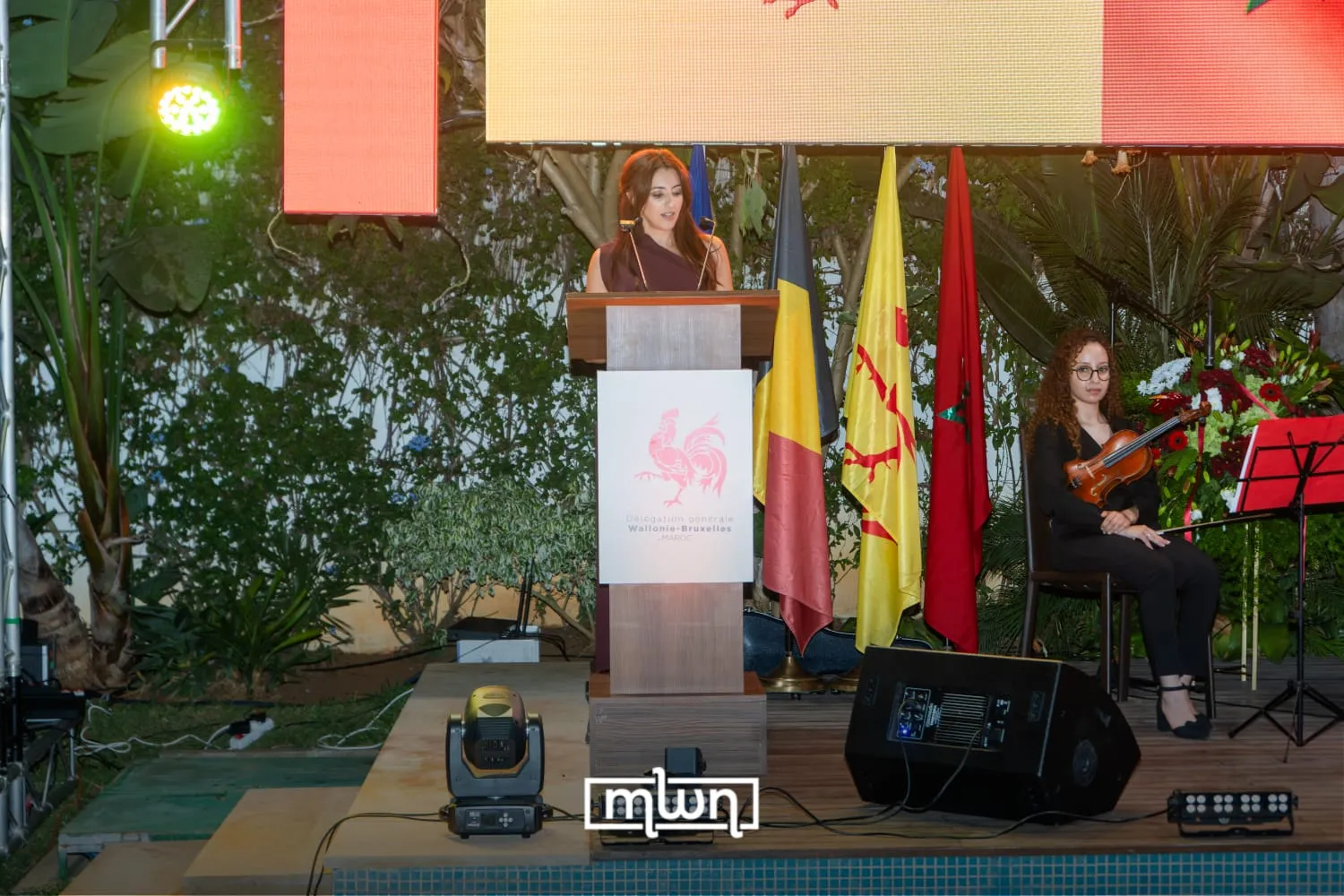
The Wallonia-Brussels General Representation in Morocco recently organized a reception in Rabat to commemorate the annual Fêtes de la Wallonie and Fédération Wallonie-Bruxelles. This significant event brought together a diverse group of attendees, including institutional representatives from both Belgium and Morocco, diplomatic partners, officials from the European Union, and various civil society actors. Set against the backdrop of the Wallonia-Brussels Residence, the gathering served as a vital platform for discussing the enduring connections between Morocco and the French-speaking region of Belgium, highlighting the extensive range of cooperative efforts that have flourished between the two parties.
Chiraz El Fassi, the General Representative of Wallonia-Brussels in Morocco, emphasized the robust network that underpins the collaboration during the annual September festivities. Speaking to Morocco World News (MWN) on the sidelines of the event, she articulated that this celebration not only honors solidarity within French-speaking Belgium but also provides a unique opportunity to unite various institutions and organizations involved in fostering this relationship. El Fassi identified several key partners, including APEFE, Belgian educational institutions, the Circle of Belgian Alumni, and the Belgian Embassy, all of which, alongside their Moroccan counterparts and European Union allies, contribute to enriching bilateral cooperation on a daily basis.
A Comprehensive Partnership with Historical Roots
The partnership between Morocco and Wallonia-Brussels has a rich history, dating back to the cooperation agreement signed in Rabat on October 26, 1999. Since then, this partnership has significantly broadened, encompassing various sectors such as education, culture, scientific research, professional training, and sustainable development. A subsequent cooperation agreement between Brussels’ French Community Commission and the Moroccan government was established in 2002, further solidifying these ties.
Recently, during the eighth session of the Permanent Joint Commission held in Rabat in May 2023, a new cooperation program for the years 2023-2027 was agreed upon. This program is designed to enhance collaboration across several areas, including education and research, culture and youth, energy management, public policy, and vocational training. Notably, in September, Morocco’s Office of Vocational Training and Employment Promotion (OFPPT) welcomed representatives from Wallonia’s public employment and vocational training service, FOREM, to discuss critical topics such as digitalization and the development of training programs, alongside the exchange of best practices in vocational training management. This partnership also includes initiatives backed by Wallonia-Brussels International and the APEFE’s Min Ajliki program, showcasing the multifaceted nature of their collaboration.
Furthermore, the cooperation has extended into the fields of industrial energy and water efficiency, with a notable project undertaken in June and July involving an energy and water audit at the Moroccan sugar company Cosumar. This initiative, supported by Wallonia-Brussels International, aims to facilitate decarbonization efforts within the food industry, reflecting a commitment to sustainable practices. Cultural cooperation remains another vibrant aspect of this partnership; in April, Morocco’s Culture Department, in collaboration with Wallonia-Brussels International, launched applications for eight professional training scholarships aimed at Moroccan artists and cultural professionals, providing them with opportunities for one-month placements within cultural institutions in French-speaking Belgium.
Political and parliamentary relations have also seen continued development. In April, Morocco’s House of Representatives hosted the fifth session of the joint parliamentary committee with the Parliament of the Wallonia-Brussels Federation in Rabat, indicating a strong commitment to furthering diplomatic and legislative ties between the two regions. Overall, the reception in Rabat not only celebrated the rich cultural ties but also reinforced the ongoing efforts to enhance cooperation across various sectors, paving the way for a future of mutual growth and understanding.
As reported by moroccoworldnews.com.