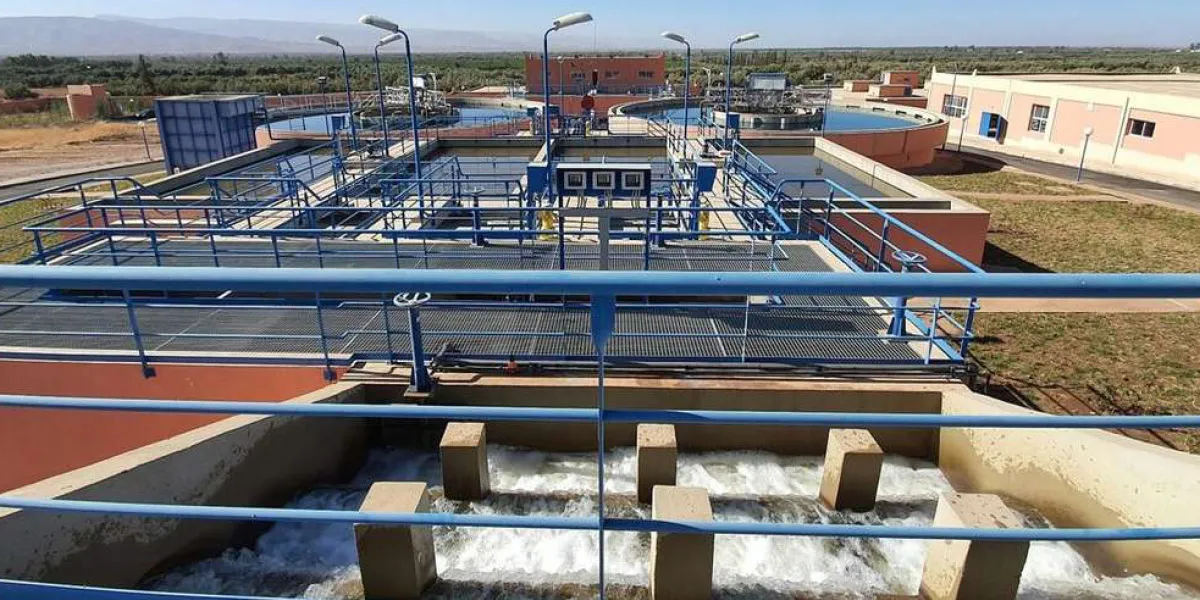

Strategic Initiative for Water Supply Resilience
In alignment with the National Risk Management Strategy 2020-2030, the National Office of Electricity and Drinking Water (ONEE) has initiated a forward-looking study aimed at securing the drinking water systems of Grand Agadir against natural and technological risks. This initiative seeks to preemptively implement the national directive concerning the resilience of critical infrastructures. Ultimately, a comprehensive investment and continuity plan will be established to ensure that a minimal vital service is maintained under all circumstances.
The regional production department of Souss-Massa at ONEE has embarked on a resilience study for the drinking water supply systems (AEP) serving Grand Agadir and its connected centers. This study is designed not only to enhance the resilience of these critical infrastructures but also to anticipate the implementation of national directives on infrastructure resilience, which emphasize risk-based approaches, proportionality, and shared responsibility, while also taking interdependencies into account. This initiative is part of the broader National Strategy for Disaster Risk Management 2020-2030, specifically its ninth program focused on bolstering the resilience of critical infrastructures and its fourteenth program dedicated to establishing business continuity plans and vital service management. According to ONEE, the realization of this study will facilitate a shift from a corrective security approach to a proactive and preventive management of resilience. The study aims to assess the capacity of the AEP system—encompassing production, treatment, transport, and storage—to maintain functionality in the face of shocks, mitigate their effects, recover swiftly, and adapt accordingly.
Operational Deployment and Action Plan
The operational deployment of this study revolves around four fundamental missions. The first mission involves conducting a diagnostic assessment and a georeferenced inventory of hydraulic assets, which includes cataloging all physical installations such as water catchments, pumping stations, pipelines, and reservoirs. Integrating this data into a Geographic Information System (GIS) is essential to ensure full compatibility with the national inventory of critical infrastructures. This field phase will be complemented by traditional topographical surveys utilizing centimeter-precision differential GPS, as well as drone acquisitions. The use of aerial technology aims to produce high-resolution orthophotos and digital terrain and surface models, enabling precise location of pipeline sections, access paths, and easement areas, even in the most remote or hazardous regions. The inventory will also encompass strategic systems, including water production from desalination facilities in Agadir, along with other critical infrastructures. Each component will be analyzed according to its nature and observable operational state. This database will serve as the foundation for the second mission, which focuses on risk analysis by mapping the exposure of infrastructures to priority hazards while evaluating incoming dependencies, such as the essential electrical supply for treatment stations, and outgoing dependencies, measuring the impact of service disruptions on hospitals, industries, and civil protection, ultimately leading to the development of a risk matrix prioritized by scenario severity.
Based on these technical diagnostics, a structured action plan will be developed to reinforce resilience, supported by a multi-year investment program. This plan will recommend concrete and varied measures, drawing from best international practices, ranging from seismic reinforcement of existing structures to flood protection for strategic sites, as well as establishing hydraulic redundancies through interconnections or alternative sources. Beyond purely structural aspects, emphasis will also be placed on organizational measures such as early warning systems and strengthened maintenance contracts. A cost-benefit analysis will accompany each recommendation to guide financial decisions made by ONEE, exploring national funding avenues like the Fund for Combating the Effects of Natural Disasters (FLCN) or specific insurance solutions. Concurrently, the fourth mission will concentrate on crisis management by formulating business continuity plans (BCPs). The goal is to define a 'minimal vital service level' to be maintained in each geographical area of Grand Agadir in the event of a major incident, detailing the quantities of water and emergency distribution points. Operational procedures will be outlined, including interoperable crisis communication protocols with external partners, such as civil protection agencies and energy suppliers. The study will also strategize the optimized management of critical spare parts inventory and the necessary human resources for a swift service recovery. This strategic planning aims to transform ONEE's crisis response from improvisation to a pre-established coordination, thereby ensuring the sustainability of public water services in the face of the increasing environmental challenges faced by the Souss-Massa region.
As reported by leseco.ma.