Widening Development Gap in Morocco Highlights 'Dual-Speed' Society
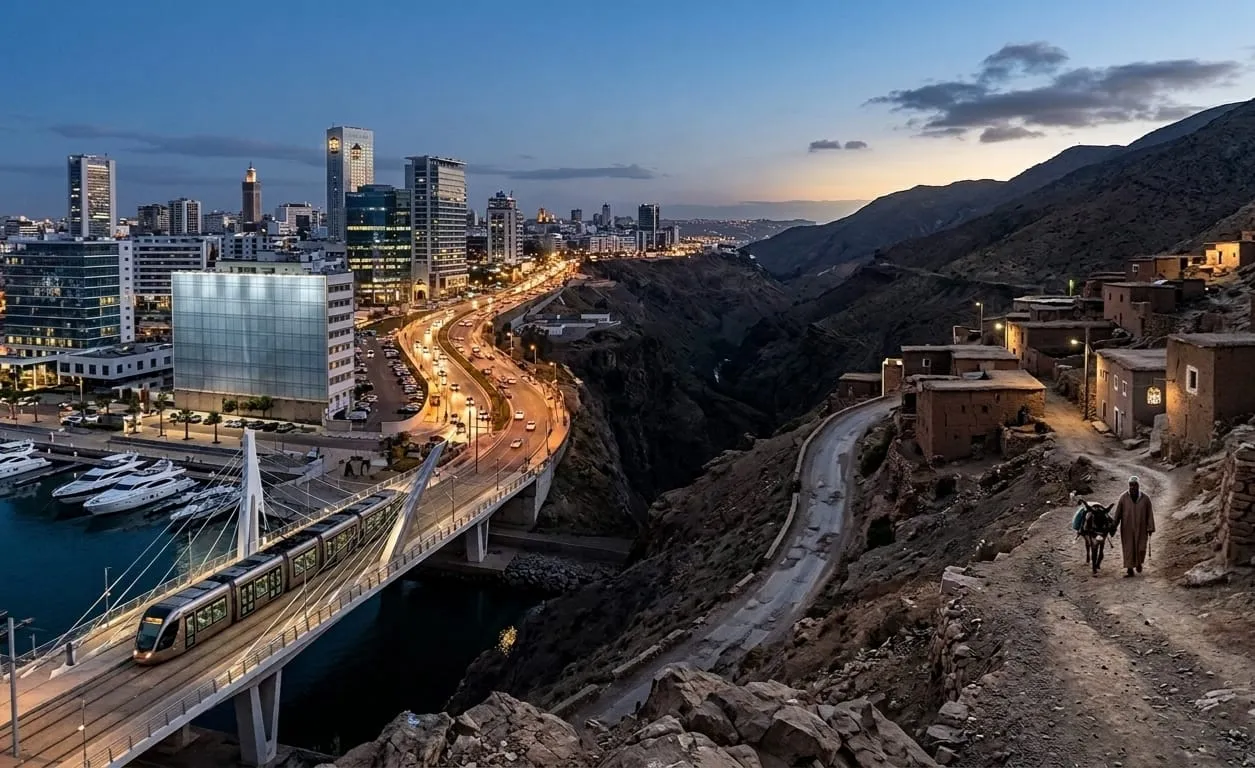
A recent policy paper has shed light on a troubling trend in Morocco, highlighting a significant widening of the development gap between urban and rural areas, a phenomenon now referred to as the 'Dual-Speed Morocco.' This situation poses serious social and economic implications and calls for urgent attention. The document emphasizes that addressing these disparities necessitates a territorial approach that balances a unified national vision for development with the design of programs that meet actual local needs.
According to the report released by the Moroccan Institute for Policy Analysis (MIPA) and authored by Abdel Rafii Zaânoun, a visiting professor at the Faculty of Legal and Economic Sciences in Tetouan, the analysis titled 'How Can We Overcome the Dual-Speed Morocco?' indicates that numerous social indicators reflect the deepening divide between rural and urban areas. Notably, the multidimensional poverty index has risen over the past decade, primarily driven by a marked increase in poverty rates in rural regions, while urban areas have experienced a decline in vulnerability rates.
The study has also recorded a surge in unemployment rates within rural areas, escalating from 10.5% in 2014 to 21.4% in 2024. This alarming trend is attributed to inadequate economic infrastructure, limited investment pathways, and poor transport and distribution networks, which contribute to what the report describes as 'economic isolation' in numerous rural regions.
On the social front, the study emphasizes the continued imbalance in the distribution of essential services between urban and rural areas, particularly in education and health sectors. In education, rural schools are suffering from a lack of facilities, human resources, and limited internet connectivity, exacerbating the educational divide between the improving urban education system and the lower-quality rural education system. Furthermore, in the health sector, disparities are even more pronounced, with healthcare services remaining scarce in rural areas. Some regions report a medical density of just one doctor for every ten thousand inhabitants, and more than half of the rural population must travel over five kilometers to access the nearest basic healthcare services.
The paper also warns that climate change and water stress are further exacerbating the vulnerabilities faced by rural areas, highlighting the urgent need for comprehensive strategies to address these systemic issues and promote balanced development across Morocco.
As reported by thevoice.ma.