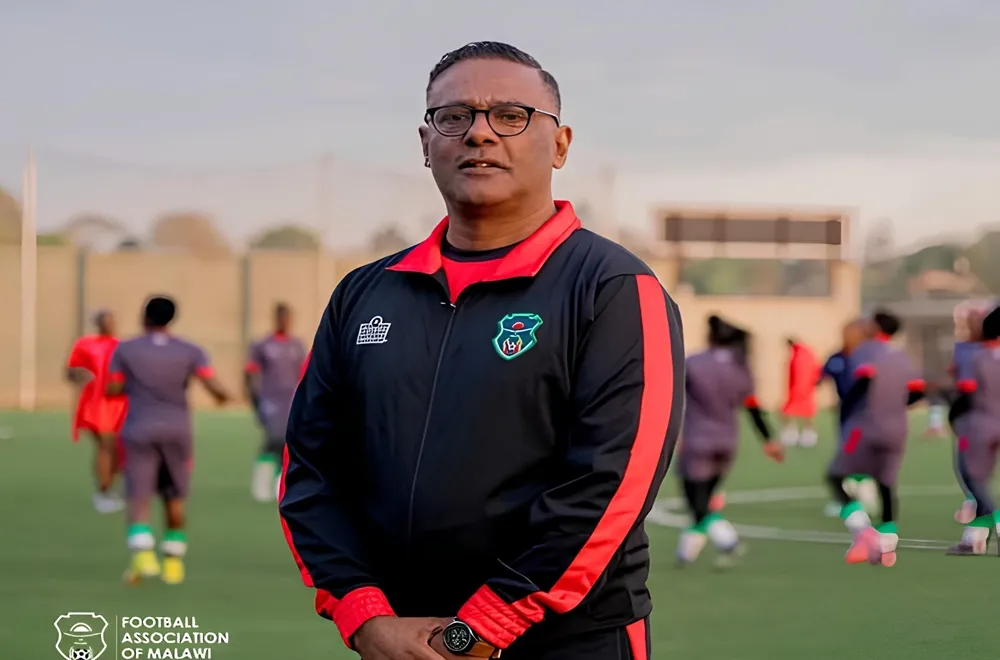

South African football coach Sudesh Singh has played a pivotal role in the remarkable journey of Malawi's national women's team, the Scorchers, at the Women's Africa Cup of Nations (WAFCON) held in Morocco. His contributions ensured that the South African flag was prominently displayed during this prestigious continental tournament. Malawi made headlines by finishing as the African runners-up, marking a historic debut at WAFCON after a stunning performance that culminated in a 3-0 defeat to Cameroon in the final held in Rabat.
Singh, who joined the Scorchers as a technical advisor shortly before the tournament commenced, was integral in establishing a high-performance environment. His focus on professionalism and unifying the team around a common goal was crucial for their success. This appointment came as part of the Football Association of Malawi’s strategy to bolster the technical team ahead of their first-ever WAFCON appearance, and it proved to be a game-changer.
Reflecting on his role, Singh emphasized that his primary objective was to construct a robust framework and a culture that would equip the team for success. “My position here was as Technical Advisor; to architect a High Performance environment and a culture of professionalism and excellence,” he stated. During his brief time—spending about 8-10 days in camp before heading to Morocco—Singh faced the challenges of resistance and pushbacks while keeping the team focused on the ultimate objective of qualifying for the World Cup, which they achieved with remarkable success.
One of the standout moments of Malawi's campaign was their unexpected victory over defending champions Nigeria during the group stage. This victory propelled them into the knockout rounds, where they secured their place in the semi-finals, thus guaranteeing their qualification for the 2027 FIFA Women’s World Cup in Brazil. Singh attributes this success to effective alignment within the team, stating, “Getting everyone aligned to the performance objectives was key. Instilling confidence and professionalism while changing mindsets was challenging, but we remained focused on our goals.”
Singh also implemented the Maximal Training methodology, which transcends conventional training approaches. This holistic method encompasses both on-field and off-field preparations, emphasizing that the success of a football team is interconnected with the professionalism exhibited in all areas of their operations. “You can’t achieve success on the field of play if it’s not matched by excellence and professionalism off the field and behind the scenes!” he asserted, highlighting the comprehensive nature of his strategy.
The meticulous attention to detail in planning was evident throughout the team's daily routines. Singh emphasized the significance of factors such as circadian rhythms, meal timings, and training schedules, all aimed at optimizing performance and recovery. “Everything was planned for optimum efficiency, ensuring that we could maximize our training volume, intensity, and complexity,” he explained. This careful tactical planning was tailored to leverage the strengths of the players available to head coach Lovemore Fazili, leading to a game model that highlighted Malawi's attacking capabilities while enhancing their defensive organization.
The contributions of key players, such as the Chawinga sisters, Tabitha and Temwa, were crucial to the team's strategy. Singh noted that despite challenges, particularly with local-based players who had not been in competitive form due to their league's late start, the overall training environment was positive. The inclusion of two young attackers currently playing in France and Sweden further enriched the squad’s talent pool.
While Malawi ultimately fell short of clinching the WAFCON trophy against Cameroon, their second-place finish represents a historic milestone for women's football in Malawi. For Singh, the implications of this achievement extend beyond national borders. He advocates for a greater investment in modern, scientific, and context-specific coach education across African football. “There needs to be a higher quality level of coach education that is modern and tailored to the local environment,” he urged, stressing the importance of understanding local cultures to maximize talent development.
Singh's experience in Malawi exemplifies the potential outcomes when an entire football structure aligns with a common goal. “Overall, it’s been a highly successful and enjoyable experience,” he reflected, expressing gratitude to everyone involved in the project, including Football Association of Malawi (FAM) President Fleetwood Haiya and HOD Felister Dossi. Singh's journey highlights the significant lessons for African football, underscoring that with proper planning and a unified approach, success is an attainable goal.
For Singh, this opportunity was not just a chance to contribute to Malawi's historic achievement but also a moment to showcase South African expertise on one of the biggest stages in African football. Although the WAFCON trophy eluded them, Singh's efforts were instrumental in helping Malawi reach their first continental final and secure their spot at the 2027 Women’s World Cup in Brazil, setting the stage for future successes.
As reported by sabcnews.com.