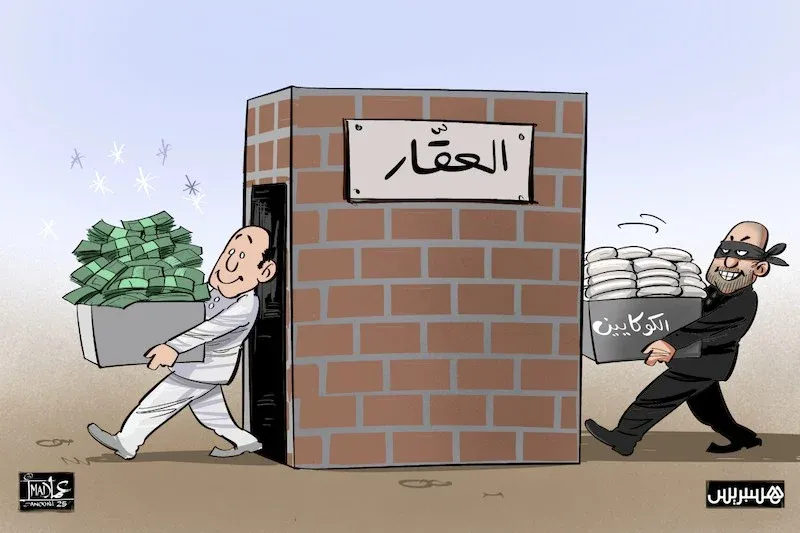

Intensified Investigations into Real Estate Projects
Recent developments have emerged concerning the financial scrutiny conducted by the National Financial Information Authority (ANIF) in Morocco, as they ramp up investigations into the financial activities linked to real estate developers and companies associated with unexplained cash flows. This surge in oversight is primarily focused on a series of ‘abandoned’ projects scattered across major urban centers, including Casablanca, Tangier, and Marrakech. Sources familiar with the matter indicate that the investigations aim to verify suspicions regarding the utilization of incomplete construction sites for the purpose of channeling and reinvesting illicit funds back into the economic cycle.
The inquiry is particularly focused on the acquisition of land, funding for construction works, and the settlement of debts owed by the companies owning these projects. Furthermore, the investigation has unveiled a pattern of subsequent transfer operations that have facilitated the commercial and real estate legitimization of these financial sources. Authorities have identified several projects, notably in Casablanca, that have shown significant financial activity despite the construction works being halted for extended periods, ranging from months to years.
Uncovering Financial Anomalies
Investigators have reported notable discrepancies between the volume of financial transactions related to these projects and the actual value of the work completed. This has prompted a re-examination of the funding trails and the identities of those who injected capital into these companies. Among the cases drawing attention, three projects in Casablanca have remained dormant while financial transactions continue to occur. Additionally, two projects in Tangier have undergone changes in ownership and shareholder composition due to financial difficulties, alongside a luxury villa project in Marrakech that attracted significant investments from Belgian investors despite minimal construction progress.
Moreover, the monitoring bodies have isolated transactions that raised red flags due to the infusion of funds into stalled projects without any corresponding investment benefits on the ground. Another concerning pattern involves the entry of new investors into debt-laden companies linked to real estate assets, raising questions about the economic justifications for these transactions. The ongoing audits are meticulously reconstructing the financial trajectories of these abandoned projects from the initial acquisition of real estate assets, through various expenditures related to studies, excavation, construction, and outfitting, ultimately leading to sales and shareholder alterations.
Furthermore, the inquiries have extended to identifying the actual beneficiaries of these companies under investigation and mapping the relationships among shareholders, managers, financiers, and parties involved in the documented transfer operations. This scrutiny is especially pertinent in instances where multiple companies are intertwined with the same real estate project, indicating a complex web of financial activity. Investigators are also examining the movements of funds between accounts belonging to companies and individuals associated with the projects in question, assessing the economic and commercial justifications for the recorded transactions.
These recent investigations underscore the increasing activity surrounding anti-money laundering efforts in Morocco. The annual report from the National Financial Information Authority revealed that it processed over 8,103 suspicious transaction reports within a single year, reflecting a staggering increase of more than 40 percent year-over-year. Furthermore, the number of cases forwarded to relevant public prosecutor offices has risen from 71 to 84, marking an 18.31 percent increase.
According to sources, the investigations have also encompassed instances of purchasing ‘abandoned’ projects through new companies and developers, involving significant financial advances that enabled sellers to settle obligations and lift encumbrances on the assets involved in these transactions. This pattern has prompted regulatory bodies to closely monitor the sources of funding used to cover the costs of acquiring these projects, amidst growing suspicions of connections to international drug trafficking networks.
As reported by hespress.com.