
Taiwan's Travel Advisory on Morocco
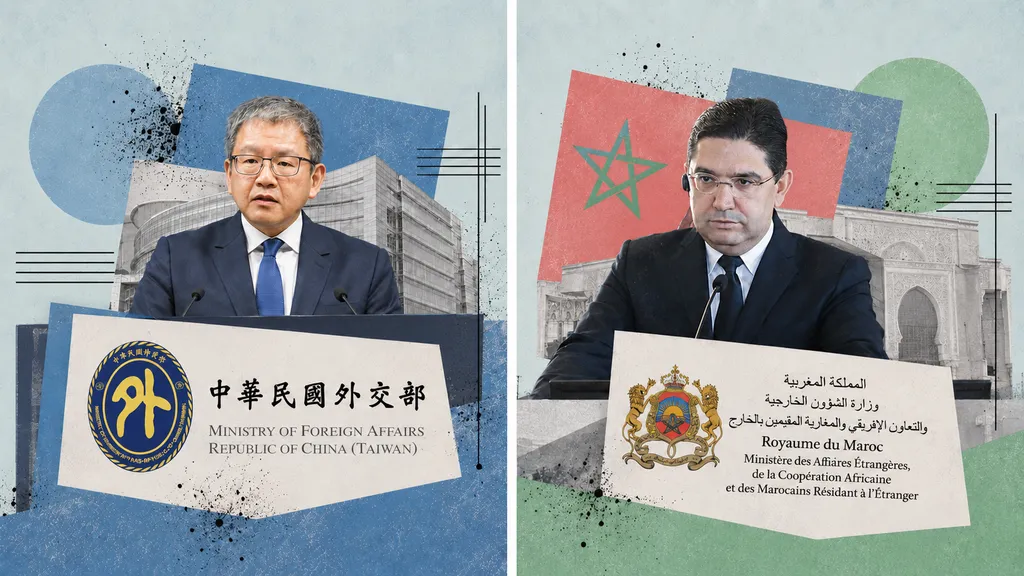
The Bureau of Consular Affairs (BOCA), the Taiwanese foreign ministry's department responsible for passports, visas, and the protection of citizens abroad, updated its travel advisory for Morocco on October 2. The advisory has maintained an orange alert level, which is the third tier on a four-tier scale. The primary reason for this alert is based on the judicial cooperation agreements in criminal matters and extradition that Morocco has entered into with Beijing.
This advisory strongly recommends that Taiwanese citizens refrain from all non-essential travel to Morocco, whether for tourism or business purposes. The caution is tied to China's recently enacted law promoting ethnic unity and progress, which came into effect on July 1. Under this law, _"organizations and individuals based outside of China that undermine the country's ethnic unity or engage in acts of ethnic separatism will be legally held accountable according to the law"._
According to BOCA, Beijing is _"attempting to legalize cross-border jurisdiction and threatens Taiwanese citizens abroad"_. The office also recalls Morocco's adherence to the One China principle and its signing of a judicial cooperation agreement and an extradition treaty, which grant China the right to request judicial assistance or the extradition of fugitives from Morocco. The advisory calls on travelers to _"pay attention to the evolving regulations and the potential risks involved in order to safeguard their rights and personal safety"._
Visa Applications and Extradition Agreements
The advisory also confirms the reopening, as of September 21, of visa confirmation letter applications (VCL) from Taiwanese nationals for both tourism and business stays, following a suspension instigated by Rabat starting July 20. Taiwanese Foreign Ministry spokesperson Hsiao Kuang-wei announced on September 28 that Morocco's embassy in Japan, which processes these applications, verbally confirmed on September 25 the resumption of tourist-related requests, a decision that Rabat has yet to formalize. The advisory from October 2 includes both tourism and business as valid reasons for travel.
In contrast, the suspension of visa applications from Moroccan nationals, initiated by Taipei on July 30 for reasons of reciprocity, remains in effect as of September 28, with exceptions only for special permissions. Hsiao noted that the ministry intends to _"further investigate the status of Taiwanese nationals obtaining Moroccan visas and assess the potential reopening of visa requests from Moroccan nationals as developments unfold"_. The Moroccan embassy in Tokyo had informed Taiwanese travel agencies on July 23 of the interruption of this service, instructing all its embassies and consulates to cease accepting these applications. Despite the ongoing situation, several Taiwanese travel agencies resumed offering Moroccan tours at the end of September, while the Travel Quality Assurance Association (TQAA) urges prospective travelers to exercise caution due to the uncertainty surrounding visa issuance.
The mention of judicial agreements with China has appeared in a series of updated advisories since late August, covering countries from South Africa (September 30) to Cambodia, Laos, Vietnam, and Kyrgyzstan. The advisory concerning South Africa states that _"the Chinese government can now exercise extraterritorial jurisdiction over any non-Chinese citizen"_, while the advisory for Cambodia indicates that since the law's enactment, _"the likelihood of Taiwanese nationals being extradited to China for trial has increased"_. BOCA has included this indicator in its advisories since January. The director, Cheng Cheng-yung, presented it on January 27, and at that time, the foreign ministry reported 67 countries linked to China through a judicial cooperation agreement and 62 through an extradition treaty.
Moreover, the advisory regarding Morocco highlights that _"the Moroccan government has effectively combated the terrorist threat in recent years and regularly publishes its results in this regard, yet the country remains exposed to terrorism"_. It identifies the most severe insecurity in the border areas with Mauritania and Algeria and in what it refers to as _"the Western Sahara region in the South"_, noting incidents of violent theft in Casablanca and Marrakech, and advises female travelers to move in groups. Taiwanese nationals in distress in Morocco can seek assistance from the Taipei office in Aix-en-Provence or the representation in France.
As reported by barlamane.com.