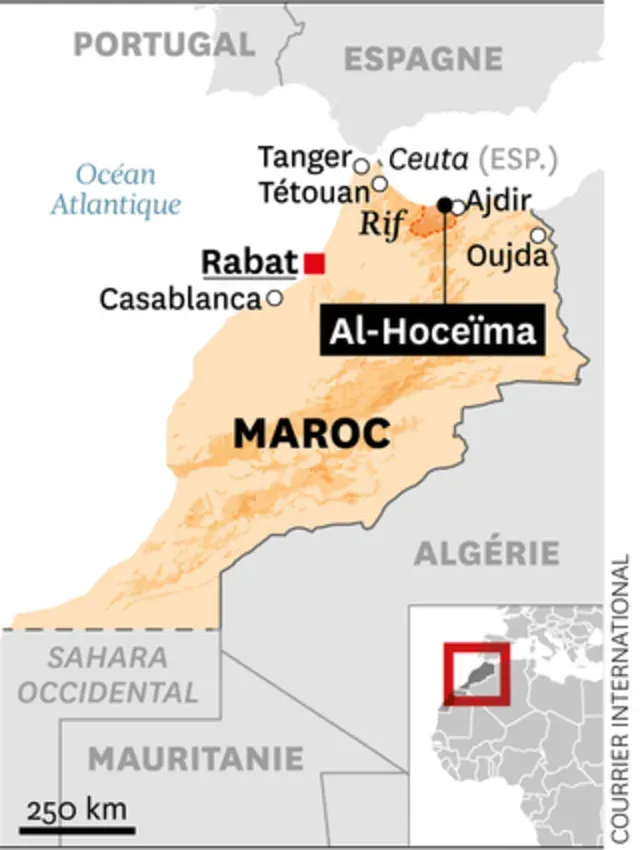

Nearly a decade after the Hirak movement in the Rif region of Morocco, Al-Hoceima stands as a city markedly transformed. Once vibrant with the voices of thousands of protesters echoing through its streets each evening, the city has now returned to a semblance of calm. Most of the visible signs of one of the most significant dissent movements in Morocco's recent history, which followed the February 20 Movement that emerged in 2011 during the Arab Spring, have faded into the background.
From October 2016 to August 2017, Al-Hoceima experienced a wave of unprecedented anger that swept through the city. The peaceful facade it presents today starkly contrasts with the tumultuous atmosphere of those months, sparked by the tragic death of fish vendor Mohcine Fikri on October 28, 2016. Fikri's demise, occurring when he was crushed in a garbage truck while attempting to reclaim his confiscated merchandise, served as the catalyst for the Hirak movement, turning Al-Hoceima into a symbol of social protest and marking one of the most significant episodes in Morocco's contemporary history.
Despite the passage of time since the intense protests of 2016 and 2017, followed by numerous arrests, trials, and harsh sentences, the city has not fully turned the page on this chapter of its history.
A Lingering Pain for Families of the Imprisoned
For many families in Al-Hoceima, the pain remains palpable. Mothers continue to await the return of their sons, as relatives undertake long journeys to visit the prisons where these activists are held. This determination to resist being forgotten was powerfully expressed on June 6, 2026, when a solidarity caravan arrived in Al-Hoceima, organized by a collective of human rights activists.
In the home of Nasser Zefzafi, a prominent figure of the movement who has been serving a twenty-year prison sentence since 2018, the passage of time seems to stretch differently for those inside the house compared to the outside world, which continues to move on. His mother, Zoulikha Zefzafi, welcomed the caravan participants with a heartfelt message: 'Thank you for coming… I am exhausted from the trips to the prisons.'
As reported by fr.news.yahoo.com.