
Ceuta's Migrant Crisis: Rising Tensions and Clashes
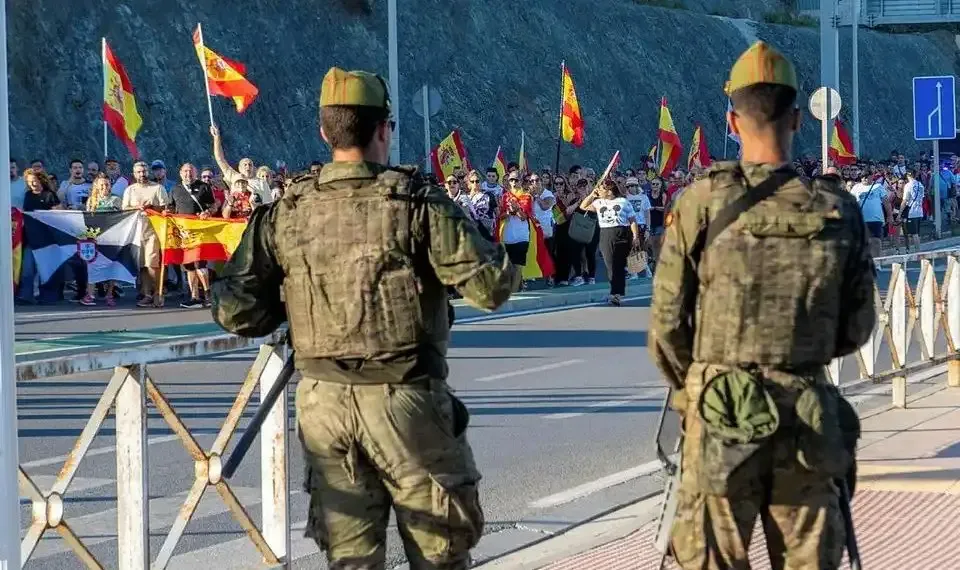
In the wake of a significant influx of migrants crossing from Morocco to Ceuta, Spain's North African enclave, tensions have surged dramatically as the city grapples with the ongoing crisis. Nearly a month after tens of thousands of individuals entered this small territory, which is home to approximately 80,000 residents, many migrants remain on the streets and beaches, leading to severe confrontations. Recently reported incidents highlighted the growing unrest, with migrants clashing with Spanish soldiers, including stone-throwing episodes that resulted in injuries to military personnel.
The latest confrontation occurred on Saturday, when four Moroccan migrants were detained for allegedly assaulting a military patrol by throwing stones. One soldier sustained injuries during the pursuit of the assailants, marking the second such incident within a few days. Earlier in the week, around 70 migrants launched an ambush on a military vehicle, prompting soldiers to call for police backup after being pelted with stones and debris. As a result of this altercation, twelve Moroccan migrants were arrested, with eleven subsequently deported back to Morocco, according to local reports.
Community Response and Government Actions
The situation has incited regular demonstrations from Ceuta residents who express concerns over security and sanitation issues exacerbated by the influx of migrants. Tensions escalated earlier this week as protests turned violent, resulting in clashes between demonstrators and police. Officers were forced to intervene on one of the beaches when a group of protesters encroached upon an area where migrants were sleeping, leading to the destruction of some migrants' belongings amidst the turmoil.
The number of migrants currently in Ceuta remains contentious. While the Spanish government's estimates suggest that between 3,500 and 7,000 migrants still reside in the enclave following the mass crossing in late July, local officials claim the figure exceeds 10,000. In response to the escalating conflicts, Spanish Interior Minister Fernando Grande-Marlaska appealed for calm and urged an end to violence, emphasizing that such actions would not solve the ongoing issues facing the city. He also criticized right-wing commentators for inciting further division and unrest in the community.
Ceuta's President, Juan Jesús Vivas, acknowledged the legitimacy of peaceful protests advocating for a return to normalcy but cautioned against any acts of vandalism. He firmly stated that violence would not be tolerated and urged citizens to refrain from taking the law into their own hands. The migrant crisis has sparked significant political discourse, especially as Spain approaches a general election next year. Opposition parties have called for the immediate repatriation of all migrants, arguing that the government has been slow to respond to the crisis. Critics have pointed out Prime Minister Pedro Sánchez's decision to take a summer vacation amid the unfolding crisis, further complicating the government's response.
In light of the ongoing humanitarian emergency, opposition leader Alberto Núñez Feijóo expressed concerns over the government's handling of the situation, emphasizing that the residents of Ceuta have been shouldering an undue burden without adequate support. He announced that his party would participate in legal proceedings initiated by Spain's National Court and organize rallies across Ceuta and other public squares on September 2. Meanwhile, the government is working to address the crisis by sending additional personnel to assist in identifying migrants, while also allocating €25 million ($29 million) for the care of unaccompanied minors, who cannot be deported under current laws. EU Commissioner for Internal Affairs and Migration, Magnus Brunner, confirmed that Spain has requested assistance from Europol, describing the situation as challenging while emphasizing the urgency of addressing the illegal stay of migrants in Ceuta.
As reported by israelhayom.com.