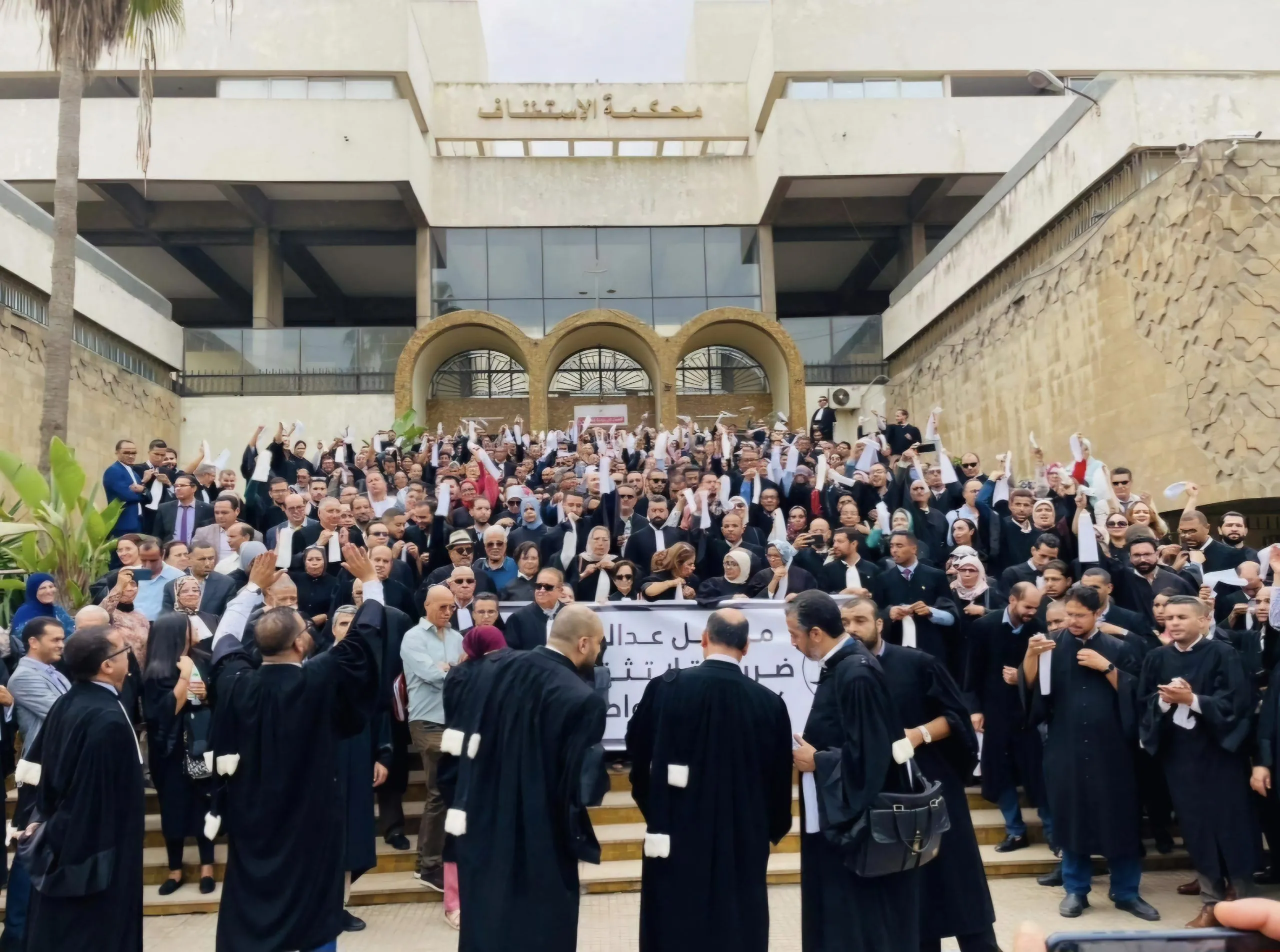

Recent developments within the Moroccan Bar Association have stirred significant unrest among legal professionals. Following the call from the Association of Moroccan Bar Associations to continue the strike, even after the official publication of the new law on August 20, many prominent lawyers from Casablanca and Rabat have opted to defy this movement and resume their activities. Among the notable figures reinstating their legal duties is Mustapha Ramid, a former Minister of Justice, who made headlines on September 1, 2026, by donning his black robe during a court session at the Casablanca Court of Appeal. He was joined by several colleagues, including former Casablanca Bar president, Mohamed Chahbi. The next day, Ramid took to Facebook to articulate his stance, urging an end to the strike and a return to normal court operations.
This call to action was motivated by various political considerations, particularly the impending end of the current government's term and the atmosphere surrounding the upcoming legislative elections. Ramid contends that continuing the strike under the present circumstances will yield no productive outcomes and will only further obstruct the judicial process. Since June 15, the Kingdom’s courts have been paralyzed due to the lawyers' strike, which is a reaction to the new law regulating the legal profession. The strike has been so extensive that none of the approximately 17,000 lawyers in the kingdom, whether in favor of the strike or not, can operate effectively.
On the Justice Ministry's side, led by Abdellatif Ouahbi, who has faced strong criticism, the narrative is one of modernization and reconciliation. The ministry asserts that this reform is part of a broader initiative aimed at digitizing the legal framework, enhancing governance, and streamlining the national judiciary system. However, this perspective has not resonated well with members of the Association of Moroccan Bar Associations, who believe the newly implemented law seeks to place the profession under undue oversight. Lawyers have raised concerns about the erosion of defense rights, challenges to their institutional autonomy, and the introduction of burdensome fiscal and administrative constraints.
While there is a unanimous rejection of the ministerial text across the legal profession, opinions diverge regarding the methods of protest. On one side, there is a faction advocating for unwavering resistance, represented by figures like Aziz Rouibah, the Rabat Bar president. This hardline group insists on maintaining the strike and rejects any form of concession. Rouibah has characterized the ministerial proposal as an “appropriation of the profession” and a violation of past commitments. He has firmly stated that lawyers will not relent, making the resumption of their duties contingent upon the complete withdrawal of the new law.
Conversely, some voices express concerns about the detrimental effects of a prolonged boycott, such as the financial vulnerability of young lawyers, the paralysis of the judicial system, and the potential damage to the Bar's reputation in the public eye. As the situation develops, the Association of Moroccan Bar Associations has announced a press conference scheduled for Thursday, September 10, to clarify the reasons behind the continuation of the strike.
As reported by maroc-hebdo.com.