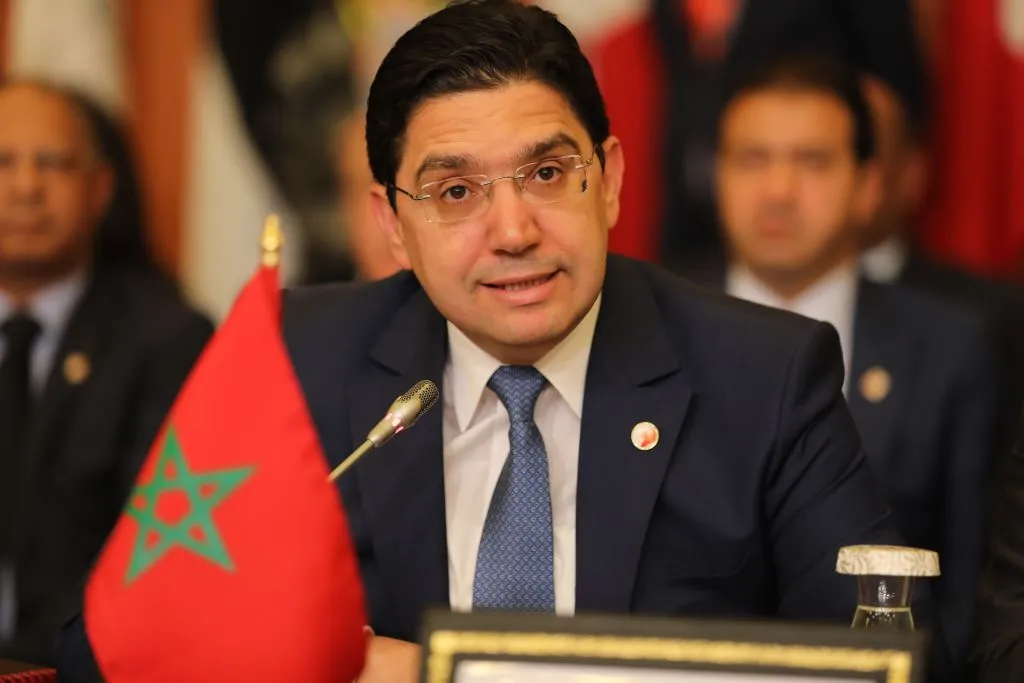

In a recent statement, Moroccan Foreign Minister Nasser Bourita accused Spain of not repatriating the thousands of migrants who remain stranded in Ceuta following a mass crossing incident last July. This development reignites tensions surrounding the Spanish exclave, which was overwhelmed by 80,000 individuals during a crisis that tragically resulted in the loss of over 100 lives and plunged Spain into one of its most severe migration challenges to date.
Spanish Foreign Minister José Manuel Albares, following his first personal meeting with Bourita at the United Nations General Assembly in New York, reiterated Morocco's commitment to facilitate the swift repatriation of migrants. He emphasized Spain's desire to maintain positive relations with Morocco. However, Bourita countered during a press briefing after their meeting, stating, "If illegal immigrants have not been repatriated, and if minors have not been returned, the question should not be directed at Morocco, but at Spain instead.”
Despite a significant number of migrants having returned to Morocco immediately after the influx, Ceuta authorities claim that around 13,000 migrants still remain. In contrast, Spanish Prime Minister Pedro Sánchez estimates the number to be around 5,000, while some ministers suggest it could be as high as 10,000 individuals still in the enclave.
Initially, Spain informed EU authorities that all migrants arriving in Ceuta, primarily Moroccan nationals who typically do not qualify for asylum, would be returned to their home country. Currently, as authorities continue to process migrants—conducting over 100 evaluations daily—thousands of individuals are opting to return voluntarily. According to Ángel Víctor Torres, Minister for Territorial Policy, more than 7,500 migrants have returned to Morocco since the beginning of August.
However, Spanish domestic law permits the over 2,300 registered minors still in Ceuta to remain in Spain, while migrants who may qualify for international protection, particularly those from sub-Saharan Africa, are also allowed to stay. Moroccan officials have attributed the delays in the repatriation of undocumented migrants, especially minors, to Spain's bureaucratic hurdles.
On the other hand, Spanish judges, prosecutors, and police unions have long accused Rabat of failing to cooperate adequately in identifying migrants and expediting administrative and judicial processes necessary for repatriation. In its latest annual report, the Spanish prosecution service highlighted Morocco's "extremely restrictive stance" on facilitating deportations.
The situation is further complicated by additional legal protections in place for minors. During the 2021 Ceuta crisis, when approximately 10,000 migrants entered irregularly, most unaccompanied minors remained in Spain and were later transferred to the Spanish mainland. Thus far, 54 minors have been reunited with their families on the mainland since August 1, according to Minister for Children, Sira Rego, who also noted that most of these minors are unlikely to be sent back. "Most of them want to stay in Spain, and they certainly will. There is a law that protects them," she stated.
As reported by euractiv.com.