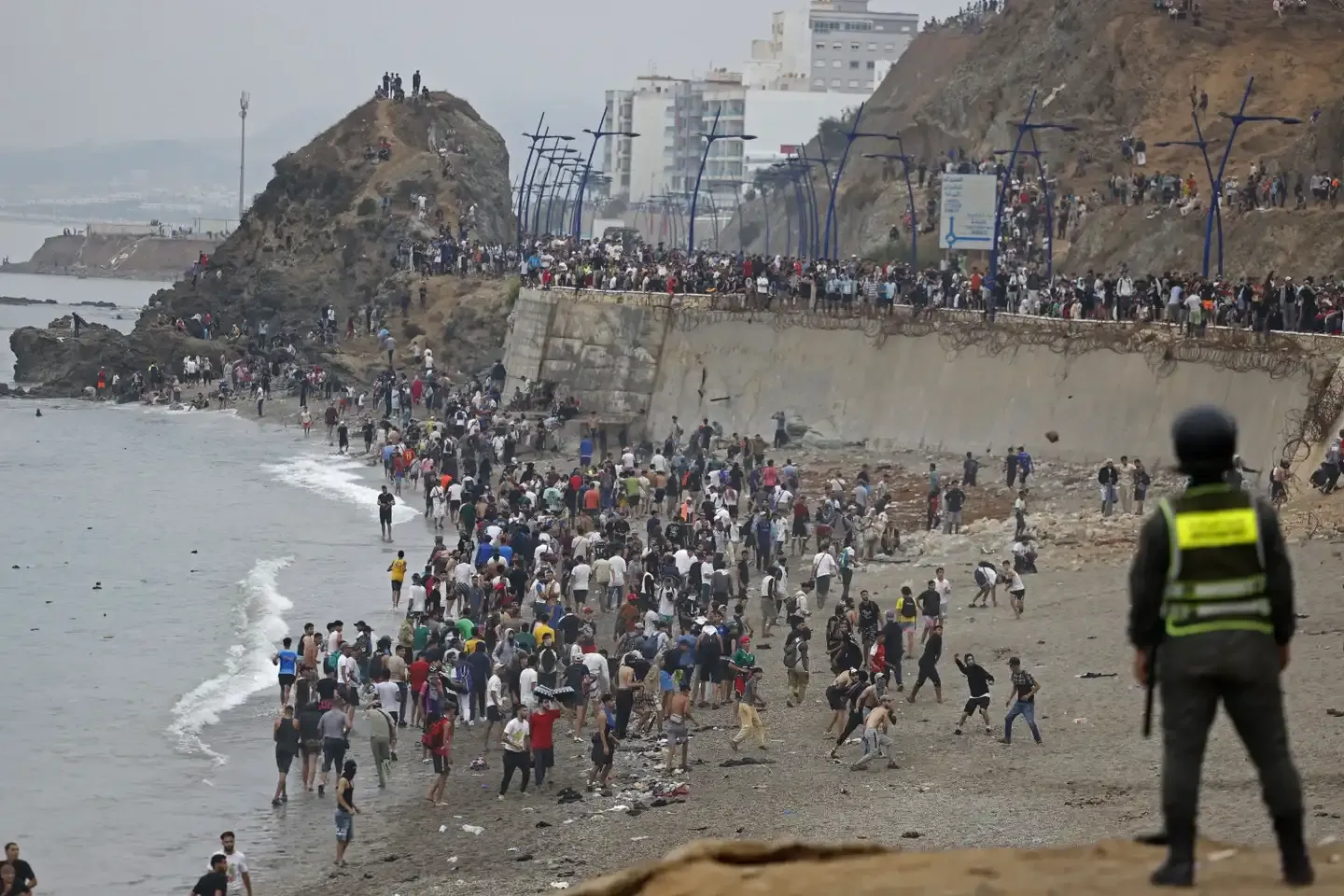

In a significant diplomatic development, tensions between Morocco and Spain have once again resurfaced following the recent influx of migrants into Ceuta. This renewed strain comes just weeks after tens of thousands of migrants crossed the border, prompting new statements from Moroccan officials regarding the Spanish enclaves. At the same time, the European Union is contemplating an increase in its financial support to Morocco for border management, a situation that brings to light ongoing debates about the potential use of migration pressure as a tool in diplomatic negotiations.
The recent political climate was encapsulated on August 24, 2026, during a religious ceremony at the Royal Palace in Rabat, presided over by King Mohammed VI. During this event, Moroccan Minister of Habous and Islamic Affairs Ahmed Toufiq referred to the “sacred struggle” to “liberate the occupied cities,” a statement that specifically targeted Ceuta and Melilla. The historical context of his words drew immediate scrutiny and concern from Spanish officials, highlighting the sensitive nature of the ongoing territorial dispute.
Despite the weight of Toufiq's remarks, the Moroccan Foreign Ministry did not indicate any formal shift in the nation's stance regarding these territories. The Spanish government swiftly reaffirmed its position, asserting that Ceuta and Melilla are integral parts of Spain and the European Union, a message reiterated through diplomatic channels in light of several recent comments from Moroccan authorities.
Compounding these tensions is the aftermath of the migration crisis that erupted on July 30, when estimates indicated that around 72,000 individuals crossed the border illegally from Morocco. The tragic human cost was substantial, with reports of at least 82 fatalities on the Spanish side and 14 in Morocco, while thousands of migrants remained in the enclave weeks later, struggling to find stability.
Historical Context of Migration and Diplomacy
The events of July 30 inevitably draw comparisons to a similar crisis that unfolded in May 2021, when approximately 8,000 migrants entered Ceuta within a mere two days amid a diplomatic fallout over Spain’s hosting of Brahim Ghali, the leader of the Polisario Front. Following that incident, Moroccan officials suggested that Morocco had the right to relax its border controls in response to Spain’s actions, further complicating the delicate balance of the two nations' relations. Spanish Defense Minister Margarita Robles directly accused Morocco of orchestrating a form of blackmail, citing the ease with which migrants managed to reach Ceuta.
While historical context adds layers to the current situation, it is essential to note that there is no substantial evidence to suggest that Moroccan authorities deliberately instigated the recent migrant influx. In fact, Moroccan forces employed various measures to contain the crossings and subsequently intensified their deployments along the border. The Moroccan government has categorically denied any allegations of using migration as a bargaining chip, stating that it acted independently of external pressures and communicated its concerns to Spain regarding the implications of certain judicial rulings on migrant returns.
European Union's Role and Future Directions
The European Union's involvement adds another critical dimension to the discussion, as Morocco has been a significant recipient of EU funding aimed at enhancing migration management and border security. Recent reports indicate that the EU has committed around 222 million euros for migration cooperation with Morocco from 2021 to 2024, with plans for an additional 190 million euros by 2027. These funds are intended to bolster not only surveillance capabilities but also broader economic reforms and environmental initiatives.
The current crisis has prompted Brussels to reassess its partnership with Morocco, particularly as negotiations for a new strategic and global partnership are underway. EU officials are now considering strengthening migration, security, and border control measures in light of the recent events in Ceuta, emphasizing the need for improved collaboration with Morocco to address irregular migration effectively.
Given Morocco's geographical significance as a gateway to Europe, its position in negotiations regarding migration policy is increasingly pivotal. The interdependent nature of this relationship raises questions about the potential for diplomatic leverage, particularly during times of crisis. As both countries navigate these complex dynamics, the challenge remains to establish a cooperative framework that does not hinge disproportionately on migration control as a bargaining tool.
As reported by beninwebtv.com.