
A Surge in Activity at Cafés Carrión Amid Heightened Security
The small stall known as **Cafés Carrión**, located just across the border from Ceuta to **Castillejos**, has experienced unprecedented sales this past Friday. By mid-afternoon, a lengthy line of police officers, gendarmes, soldiers, and undercover agents snaked in front of the bustling establishment. Orders for loaded coffees, sweet pastries, and, notably, half-liter bottles of chilled water surged, quickly depleting the stall's supply.
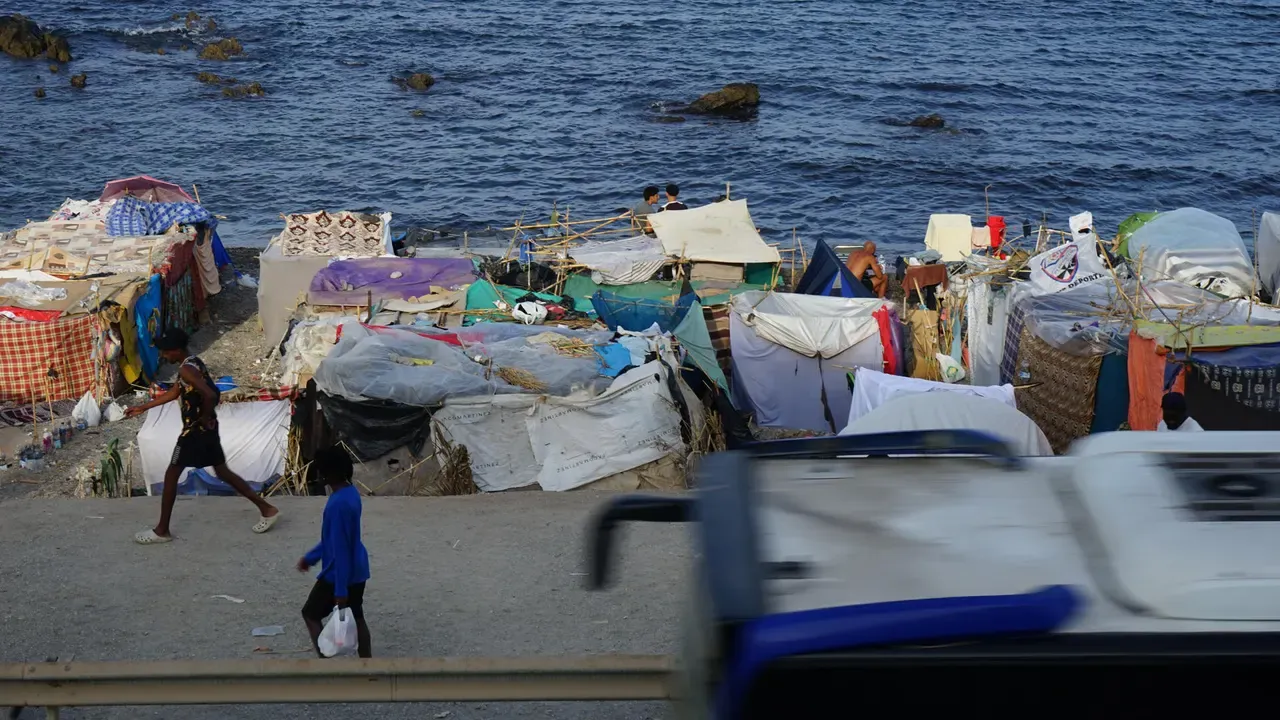
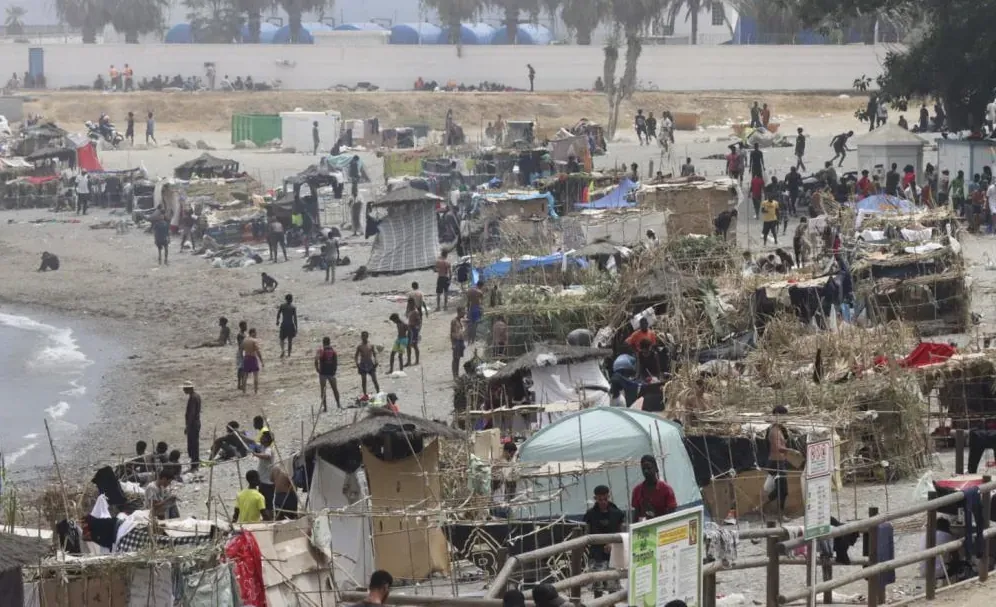
When inquired about the increased security presence, **Abdel**, the sole attendant, responded with a grin, indicating that the number of security personnel was not merely doubled, but significantly more—twenty times what it usually is. A glance around the vicinity corroborated his claims; dozens of police vehicles, riot trucks adorned with the red-green stripes of the Moroccan flag, and ambulances filled the area. Furthermore, perched on the surrounding hills, numerous scouts observed every movement under the scorching sun, while newly installed barbed wire restricted access to the nearby beaches.
Morocco's Strategic Response to Immigration Concerns
This overwhelming security apparatus is part of Morocco's crackdown in anticipation of the dreaded **15-A**—a date marked by tens of thousands of internet users as a potential day for uncontrolled crossings into Ceuta. The Alawite regime seems intent on preventing a repeat of the recent mass influx that occurred just a fortnight earlier. As confirmed by the police chief stationed at the border, dressed in civilian attire, the importance of **15-A** is paramount for them.
Questions arise naturally: Why the sudden and extensive security measures? Why was there so much inaction during the recent wave of migrants? And what has changed in such a short span that transformed Castillejos into a near-military zone? **Luis Mayandía**, former head of the **Central Unit for Illegal Immigration Networks and Document Fraud (UCRIF)**, suggests that this is the second phase of a well-orchestrated strategy by Morocco. Initially, the regime allowed a massive influx into Ceuta following a social media campaign. Two weeks later, they imposed strict controls, issuing a warning akin to a declaration of hybrid warfare. The message appears directed at the **European Union**—indicating that if they wish to manage illegal immigration effectively, they must negotiate directly with Rabat, implying that Ceuta and **Melilla** could become leverage in these discussions.
The strictness of the Moroccan security forces is palpable, bordering on paranoia. Even the act of filming in the border area prompts immediate demands from police to delete any footage. The presence of thousands of officers is not limited to the border crossing but permeates the entire border town. Orders have been given to monitor groups of young people, particularly those most likely to attempt crossings on **15-A**, lured by social media messages. The hashtag **#haraga** (meaning 'burners') has garnered millions of views across platforms like X, Instagram, and TikTok, encouraging youths to believe that the Ceuta border will be open for 24 hours, coinciding with a public holiday in Spain, despite clear denials from authorities.
Even stricter measures are in place for minors, who are prohibited from walking the streets without adult supervision. A local businessman with ties to intelligence services remarked, “The youngsters aiming to reach Ceuta are more hidden than ever. The police and military presence is unprecedented.” As the sun sets in Castillejos, cafes are filled with patrons, all under the watchful eyes of hundreds of agents monitoring the situation closely. It has become increasingly difficult to find anyone willing to share their aspirations of crossing into Spain, as the fear of repercussions looms large.
As reported by elmundo.es.