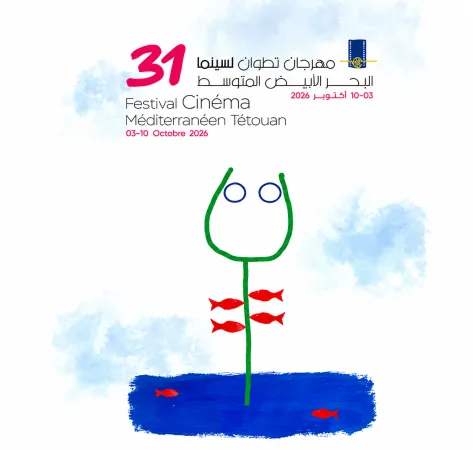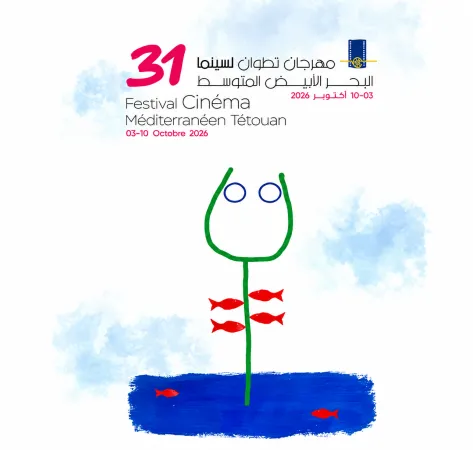

The Tetouan Mediterranean Film Festival, set to take place from October 3 to October 10, 2026, is dedicating a significant portion of its program to the exchange of expertise, professional networking, and discussions surrounding the current issues and transformations in Mediterranean cinema. As highlighted in a statement from the organizers, the "Tetouan Workshops" will feature not only two intellectual seminars but also a collaborative program with the Italian city of Matera, bringing together filmmakers, producers, writers, researchers, and emerging talents for a series of meetings aimed at fostering collaboration, creativity, and knowledge sharing.
This year marks the fourth edition of the "Tetouan Workshops," which serve as a pivotal component of the Tetouan Mediterranean Film Festival. The workshops are designed to support film projects currently in development, with a competition showcasing ten projects from eleven filmmakers, spanning both documentary and narrative films. The "Tetouan Workshops" fund, a standout initiative of the festival, is aimed at nurturing screenplay development for projects in the writing phase, ultimately seeking to amplify new voices within Mediterranean cinema.
The current edition features a diverse selection of ten projects presented by eleven filmmakers and creatives hailing from Turkey, Syria, Lebanon, Tunisia, France, and Morocco, with a mixture of documentary and narrative films. Among the notable projects are documentaries by Osman Selil and Julia Le Noeil (joint direction), Faisal Bengrou, Zeinab Chefsahouni Moussaoui, and Gina Dou, alongside narrative film projects from Beryl Tan, Lina Arrious, Osama Ousous, Reda Lahmoud, Yassine El Idrissi, and Siba Younes.
The chosen projects will be presented to a jury composed of prominent figures including Karim Aitouna, a producer based in Morocco and France; journalist Mohamed Reda from England; Moroccan writer and political analyst Bashir Dakhil; and Italian actress and producer Pilar Saavedra Peruta. The "Tetouan Workshops" offer selected project owners financial support specifically aimed at enhancing their writing, along with a space for project preparation and pitching, as well as opportunities for exchanging experiences with industry professionals.
Moreover, the festival will also host a three-day training program called "Talents in Short Film," designed for students from various film and arts schools across Morocco. This training will allow participants to explore the different stages of short film production, from screenplay writing to directing, through practical workshops, experience sharing, and meetings with industry professionals. The program is coordinated by Moroccan filmmaker Mohamed Cherif Al-Tarbiq and Egyptian filmmaker Nasser Abdel Rahman.
In addition to the practical training, the festival proposes two intellectual forums aimed at reflecting on the transformations affecting cinematic creativity and its relationship with audiences. The first seminar, titled "New Cinematic Economies in the Mediterranean," will delve into the evolution of production, funding, and distribution models amidst the technological and economic transformations impacting the sector. Key topics for discussion will include co-productions, film circulation, digital platforms, national markets, and cooperation between the Mediterranean shores, featuring participants such as Said Hamish, Hala Lotfi, Peter Marcis, and Caroline Loucardi Al-Ariqi, with Khaled Al-Zayri moderating the session.
The second seminar, titled "Films and Cinemas: Reception Challenges," will address the relationship between films and their audiences, cinematic memory, and the role of images in individual and collective narratives, with contributions from poet and screenwriter Soukaina Habiballah, writer and novelist Abdelkader Chawi, poet, novelist, and art critic Hassan Najmi, and writer and philosopher Abdel Rahim Zaid, moderated by Zahra Al-Lahiwi.
Additionally, the festival will launch a cinematic dialogue between the Mediterranean cities of Tetouan and Matera, featuring a "Free Choice" segment from the Matera Film Festival, as part of the collaboration between the two cities under the initiative "Matera and Tetouan, Mediterranean Capitals of Culture and Dialogue 2026." This program, executed in collaboration with Cinecittà and supported by various Italian institutions, aims to unite Moroccan and Italian professionals to discuss avenues for cultural and cinematic cooperation between the two countries.
An institutional seminar will be dedicated to showcasing initiatives developed in Matera during 2026, while a professional session titled "Italian and Moroccan Producers: New Horizons for Co-production" will explore production, co-production, distribution, and project development opportunities, featuring Italian producer Mario Mazzarotto alongside several Moroccan professionals.
Moreover, audiences will have the chance to discover a curated selection of films from the Matera Film Festival, with the presence of an Italian delegation, and this collaboration is expected to continue in November 2026 in Matera, where a delegation from the Tetouan Festival will partake in various activities alongside notable figures from Moroccan cinema.
Through these diverse programs, the Tetouan Mediterranean Film Festival is firmly establishing the sharing of expertise, creative dialogue, and cooperation among Mediterranean cinemas as central themes for its thirty-first edition.
As reported by maroc.ma.