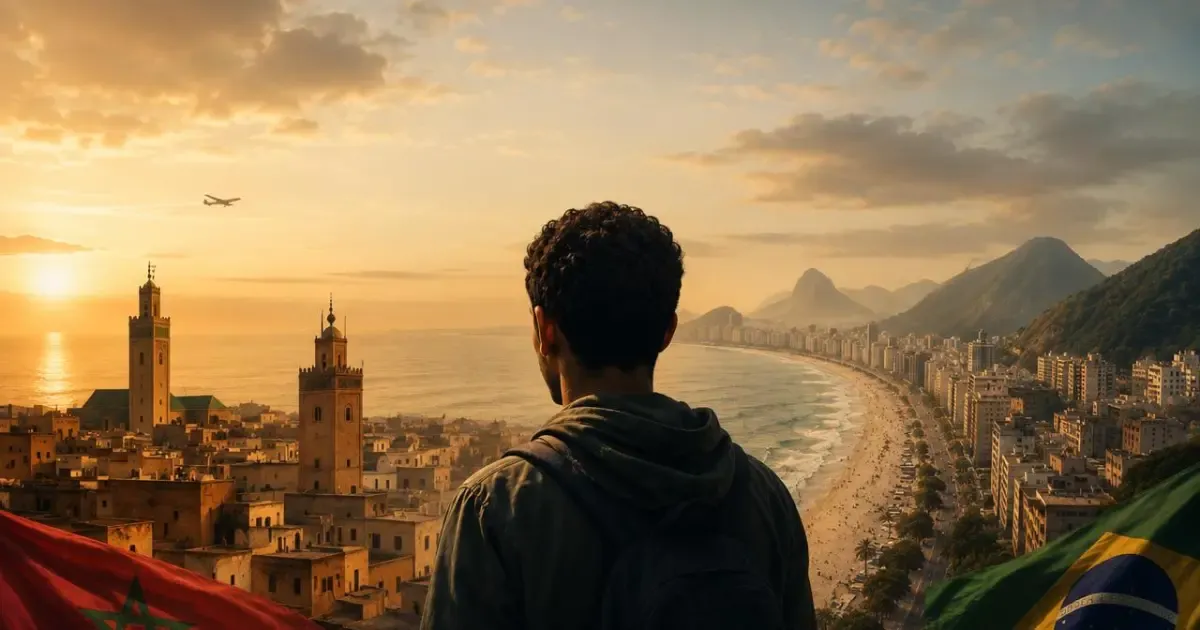

In a heartfelt ode to the longing for a better life, the lyrics of the classic song "العين الزرقاء" by الحسين السلاوي resonate with many Moroccans. The recurring theme of yearning for what lies beyond the borders of Morocco encapsulates a sentiment that has been deeply ingrained in the collective psyche of the nation. Each time I return to Morocco, my mother insists that I bring back "paracetamol" and "Ferrero Rocher" chocolate, despite my attempts to convince her that these items can be easily purchased in Morocco. To her, anything that "comes from abroad" is undoubtedly superior to what is available locally. This perception of the "outside" as a magical realm, a paradise promised to dreamers, reflects a broader cultural mindset that associates success and happiness with migration.
From an early age, I became aware of the stereotypes surrounding life abroad through three distinct memories that have lingered in my mind. As a child, I recall neighbors returning from summer vacations in Europe, regaling us with tales of their lives there, from pristine streets to luxurious football fields, painting a picture of an idealized existence where everyone was kind and justice prevailed. The notion that a simple "certificate" would guarantee them a place in heaven further illustrates the depth of these beliefs. Furthermore, I remember a relative whose life came to a standstill after repeated failed attempts to migrate to Italy, and another elderly neighbor who traveled to Europe to bring back his son, only to find himself trapped in a foreign land for decades, burdened by the shame of not achieving the success he had envisioned.
The Migration Dream: A Cultural Phenomenon
The desire to migrate has transcended mere aspirations and become synonymous with success in Moroccan society. Children challenge each other in the streets to identify European license plates, showcasing an early fascination with the idea of travel. While this desire often comes from a place of innocence, it frequently defies logic, suggesting that simply leaving Morocco is a form of achievement in itself. European countries, the United States, Canada, and, to a lesser extent, Gulf nations, have long been the dream destinations for many Moroccans. However, in recent years, Brazil has emerged as a new hotspot, captivating the dreams of Moroccan youth seeking new opportunities. Known for its vibrant culture, festive lifestyle, and football, Brazil has transformed from a mere tourist destination to a land of hope for those looking to escape their current circumstances.
In a poignant video, a middle-aged man named Sami, who has lived in Brazil for years, reflects on his life and experiences. His story, filled with nostalgia and regret, paints a vivid picture of the immigrant experience—one filled with both promise and hardship. Sami's journey, like many others, highlights the complexities of migration, where individuals seek a better life while grappling with the emotional toll of leaving their homeland. The emergence of Moroccan influencers in Brazil, sharing their experiences and guiding others on the path to migration, sheds light on the evolving narrative of Moroccan youth and their aspirations.
Understanding the Desire to Migrate
The topic of migration among Moroccans has sparked extensive academic and public discourse. A study conducted by the High Commission for Planning revealed that over 70% of Moroccans do not wish to leave their country, suggesting that the desire to escape is often more of a fantasy than a reality. However, economic motivations remain a significant driving force, with 73.5% citing financial reasons as their primary motivation for considering migration. The COVID-19 pandemic has further complicated this landscape, with recent surveys indicating that 35% of Moroccans express a desire to migrate, a substantial increase from pre-pandemic figures.
Interestingly, the educational background of those wanting to leave reveals that 42% of prospective migrants hold university degrees, indicating that the quest for better opportunities is prevalent among the educated youth. Moreover, the willingness to migrate illegally is alarming, as 53% of those contemplating emigration indicated they would attempt to leave even without the necessary documentation. This statistic underscores the urgency of addressing the underlying issues driving this migration phenomenon, as Moroccan society continues to grapple with the aspirations and realities of its youth.
As reported by aljazeera.net.