Connecting Continents: The Vision for a Gibraltar Strait Tunnel
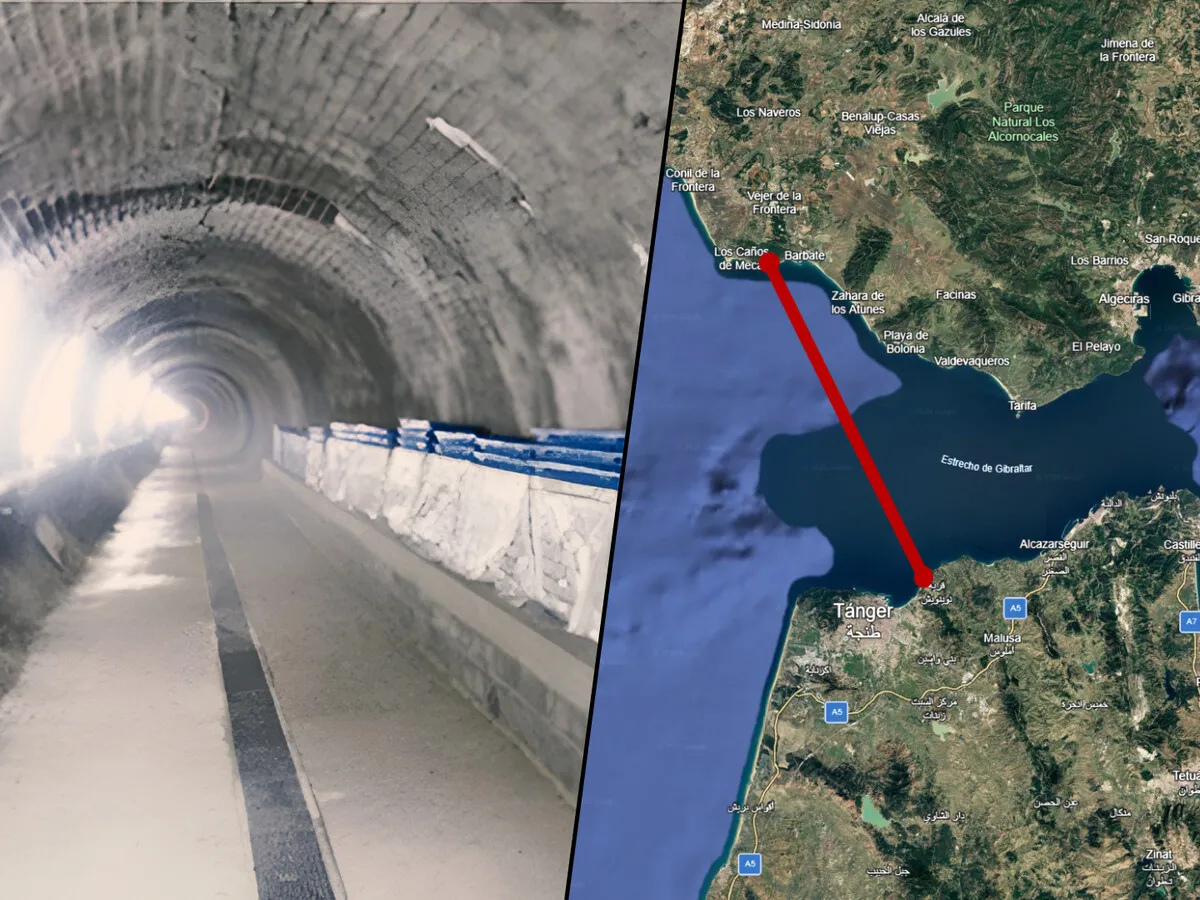
For decades, the idea of linking Europe and Africa through the Gibraltar Strait has been a subject of ongoing discussions. In recent years, however, both Spain and Morocco have taken significant strides towards making this ambitious project a reality. The two nations have intensified their efforts to construct a railway tunnel that would run beneath the Strait, connecting Punta Paloma in Tarifa with Cape Malabata, near Tangier. If realized, this infrastructure would stand as a monumental engineering feat, enabling travelers to cross from one continent to another in just half an hour.
The proposed project focuses on a purely railway tunnel, deliberately excluding any roadways or viaducts, which were initially considered. The total length of the tunnel is projected to be around 42 kilometers, with 27.7 kilometers submerged underwater. The deepest point would reach an impressive 475 meters below sea level, traversing the Camarinal Sill, known as the least deep area of the Strait while presenting significant geological challenges.
Design and Management: A Collaborative Effort
According to data collected by the Spanish public company SECEGSA, the design features two independent single-track tubes, each with an internal diameter of 7.90 meters, alongside a central service gallery measuring 6 meters wide. This gallery would facilitate maintenance and emergency operations, connecting to the main tubes through cross passages every 340 meters. At the lowest point of the tunnel, a secure parking area would be established, equipped with intervention zones and a smoke extraction system. High-speed trains would operate inside the tunnel for passenger transport, alongside shuttle convoys for goods and vehicles.
The project is being driven by a dual approach. In Spain, SECEGSA coordinates the efforts, having been established in the 1980s specifically to promote this connectivity. Meanwhile, the Moroccan government has concentrated its resources on the connection with Madrid, sidelining other parallel routes. The most recent and significant agreement was signed on December 4, 2025, at La Moncloa between Spain's Minister of Transport, Óscar Puente, and his Moroccan counterpart, Karim Zidane. This memorandum outlines a joint study on the seismic and geodynamic characteristics of the Strait over three years, involving cooperation between Spain's National Geographic Institute and Morocco's National Center for Scientific and Technical Research (CNRST).
In terms of funding, the Spanish government approved an additional transfer of €1.73 million in March to finance technical studies, as reported by La Razón. This funding is complemented by a marine research campaign commissioned to the Spanish National Research Council (CSIC), with a budget of €553,187, as published in the Official State Bulletin. Scheduled for the first half of 2026, this campaign will last approximately 15 days and include high-resolution bathymetry, sediment and rock sampling from the seabed, and laboratory analysis. Three CSIC institutes will participate, alongside the Hydrographic Institute of the Navy and the United States Geological Survey.
However, significant challenges lie ahead, particularly concerning the Camarinal Sill. A feasibility study conducted by the Spanish subsidiary of the German manufacturer Herrenknecht, which specializes in tunnel boring machines, concluded that the project is technically feasible with current engineering capabilities. Still, it highlighted enormous logistical and economic hurdles. The subsoil in this area is composed of materials from the Flysch Complex, featuring layers of sandstone and clay of turbiditic origin, which are covered by more recent sediments. This geological variability, in addition to the fact that the Strait lies above the Azores-Gibraltar-Tunisia fracture—responsible for the devastating 1755 Lisbon earthquake—renders excavation particularly complex.
Moreover, the Strait is not an easy environment; over 100,000 vessels pass through its waters annually, and the study area falls within a Special Conservation Area with a protection plan for orcas. More than 1,900 marine flora and fauna species have been documented, necessitating the acquisition of specific environmental permits prior to any construction activities.
While concrete figures regarding the project's total cost remain elusive, estimates suggest that the Spanish portion could exceed €8.5 billion. Other sources, such as El Diario, project the total budget to surpass €15 billion, to be shared among Spain, Morocco, and the European Union. Regardless, this would rank among the most expensive infrastructure projects ever undertaken in the region.
As for a timeline, expectations should be tempered. Current projections place the possible inauguration between 2035 and 2040, under the best-case scenario, though it may well extend into the 2040s if the project is executed at all. Should seismic and geotechnical studies yield favorable results, a reconnaissance gallery could be tendered in 2027, requiring several years to gather detailed information on the terrain and assess the project's viability.
Beyond its engineering significance, the railway connection between Africa and Europe would greatly enhance trade opportunities, integrating Maghreb rail networks with the European system and transforming the southern peninsula into a vibrant logistics hub. It also raises important political discussions, particularly concerning migration management. Nevertheless, the realization of this project remains contingent on numerous factors, and time will tell if it will ultimately come to fruition.
As reported by xataka.com.