
Unveiling the World of Calligraphy
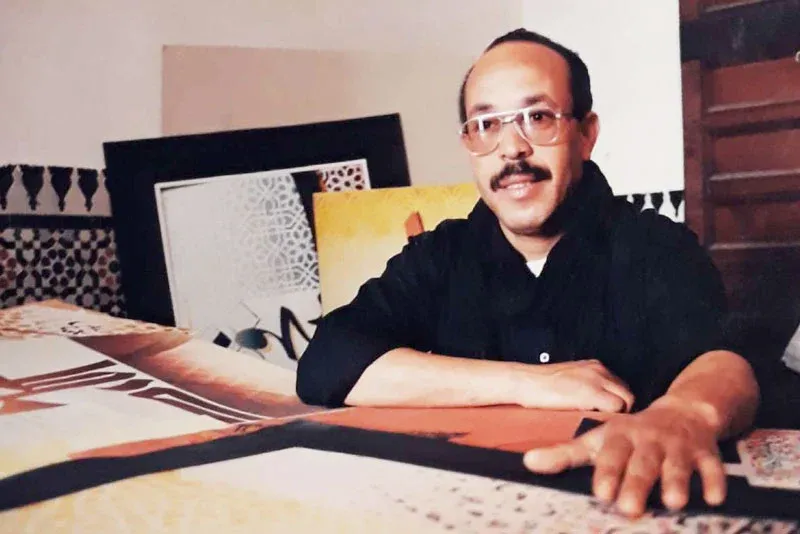
Abdelghani Ouida, a prominent figure in the realm of letter art, has long believed that letters can transcend their traditional role as mere carriers of textual meaning and transform into a visual discourse. This visionary artist, hailing from Morocco, has garnered acclaim for his work through various exhibitions across the Mediterranean, including notable showcases in Germany, France, and Luxembourg. Born in the vibrant city of Marrakech in the late 1950s, Ouida’s passion for calligraphy was cultivated within his family environment, leading him to a career in the late 1970s at the manuscript department of the Ibn Youssef Public Library in his hometown. His artistic journey is marked by the establishment of the "Marrakech Workshop for Art and Culture," the launch of the city's international sculpture biennale, and his role in coordinating the arts committee for the regional council of culture in Marrakech-Tensift-Al Haouz. This creative force also initiated the "International Festival of Calligraphy and Ornamentation" in Saint Martin, France.
From Tradition to Contemporary Expression
Beyond the exhibitions showcasing his calligraphic creativity, Ouida's influence permeates various artistic domains, featuring prominently in posters, book covers, theater, and film designs. His workshops have played a significant role in conveying Moroccan experiences and global trends to new generations of creators. In a recent interview with Hespress, Ouida reflected on his classical training in Arabic calligraphy, which began within his family, known for its traditions and history in the craft, with his uncle serving as his mentor. He reminisced about the mandatory calligraphy classes during his primary education, expressing regret over their absence in contemporary curricula. His artistic development was further enriched by his involvement in artistic workshops with political parties during the 1960s and 1970s, which focused on youth and childhood services, recalling his childhood experiences with initiatives from the Istiqlal Party and the National Union of Popular Forces.
All these experiences ignited Ouida's interest in visual arts, theater, and photography during the 1970s. Coupled with his exposure to contemporary Arab artistic movements, which sought to establish a distinct Arab Islamic identity through letter art, he utilized calligraphy as a means of self-assertion, breaking away from traditional and abstract art forms. He avidly read affordable Arabic magazines of the time, such as 'Al-Funun' from Iraq, 'Al-Faisal,' and 'Al-Arabi,' which introduced him to a modernist movement encompassing visual arts, Arabic script, and ornamentation.
Ouida not only witnessed the emergence of letter art trends in the Arab world and Europe but also founded an association aiming to bring youth closer to global artistic developments. In 1978, he established the first association for teaching Arabic calligraphy, which continued its operations into the 1980s. When asked about the transition from
As reported by hespress.com.