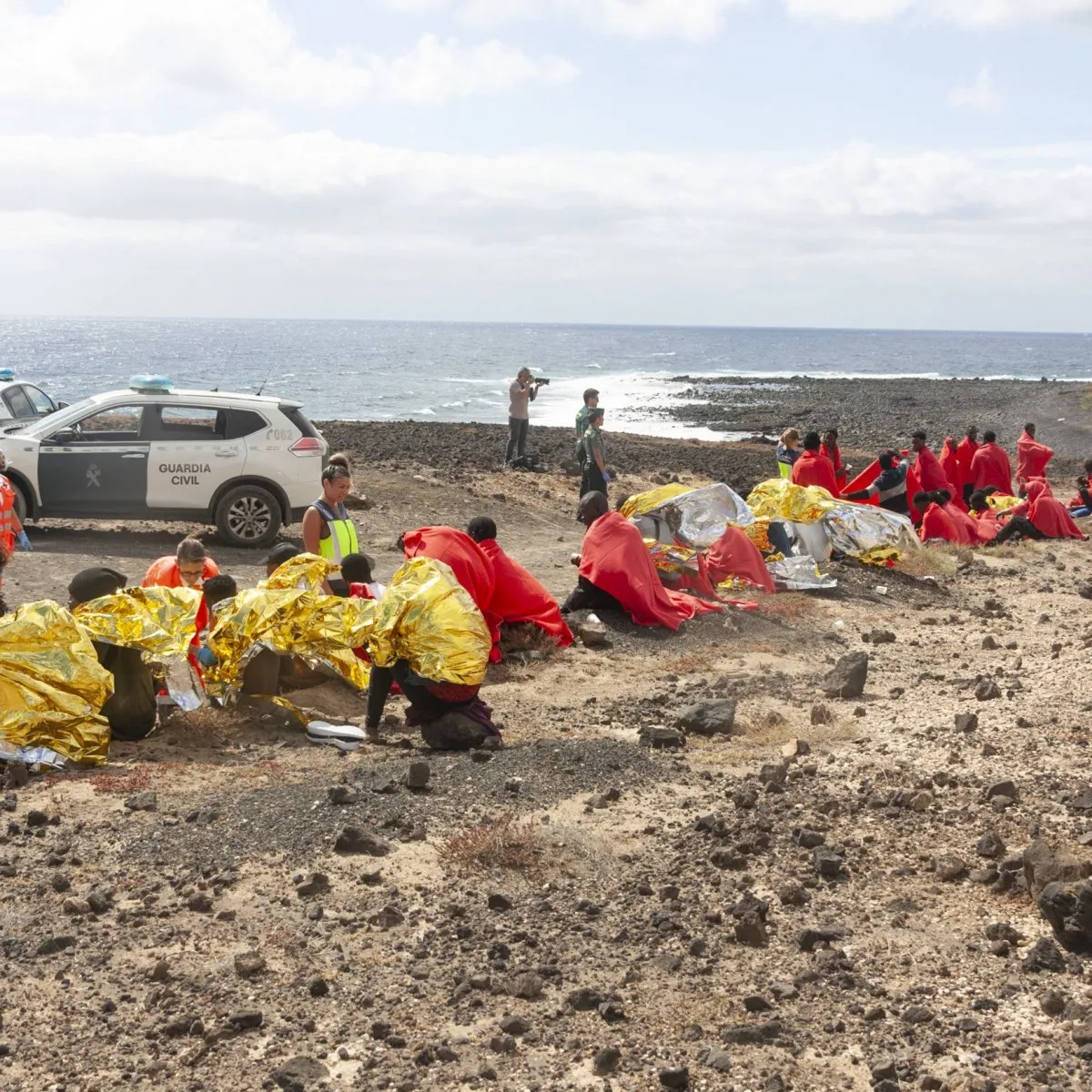

The Grim Reality of the Canary Islands Migratory Route
The migratory path leading to the Canary Islands remains the most perilous in Europe, despite a noteworthy decrease of 57.2% in lives lost at sea over the past year. This alarming statistic is underscored in the report _Monitoreo Derecho a la Vida_ published by Caminando Fronteras, which collates data from the initial five months of 2026. The report reveals a harrowing truth: for every one hundred individuals who successfully made the journey to the Canary Islands between January and May of this year, a staggering 21 lost their lives in the ocean, victims of tragic shipwrecks. In comparison, the previous year saw a lower mortality rate of 14 per 100, despite an increase in the number of arrivals.
Interestingly, this monitoring reveals that while the number of arrivals has plummeted by 72.1% within the year, the death toll has declined by only 57.2%, illustrating that the migratory route has become proportionately more dangerous. During the first five months of 2026, a total of 635 lives were lost in the Atlantic, along the three most frequently used routes connecting the African continent to the Canary Islands. In total, across various routes leading from Africa to southern Europe, 1,317 individuals have perished.
Shifting Departure Points and Increased Risks
According to Caminando Fronteras, there has been a notable increase in the use of cayucos from Gambia, with reports of significant shipwrecks and a high number of disappearances at sea. Additionally, the reactivation of inflatable boats departing from Agadir (Morocco) and Dajla (Western Sahara) between March and May has become evident, with many of these vessels arriving in Lanzarote and Fuerteventura. This shift in departure points is concerning, as vessels are now launching from more distant areas, such as Essaouira, located 175 kilometers north of Agadir, which inherently increases the risk of shipwreck.
The report further emphasizes that the ongoing dispute between Spain and Morocco regarding the delineation of search and rescue (SAR) zones contributes significantly to delays in rescue operations, resulting in more documented fatalities. To address this critical issue, the report calls for enhanced coordination between countries to reduce response times in the event of maritime emergencies. Despite the overall decrease in deaths along the migratory route to the Canary Islands, fatalities on other analyzed routes have seen an uptick: 507 on the Algerian route, 99 across the Strait of Gibraltar, 28 in the Alboran Sea, and 48 on the land route to Ceuta.
Tragically, individuals from 26 different nations have perished while attempting to cross the Western Border between Europe and Africa, including Afghanistan, Algeria, Bangladesh, Burkina Faso, Cameroon, Chad, Ivory Coast, Egypt, Ethiopia, Gabon, Gambia, Guinea Bissau, Guinea Conakry, Comoros Islands, Mali, Malawi, Morocco, Mauritania, Nigeria, Pakistan, the Democratic Republic of the Congo, Somalia, Senegal, Sudan, South Sudan, and Tunisia. These statistics highlight the urgent need for a concerted humanitarian response to address the ongoing crisis.
As reported by lavozdelanzarote.com.