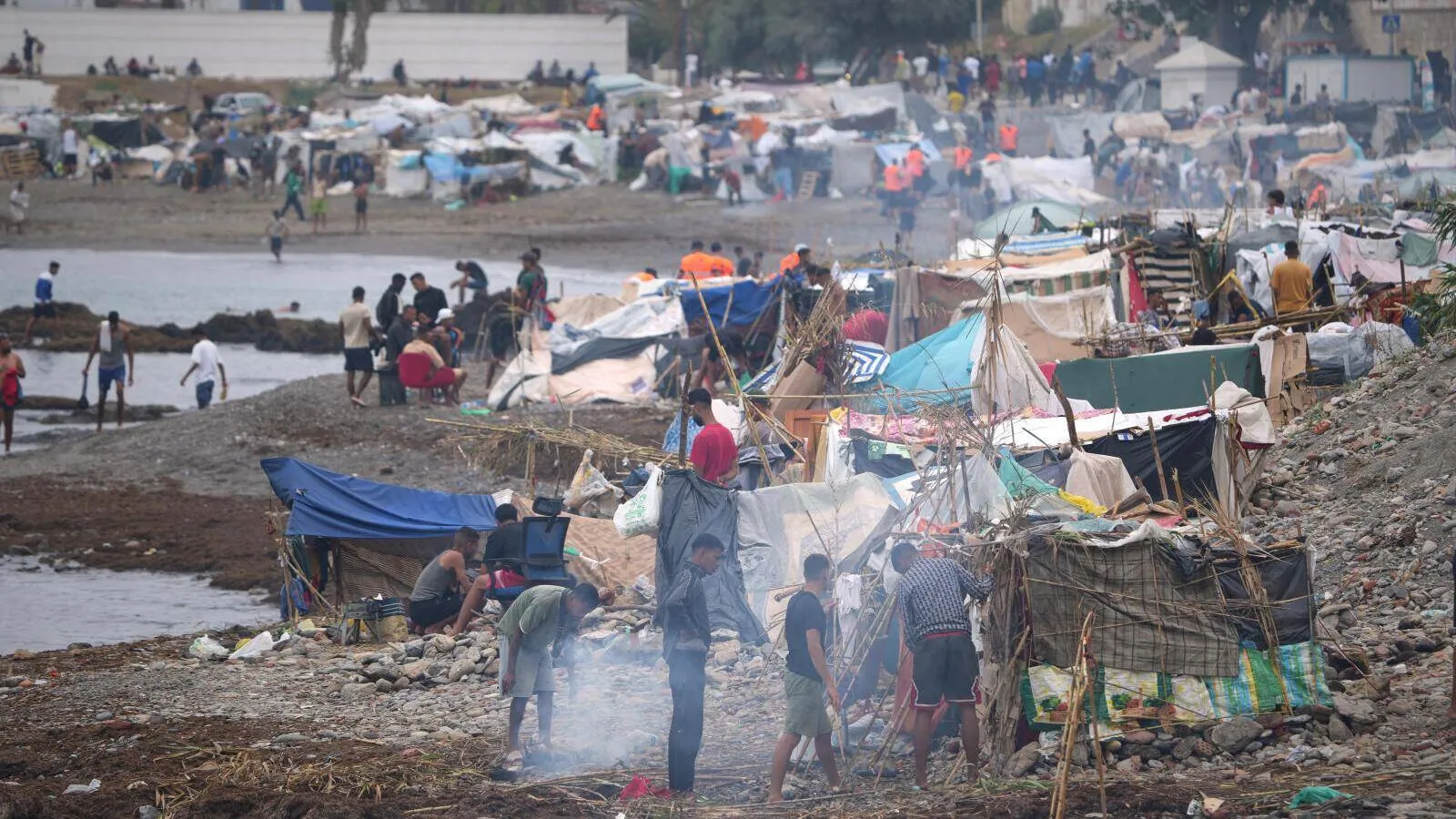

The Unfolding Ceuta Crisis and Its Political Implications
In a heated parliamentary debate, Spanish Prime Minister Pedro Sánchez found himself under intense scrutiny regarding the recent crisis in Ceuta, a Spanish enclave that experienced an unprecedented influx of over 70,000 migrants in late July. While many of these individuals have since returned to Morocco, the situation has sparked continuous protests not only in Ceuta but across Spain. A recent report from the Spanish National Police, which was made available to Le Temps, directly implicates Moroccan security forces in orchestrating this massive movement of people, suggesting that they systematically managed the influx to predetermined locations. During the session at the Cortes, opposition leader Alberto Núñez Feijóo emphasized Morocco's significant role in the crisis, demanding Sánchez’s resignation and accusing the socialist leader of succumbing to pressure from Rabat.
Ali Lmrabet: A Voice of Dissent from Exile
Ali Lmrabet, a prominent journalist who has been in exile in Spain for several years, offers a critical perspective on the implications of the Ceuta crisis for Spanish-Moroccan relations. Lmrabet, originally from northern Morocco, was imprisoned in his home country for "outrage against the king" and has been a vocal critic of Moroccan authorities. His recent experiences, which include a brief arrest for allegedly spreading false information and the hacking of his phone with the Pegasus spyware, highlight the precarious nature of freedom of expression in Morocco. In this context, he argues that an incursion into Ceuta without the explicit consent of the Moroccan government is "simply impossible," reinforcing the notion that the crisis is not merely a spontaneous event but rather a result of strategic political maneuvering.
As reported by letemps.ch.