
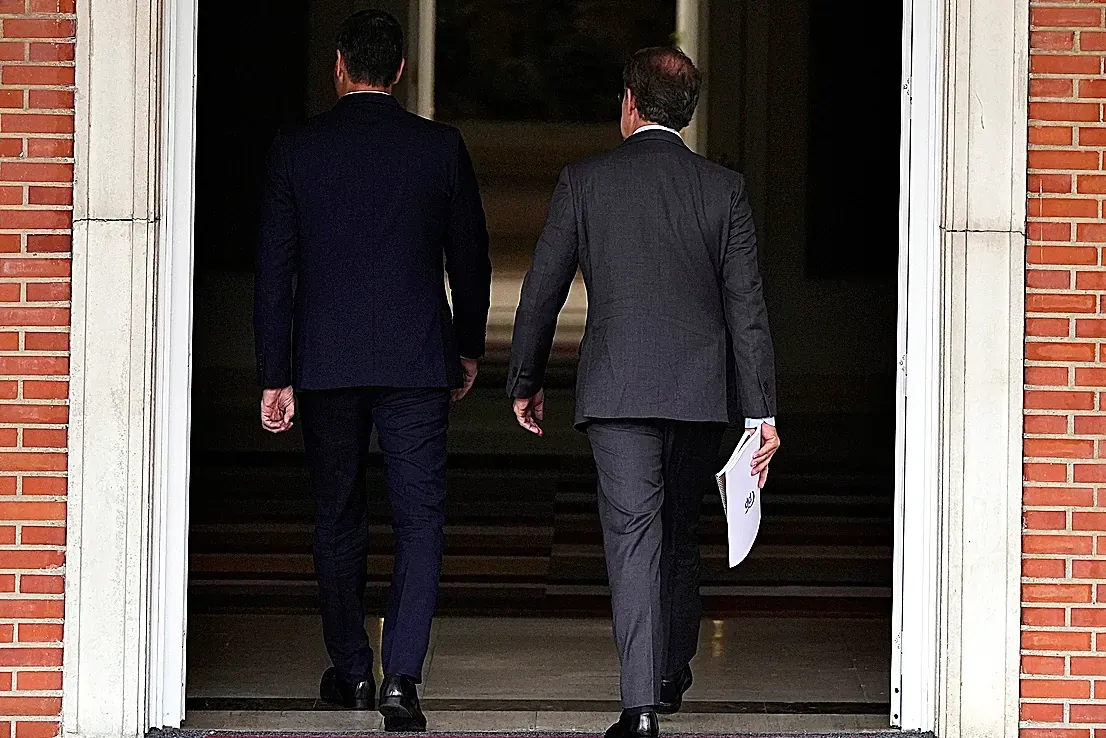

The Political Landscape Following the Ceuta Crisis
On July 30, a significant event unfolded in Ceuta, Spain, marking not just a critical juncture but also serving as the capstone to an era fraught with political strife and institutional decay. The corruption, parliamentary collapse, deterioration of public services, lack of prospects for the youth, and the pervasive influence of peripheral nationalism have all contributed to a narrative that cannot be solely attributed to the current administration under Pedro Sánchez. Although Sánchez must grapple with these historical grievances, it would require a substantial distortion of facts to absolve the past leaders, such as González, Aznar, Rajoy, and Zapatero, from their share of responsibility. The ascent of Alberto Núñez Feijóo, who aspires to replace Sánchez, would necessitate a level of perfection that is rarely, if ever, achievable, especially within the next four years. The convoluted dynamics with Isabel Díaz Ayuso, trapped in her own political challenges, further exacerbate the landscape, suggesting that the fallout from the Ceuta situation may be just the beginning of a larger crisis.
Every democratic leader has had a successor, and this seems to be the fate awaiting Sánchez as well. However, the focus remains on Sánchez and his unique significance in this moment, particularly concerning the controversial amnesty and the events surrounding the Ceuta crisis. While the ramifications of the amnesty are becoming increasingly obscure, the implications of the Ceuta crisis remain painfully evident and far-reaching.
The Implications of Ceuta and Morocco's Role
The crisis in Ceuta, which involves tensions with Morocco, will serve as a litmus test for Feijóo, as it strikes at the very heart of national integrity. The events of the past 27 days have unsettled the Spanish government more than any of the myriad scandals that have unfolded over the last eight years. The implications extend beyond domestic politics to affect Spain’s intelligence operations, its standing within the European Union, and its relationship with the monarchy, with King Felipe VI also facing scrutiny. The fallout from this crisis has left the government, the Popular Party, intelligence services, and the royal household all vulnerable and exposed.
Amidst this backdrop, Sánchez is portrayed as the 'politician of the burrow,' emerging only sporadically to address the crisis. His response, an assertion of an attack on national integrity, has become a rallying cry for the right, demanding he reiterate it. However, his silence following that initial declaration raises questions about whether this inaction is a strategic retreat, a concealment of deeper issues, or yet another concession to Rabat.
The crisis ignited during Morocco's Throne Day celebrations, a time when prominent figures from Spain were in attendance, seemingly oblivious to the chaos unfolding in Ceuta. While some ministers were late to respond to the crisis, others, like the Minister of Defense, took a strong stance on the sovereignty of Ceuta and Melilla. In stark contrast, other government members failed to prioritize the urgent humanitarian needs and security concerns that arose as a result of the crisis.
Despite the outpouring of migrants facilitated by Morocco, the country's actions have been perceived as a strategic maneuver, effectively using the situation to bolster its claims over the disputed territories of Ceuta and Melilla. This manipulation has further complicated Spain's diplomatic relations, revealing a stark disparity between the two nations' approaches to migration and territorial integrity. As time progresses, it becomes increasingly evident that Morocco's gains from this crisis are not only political but also serve to reinforce its long-standing aspirations at the expense of Spanish sovereignty.
As reported by elmundo.es.

