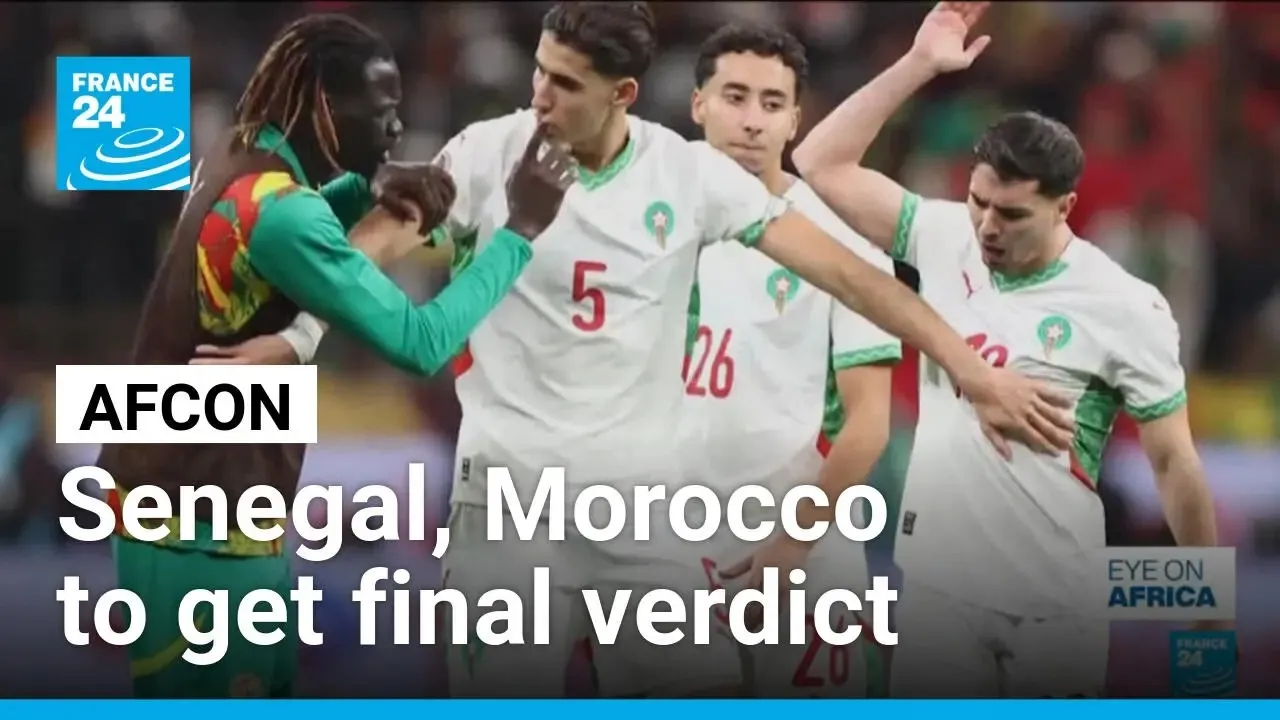
A Dramatic Conclusion to the 2025 Africa Cup of Nations
After more than nine months of anticipation, the final chapter of the 2025 Africa Cup of Nations (CAN) is set to unfold. On October 8, 2025, Morocco and Senegal will face off at the Court of Arbitration for Sport (CAS) in a highly contested battle for the title of African champion. Thibault Ulrich, a sports law researcher at the University of Lausanne, describes this situation as "an exceptional case," noting that it is unprecedented for a team to have a title stripped away after it was won on the field and validated by the referee.
The hearing, scheduled to commence at 9:30 AM on the shores of Lake Geneva in Switzerland, will be presided over by a panel consisting of French official Gérald Simon, Italian Luigi Fumagalli, and German Ulrich Haas. These arbiters will listen to representatives from both the Senegalese Football Federation (FSF) and the Moroccan Football Federation (FRMF), alongside officials from the Confederation of African Football (CAF). While the CAS has stated that no verdict will be delivered on the day of the hearing, it has assured that deliberations will begin immediately after, promising a swift resolution to a saga that has been fraught with controversy.
The Controversial Aftermath of the Final
The drama surrounding this title began on January 18 when Senegal emerged victorious over Morocco, clinching the championship with a 1-0 win after extra time amidst chaotic scenes. Tensions escalated when a penalty awarded to Morocco in stoppage time was missed by Brahim Diaz, leading to a mass exodus of Senegalese players from the field, who only returned fifteen minutes later. Following a formal appeal by the Moroccan federation, the CAF's appeals jury ruled on March 17 that Senegal forfeited the match, declaring a 3-0 loss for failing to remain on the pitch until the final whistle, thus referencing articles 82 and 84 of the CAN regulations.
The FSF condemned this ruling as "the most flagrant administrative heist in the history of our sport," and retained the trophy, even showcasing it to fans of the Senegalese diaspora at the Stade de France later that month. By turning to the CAS, Senegal aims not only to reclaim their title but also to ignite a broader dialogue concerning the fundamental principles of sport and the authority of referees. According to Ulrich, the CAF's appeals jury adopted an "extremely strict interpretation" of the regulations, disregarding the fact that the Congolese official Jean-Jacques Ndala had allowed play to resume after the Senegalese players returned.
Under the International Board's Laws of the Game, specifically rule number 5.2, it is stated that "the referee's decisions regarding facts relating to play are final, including the validation of a goal and the result of the match." This rule underscores the principle that once a game has resumed, the referee cannot alter the course of play, even if they later recognize a mistake. This long-standing doctrine, upheld by CAS jurisprudence, asserts that unless evidence of referee corruption or bad faith is presented, their sporting decisions remain unchallengeable. Ulrich emphasizes that the integrity of competitions must be maintained, insisting that outcomes should be determined on the field and in real-time, not by post-game judges, to avoid alienating supporters.
In parallel to these legal discussions, the Senegalese government called for an international investigation into potential corruption within the governing bodies of the CAF on March 18. In response, the CAF lauded the "independence" of its disciplinary bodies, yet did not provide an explanation for the dismissal of Yassin Osman Robleh, a jurist tasked with maintaining procedural integrity for six years, just two weeks before the appeals decision.
As reported by france24.com.