
The Underlying Geopolitical Tensions
The relationship between Spain and Morocco has long been characterized by a cold war, rooted in a complex history of espionage, hacking, and geopolitical maneuvering. According to a veteran source from Spain's National Intelligence Center (CNI), the two countries might be economic allies out of necessity, but they remain staunch geopolitical adversaries. This ongoing tension has manifested itself in various forms, including the current migration crisis in Ceuta, which is seen as yet another episode of this protracted cold war. The conflict translates into covert operations involving espionage, cyber-attacks, political manipulation of migration patterns disguised as conventional migration crises, and the continuous influx of hashish into Europe via Andalusia's coasts.
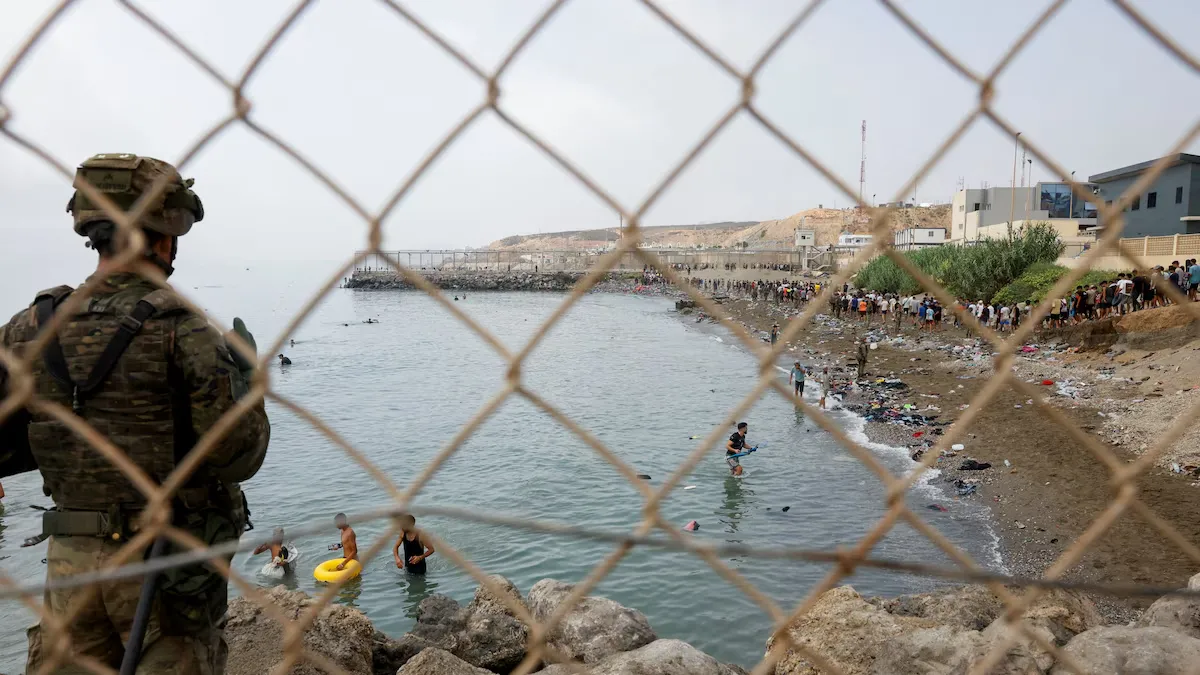
The Spanish government is aware, thanks to intelligence reports, that the recent surge of approximately 80,000 migrants crossing the Ceuta border in late July was not an uncontrolled overflow. Rather, it was a calculated move by Morocco, intended to demonstrate its influence and leverage in its relationship with Spain. This act served as a reminder that Morocco holds significant power in this geopolitical equation, and it was not merely the result of human trafficking syndicates or a direct response to a Supreme Court ruling. Instead, it appeared to be a deliberate signal, indicating a lapse in border vigilance that warranted Spain's attention.
Migration as a Geopolitical Weapon
Official data from Spain's Interior Ministry reveal that Morocco has strategically employed migration as a weapon in its geopolitical arsenal. From January 1, 2015, to August 15, 2026, Spanish security forces intercepted over 56,247 migrants at the land borders of Ceuta and Melilla, a figure that only accounts for those detained and does not include those who successfully crossed the border. This latest crisis should not be viewed merely as a border issue; instead, it represents a significant geopolitical challenge. Ceuta's strategic location in the Strait of Gibraltar makes it a crucial point for Spain and the European Union. Yet, its primary threat does not stem from potential military conflict but rather from what experts describe as a "gray zone strategy"—a blend of diplomatic pressure, migration manipulation, and espionage, coupled with Morocco's role as a major producer of hashish. This approach enables Morocco to gradually undermine Spain's position without resorting to overt military confrontation. The ultimate goal appears to be the expansionist vision of a "Greater Morocco," which includes annexing Western Sahara, parts of Algeria, and the enclaves of Ceuta and Melilla.
Recent intelligence reports from the European Border and Coast Guard Agency, Frontex, identify Morocco as a key partner in managing European borders and a primary destination for sub-Saharan migrants. This status positions the Moroccan government as a potential actor capable of wielding migration as a tool for political leverage. The instability in the Sahel region and Sudan has driven thousands of migrants to transit through or settle in Morocco. In turn, Rabat actively manages emigration toward Europe, which has heightened tensions regarding the significant undocumented sub-Saharan population within its borders, exacerbated by high unemployment and dire living conditions.
As the influx of migrants continues to spark incidents of serious crime and social unrest in major cities like Casablanca and Marrakech, the Moroccan authorities have ramped up security operations and deportations targeting undocumented migrants. However, what poses a challenge for Morocco can also be turned into a strategic asset. Internal pressures may further incentivize Moroccan emigration to the EU, as Moroccans rank among the highest in illegal stays, secondary movements within the EU, and pending return decisions. The persistent instability in the Sahel, coupled with restrictive policies in neighboring transit countries, enables Morocco to orchestrate controlled surges of migrants into Ceuta and Melilla, exemplifying a sustained pressure strategy that the Moroccan regime has been employing for years.
As reported by infobae.com.